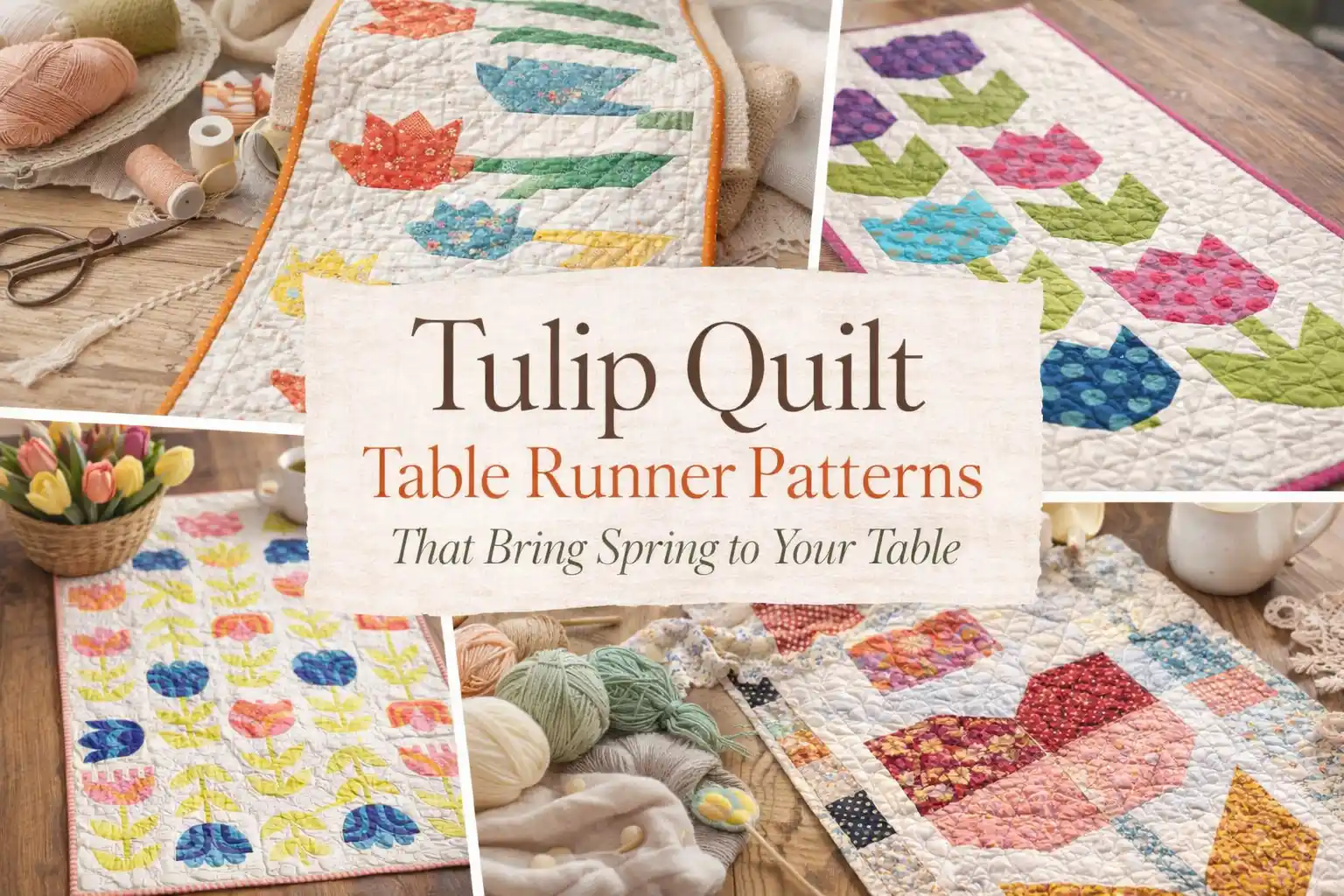
Few quilting projects can refresh a dining table as quickly as a tulip quilt table runner. The combination of floral blocks, fresh spring colors, and manageable project sizes makes table runners one of the most satisfying quilts to sew. Some patterns lean traditional with classic pieced blooms, while others use bold modern layouts and playful color combinations. Read on to find out the best one for you!
Things You’ll Need
- Rotary cutter with a self-healing cutting mat
- High-quality cotton fabric bundles
- Acrylic quilting rulers for precise shapes
- Sewing machine with quilting foot attachment
- Soft batting for a cozy finished feel
Why Tulip Table Runners Are Great for Beginners
Tulip runners are often much more forgiving than larger quilt projects. Since the size remains manageable, you can focus on improving piecing accuracy, fabric placement, and quilting techniques without feeling overwhelmed by hundreds of blocks. Many quilters also appreciate how quickly progress becomes visible. After just a few hours of sewing, the tulip shapes begin emerging clearly from the fabric pieces.
Another benefit is that floral runners encourage experimentation. You can play with bold fabrics, try unexpected color combinations, or test new quilting designs in a smaller format. The lessons learned on a table runner often carry directly into larger quilt projects later.
Tulip Quilt Table Runner Patterns
1. Quick and Easy Tulip Table Runner
Skill level: Beginner
Time required: Weekend project
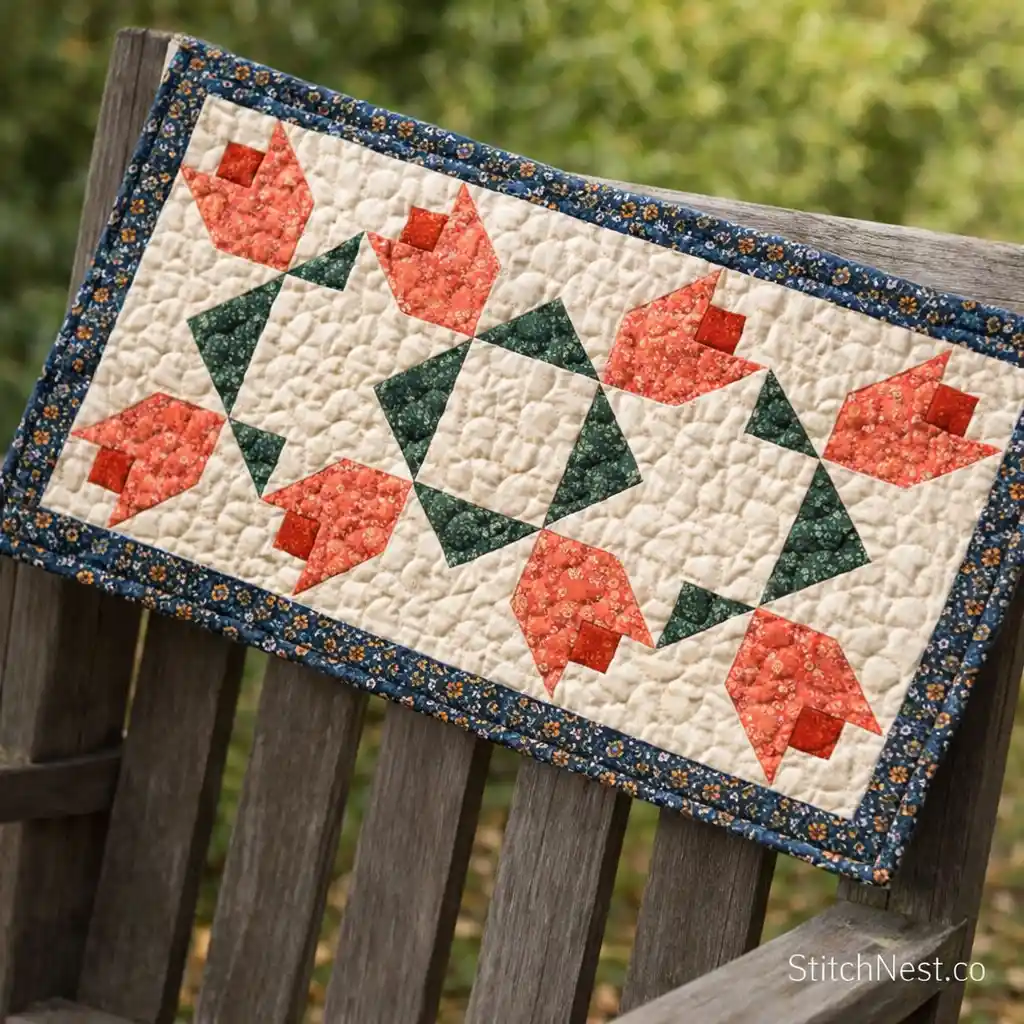
If you’re looking for a project that comes together without a lot of complicated piecing, this pattern is a wonderful starting point. The tulip blocks are straightforward enough for newer quilters, yet the finished runner still feels polished and seasonal. One thing that often helps with floral runners is choosing a background fabric with good contrast. Even simple tulip blocks become much more noticeable when they aren’t competing with busy prints. Quilting Digest shares a pattern that strikes a nice balance between simplicity and visual impact.
2. Tulip Time Table Runner Pattern by Missouri Star
Skill level: Beginner to Intermediate
Time required: 1 to 2 weekends
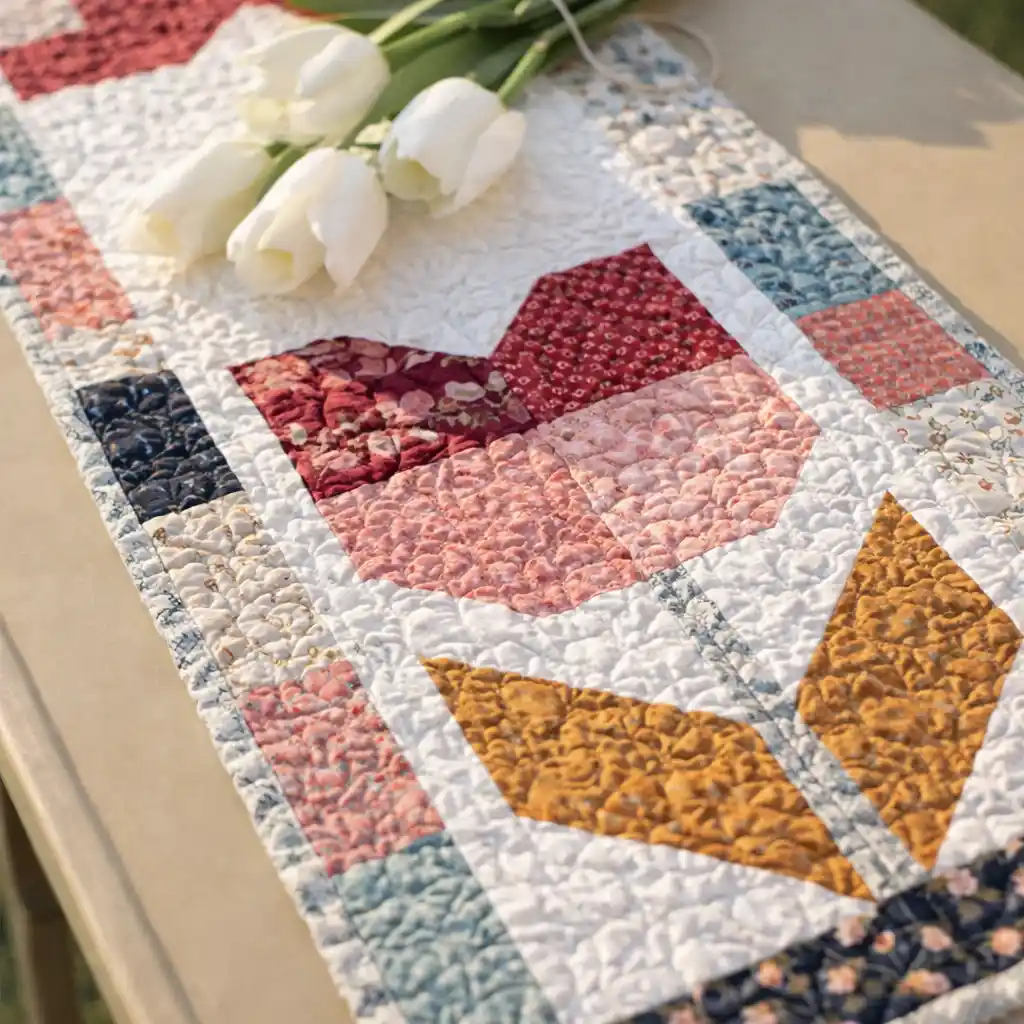
This design captures the cheerful look of a spring garden without feeling crowded. The tulips create a clear focal point across the runner, making it easy to showcase favorite fabric combinations. Many quilters find that auditioning fabrics before cutting saves a surprising amount of second-guessing later. Laying tulip petals side by side allows you to spot combinations that either pop beautifully or blend together too much. Missouri Star’s pattern offers plenty of opportunities to play with color placement.
3. Spring Tulips Modern Holiday Table Runner
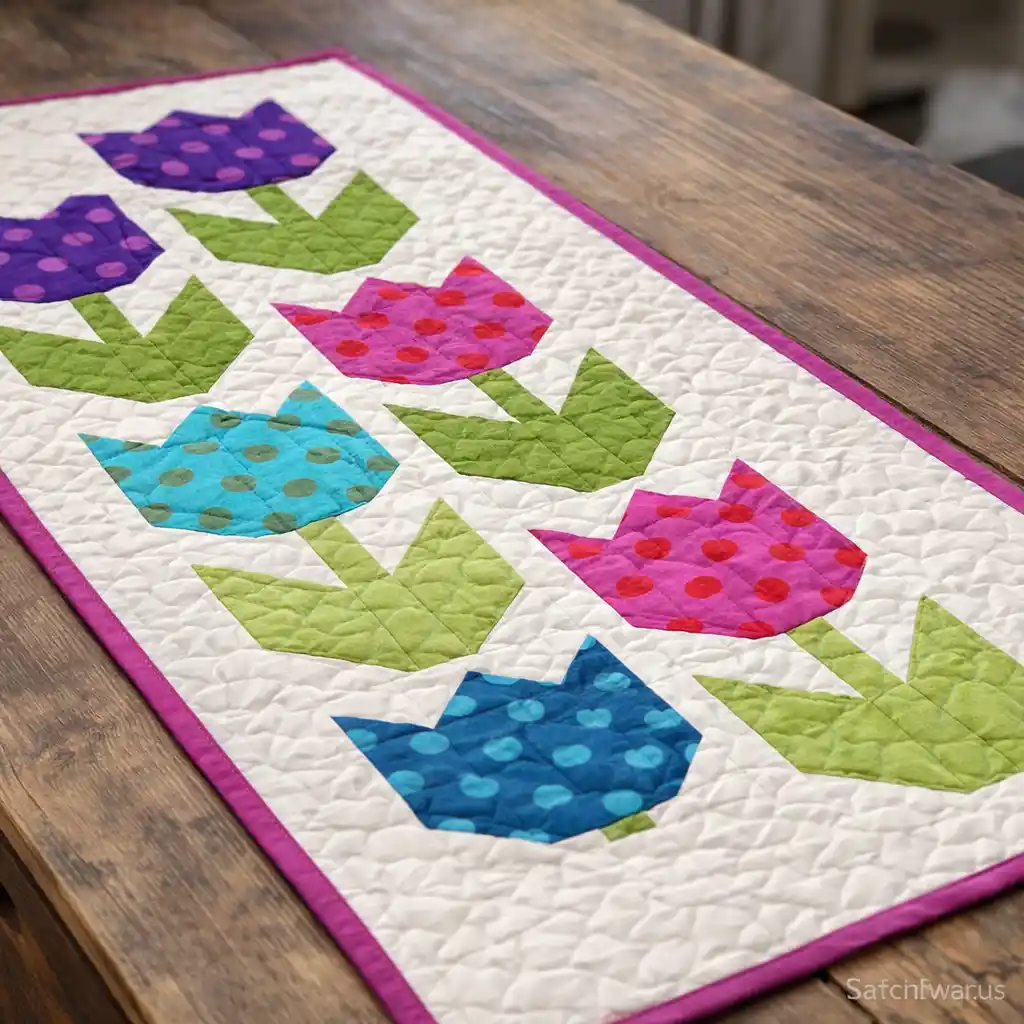
Skill level: Intermediate
Time required: 2 weekends
Modern tulip runners often rely on clean lines and carefully chosen color palettes rather than intricate piecing. That approach gives the flowers room to stand out without overwhelming the eye. When working with contemporary layouts, keeping the surrounding fabrics slightly understated can help the tulips become the star of the design. Time Flies Quilt and Sew presents a fresh pattern that feels equally at home on a farmhouse table or a more modern setting. Don’t forget to check out these baby quilts!
4. Colorful Spring Tulips Quilt Table Runner
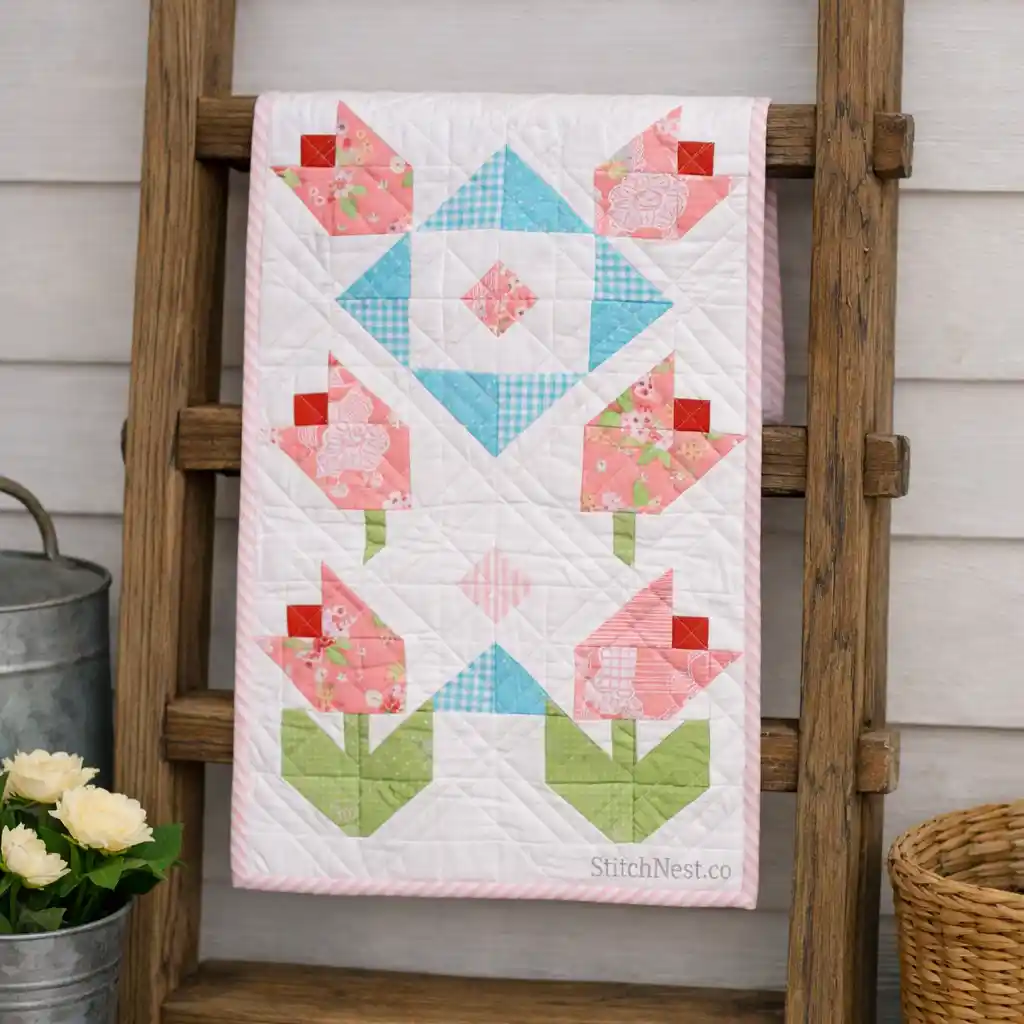
Skill level: Beginner
Time required: Weekend project
Bright fabrics and tulip blocks naturally complement one another. This runner embraces spring energy with playful color combinations that instantly draw attention. One practical trick when sewing colorful floral projects is distributing similar shades throughout the entire layout rather than grouping them in one section. That approach helps the runner feel balanced from end to end. Flamingo Toes offers a cheerful DIY project that shows how effective simple color choices can be.
5. Tulip Terrace Quilt & Table Runner Pattern
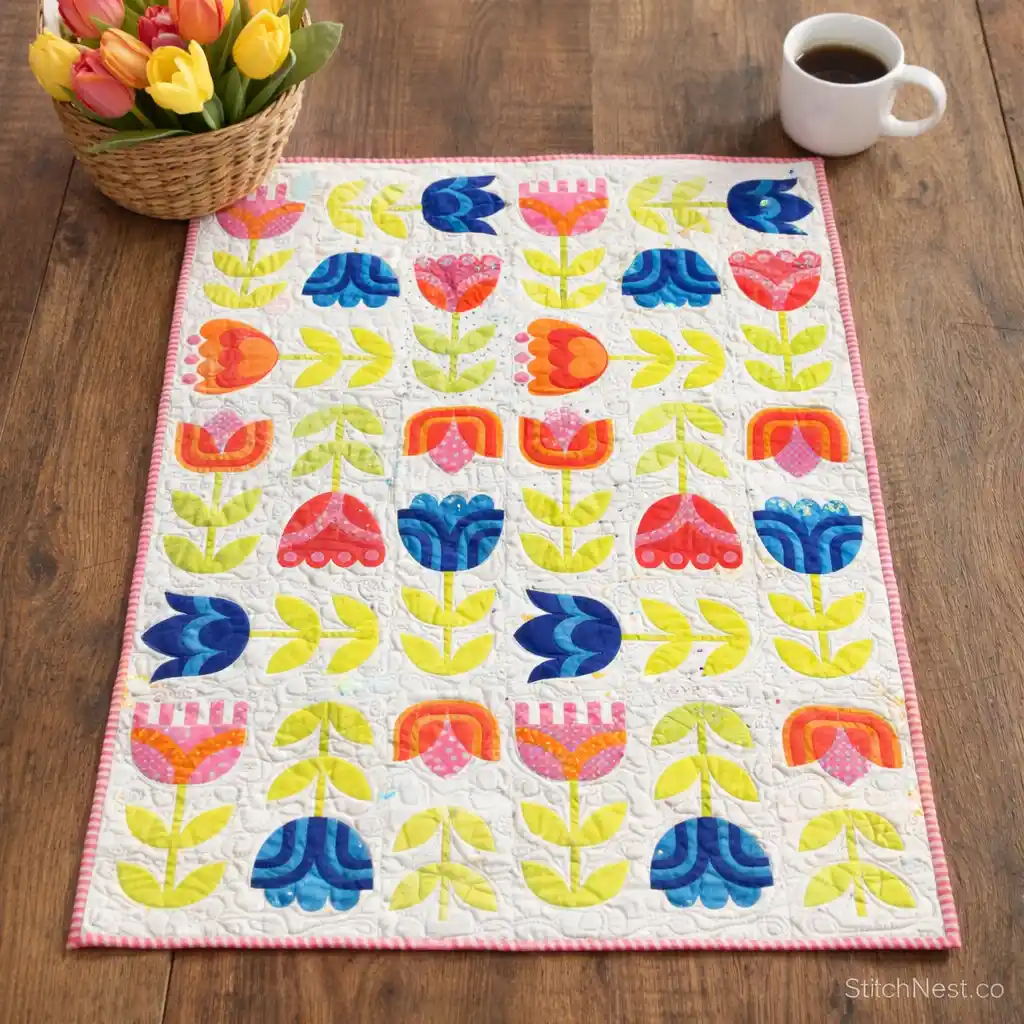
Skill level: Intermediate
Time required: 2 to 3 weekends
Some floral designs create movement across the quilt top, and this pattern does exactly that. The tulips seem to flow naturally through the layout, creating visual interest without becoming complicated. Before stitching rows together, stepping back several feet from your design wall can reveal spacing issues that aren’t obvious up close. Sassafras Lane’s pattern uses repetition and structure in a way that keeps the eye engaged throughout the runner. You can also try to make a denim quilted table runner like this!
6. Make Your Own Tulip Quilt Table Topper
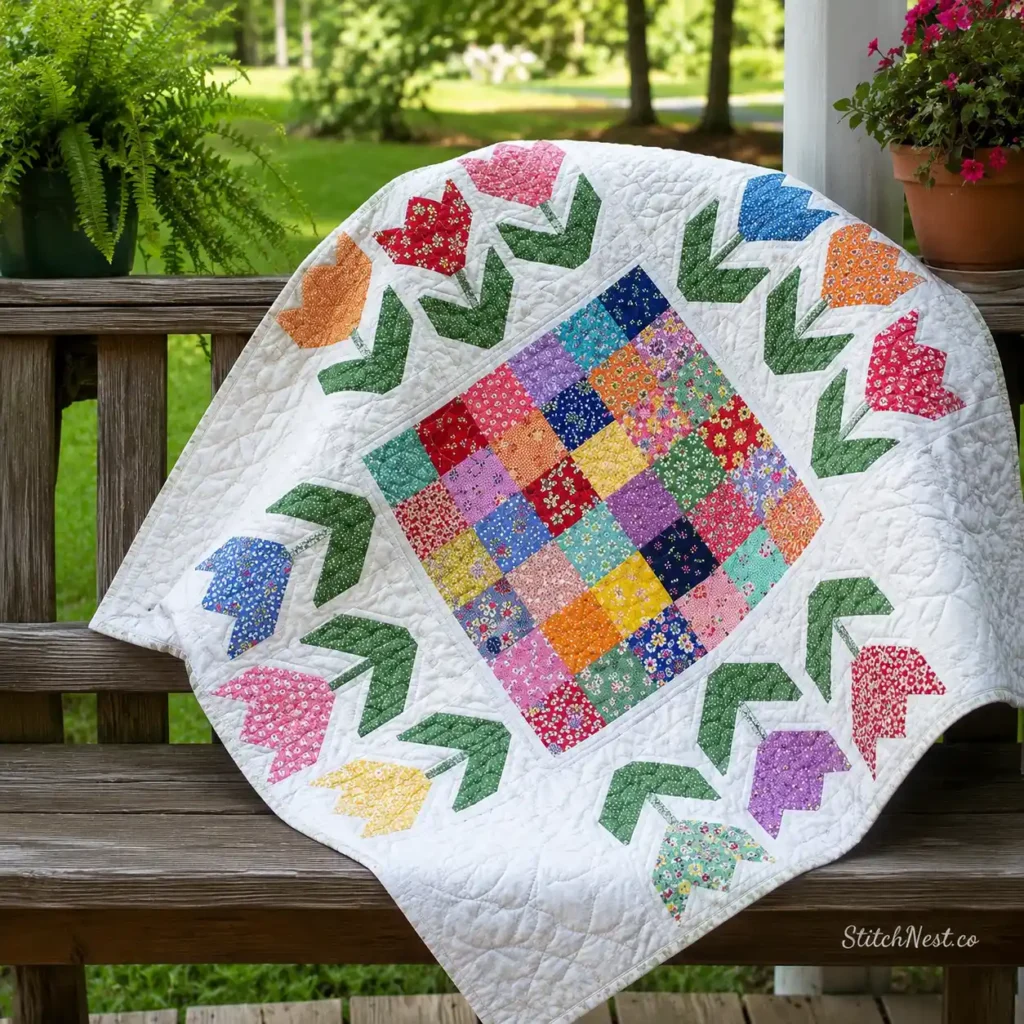
Skill level: Beginner
Time required: Weekend project
A table topper offers a slightly different approach than a traditional runner, but the tulip theme works just as beautifully in a smaller format. Compact projects like this are excellent for trying new color combinations without committing to a larger quilt. Many quilters also use table toppers as a testing ground for fabrics that may eventually appear in bigger projects. Quilting Cubby shares an approachable pattern that feels welcoming even for someone still building quilting confidence.
7. Tulip Quilt Table Runner – Tutorial & Pattern Add-on
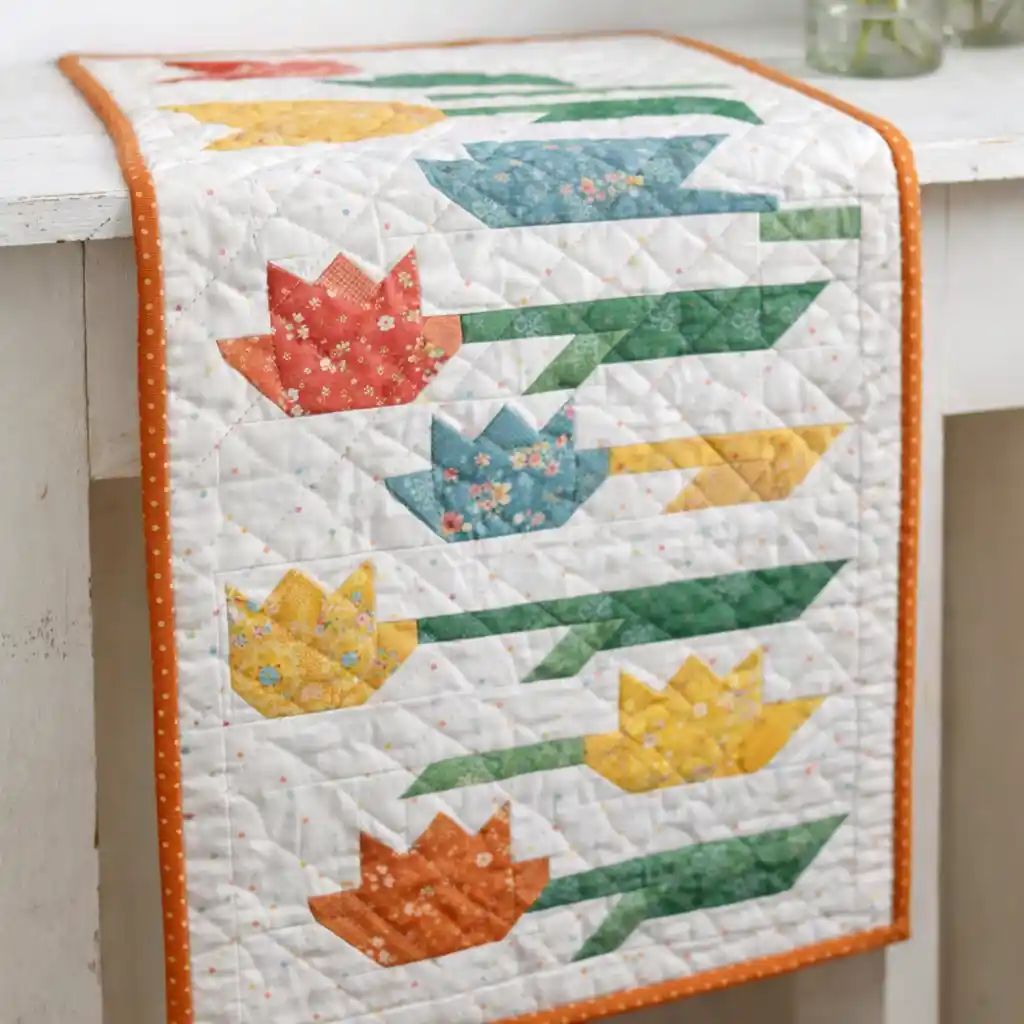
Skill level: Beginner to Intermediate
Time required: 1 weekend
This pattern focuses on creating a strong visual impact through thoughtful block placement. Rather than relying on complex techniques, it uses repetition effectively to create a cohesive finished piece. One thing experienced quilters often recommend is pressing after every major construction step rather than waiting until the end. Consistent pressing keeps the runner flatter and makes final assembly noticeably easier. Ellis and Higgs provide a tutorial that feels clear and well-organized from start to finish. Well, you’ve tried the tulips, now it’s time to try a mini hearts quilt!
8. Easter Tulips Table Runner
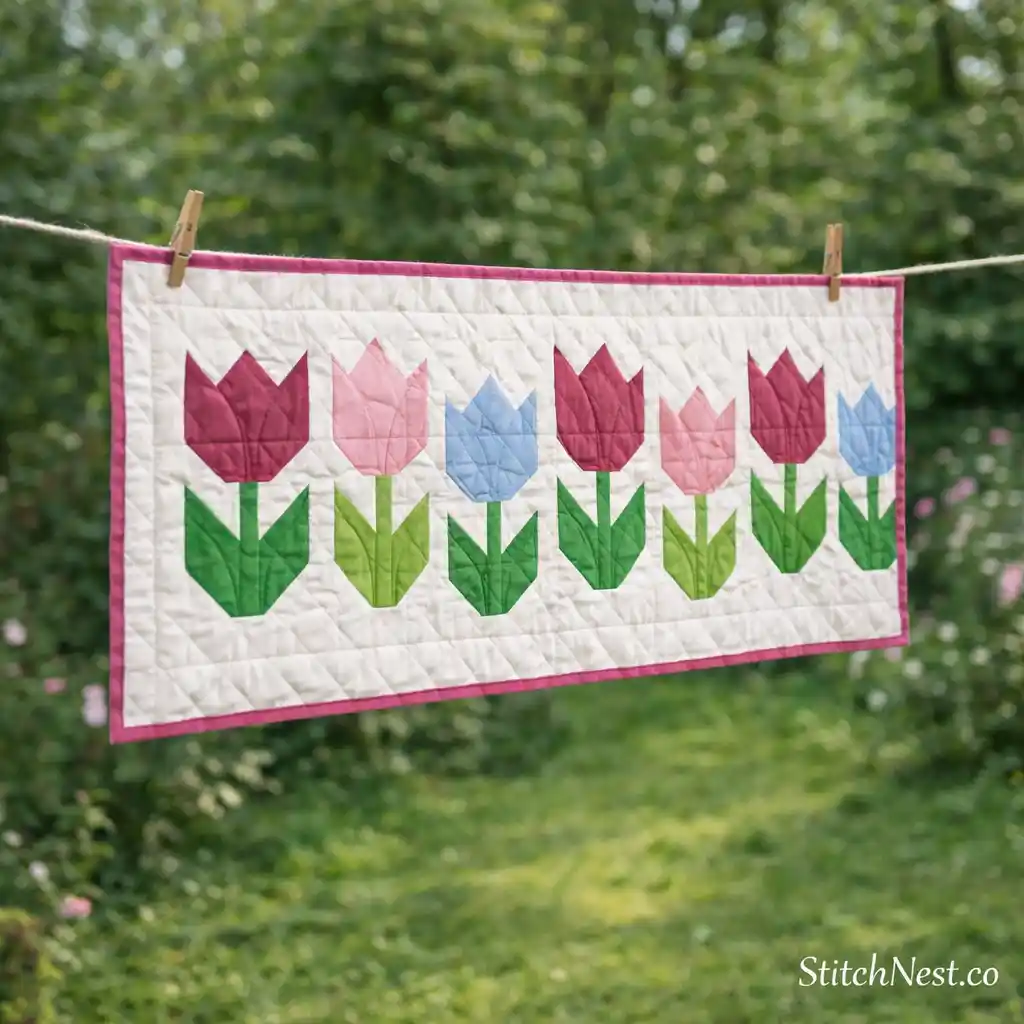
Skill level: Beginner
Time required: Weekend project
Soft spring colors and tulip motifs are a natural pairing for Easter decorating. This runner captures that seasonal feeling without limiting itself to just one holiday. Pastels can sometimes appear washed out if every fabric has the same intensity, so adding a few stronger shades often creates better visual depth. Sew Happy by Sarah shares a runner that feels festive, welcoming, and versatile enough to display long after Easter has passed.
Practical Tips for Better Tulip Quilt Table Runners
- Select fabrics with enough contrast between petals, stems, and background areas. Distinct color separation helps the tulip shapes remain recognizable from across the room.
- Before sewing rows together, arrange blocks on a large surface and view them from several angles. Small layout adjustments can dramatically improve the flow of the finished runner.
- Pressing seams carefully throughout construction reduces bulk and helps points line up more accurately during assembly.
- If the runner will be used frequently, choose quilting designs that provide enough stitching support to keep the layers stable through regular washing and use.
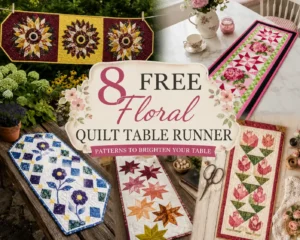
If you love quilting flowers, don’t stop at tulips. Some of the prettiest projects we’ve come across are floral quilt table runners that can completely change the look of a dining table with just a few blocks and some thoughtful fabric choices.
Common Mistakes to Avoid
One issue that appears frequently in floral runners is insufficient contrast. When petal fabrics blend too closely with the background, the tulip shapes lose much of their visual impact. Taking a quick black-and-white photo of the layout can help identify value problems before sewing begins.
Another challenge occurs when fabrics are distributed unevenly across the runner. If all the bright colors gather in one section, the design can feel visually heavy on one side. Spreading colors throughout the project creates a better balance.
Many beginners also rush through trimming and pressing because table runners seem smaller than full quilts. However, those details matter just as much here. Cleanly trimmed blocks and flat seams often make the difference between a runner that looks homemade and one that looks professionally finished.
Tulip quilt table runners have a way of bringing fresh energy into a room without requiring a huge investment of time or fabric. The floral blocks feel welcoming, the project size remains approachable, and the finished piece can completely change the look of a table with very little effort. Maybe try these scrappy quilts next!