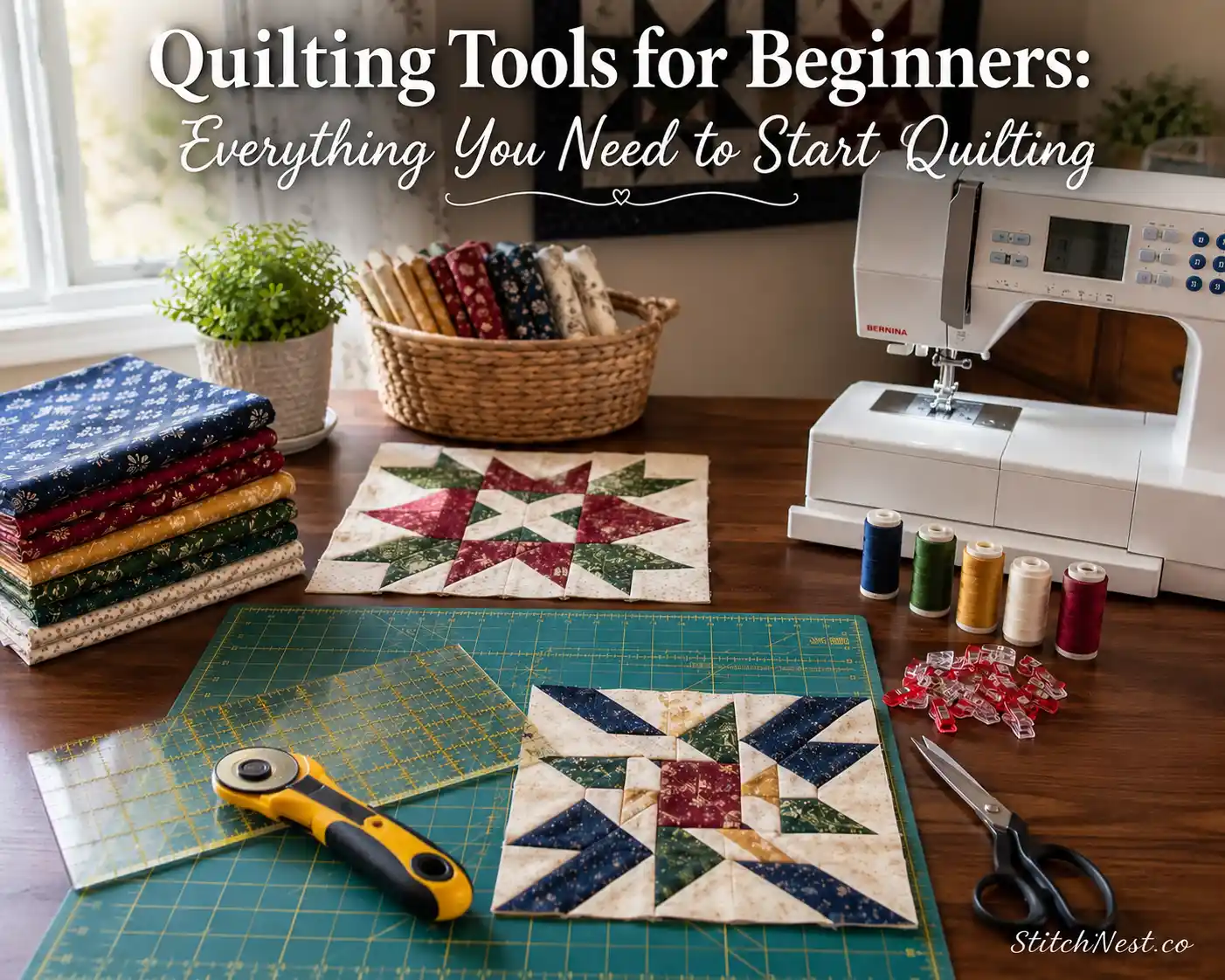
Starting your first quilt is exciting. You pick out fabrics, imagine how the finished quilt will look, and can’t wait to start sewing. Then reality hits. Suddenly you’re hearing about rotary cutters, cutting mats, rulers, walking feet, seam rippers, and dozens of other tools you’ve never needed before. The good news is that quilting doesn’t require a room full of expensive equipment to get started. Let’s walk through the quilting tools that are actually worth having from the beginning, along with a few upgrades you’ll appreciate as your skills grow.
Quilting Tools for Beginners
1. Self-Healing Cutting Mat
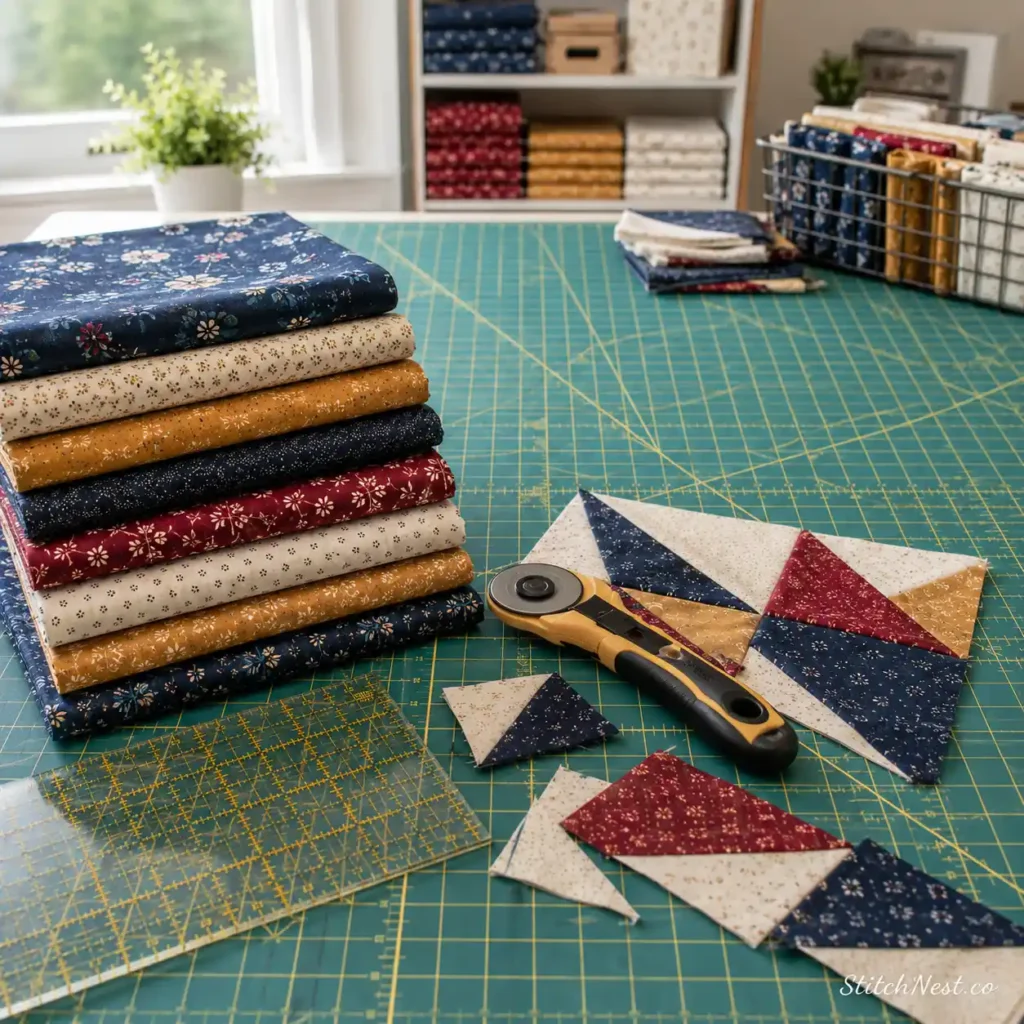
If there is one quilting tool you’ll use almost every time you sew, it’s a cutting mat. A self-healing cutting mat protects your work surface and gives you a safe place to use a rotary cutter. Many beginners don’t realize how important accurate cutting is until their quilt blocks refuse to line up. A quality mat helps you cut cleaner pieces and measure more accurately from the start.
You’ll also appreciate the grid lines printed on most quilting mats. Those markings make it much easier to square up fabric and keep cuts straight. Here’s the best one you can buy by OLFA!
2. Rotary Cutter
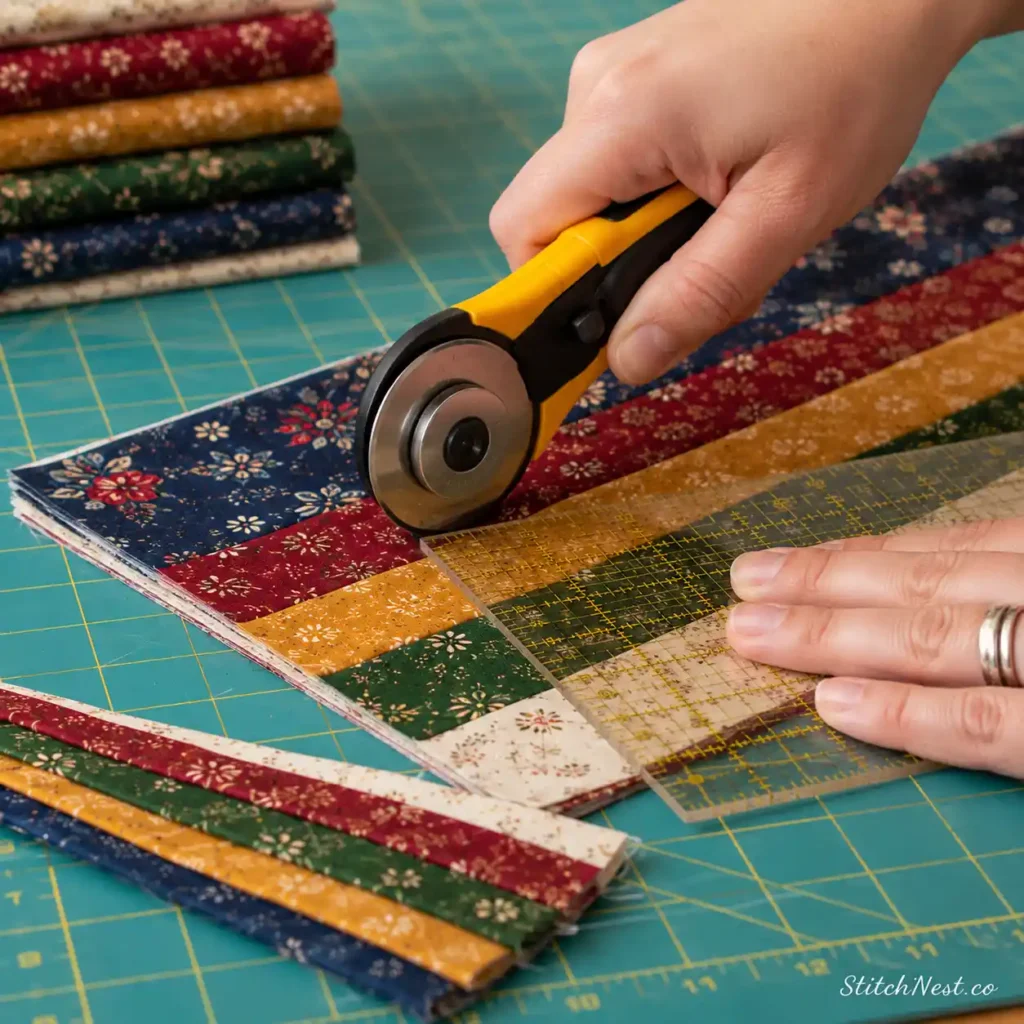
A rotary cutter is one of those tools that completely changes the quilting experience. Once you start using one, you’ll wonder how people ever cut quilt fabric with scissors alone.
Rotary cutters allow you to cut multiple fabric layers accurately and quickly. They create cleaner edges, save time, and make piecing much more precise. Most quilters recommend starting with a 45mm rotary cutter because it’s versatile enough for nearly every beginner project. As you gain experience, you may add smaller specialty cutters, but a 45mm model will handle most of your quilting needs. Here’s where to buy one!
3. Quilting Ruler
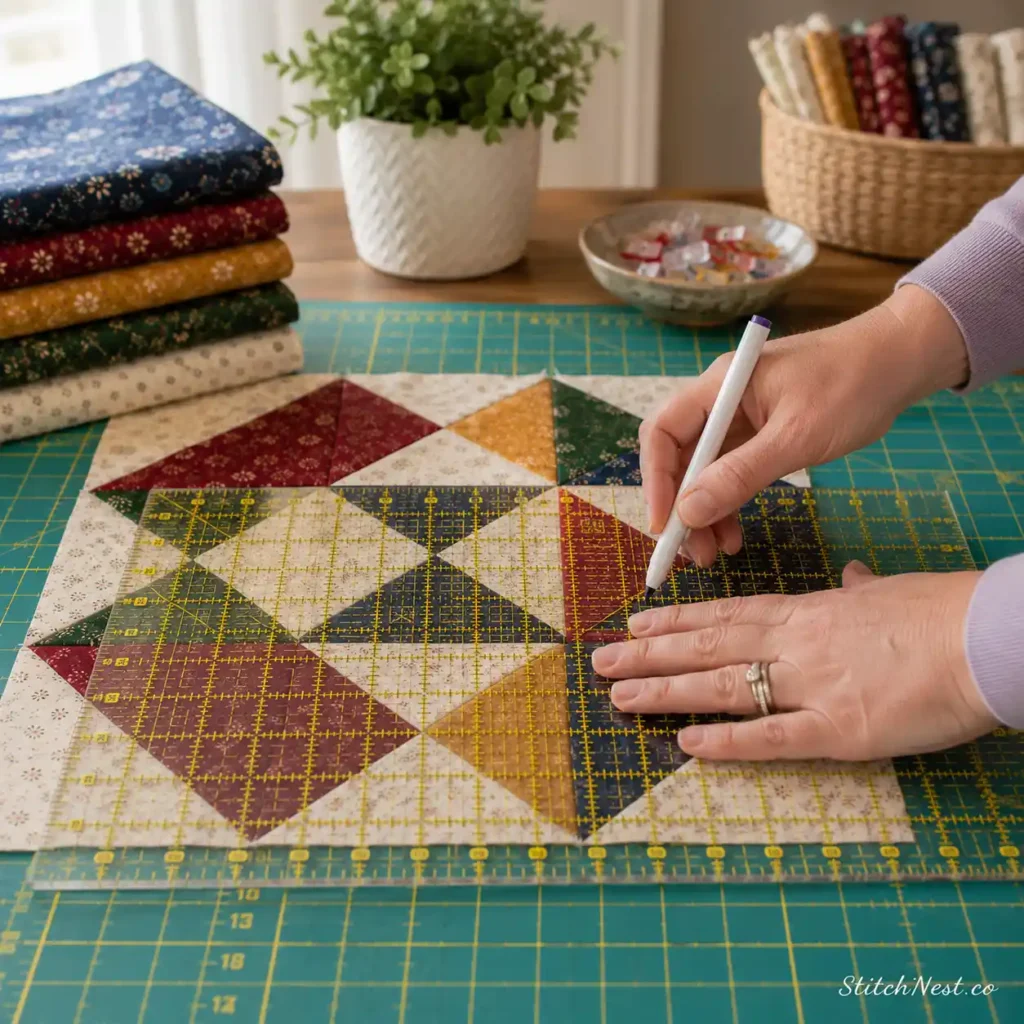
A quilting ruler works alongside your rotary cutter. Together, they form one of the most important tool combinations in quilting. A good ruler helps you cut strips, squares, rectangles, and quilt blocks accurately. It also helps square up blocks and trim projects before binding.
It’s worth investing in a ruler with clear markings and a non-slip surface. Accurate cutting starts here. This one from Creative Grids is an incredible purchase!
4. Quality Fabric Scissors
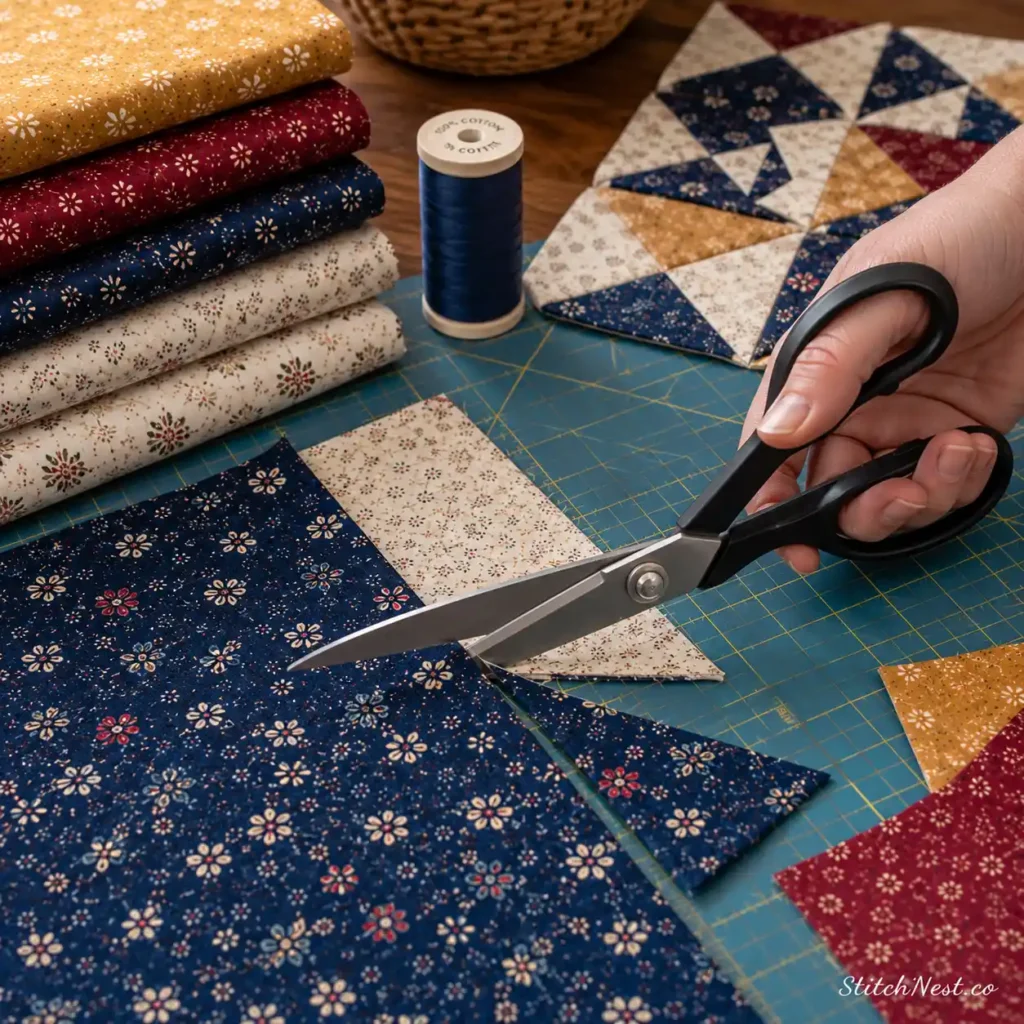
Even though rotary cutters handle most quilting cuts, you’ll still reach for fabric scissors constantly. They’re useful for trimming threads, cutting templates, opening packages, and handling countless small tasks around your sewing machine.
One habit worth developing immediately is keeping fabric scissors for fabric only. Cutting paper dulls the blades much faster than most people realize. A good pair of fabric scissors can last for years, making them one of the smartest investments you can make.
The batting you choose can completely change how a finished quilt looks, feels, and wears over time. If you’re unsure which type is right for your project, our beginner’s guide to quilt batting explains everything you need to know.
5. Pins or Wonder Clips
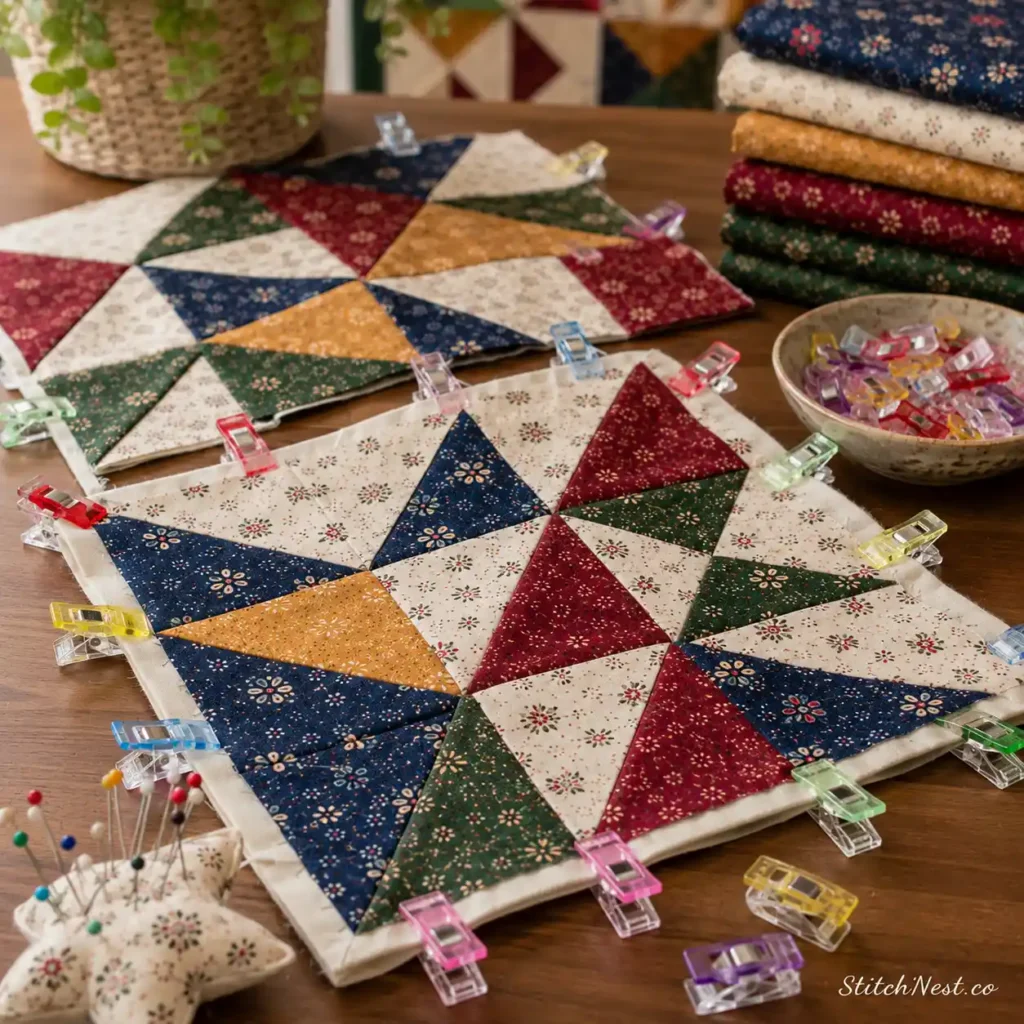
Keeping fabric layers aligned becomes much easier when you have the right tools holding everything in place. Traditional quilting pins work beautifully for many projects, but Wonder Clips have become increasingly popular because they’re easy to use and highly visible.
You’ll eventually develop your own preference. Some quilters use pins for almost everything, while others reach for clips whenever possible. Either option helps prevent shifting and keeps seams where they’re supposed to be. Why don’t you try this one by Clover?
6. Seam Ripper
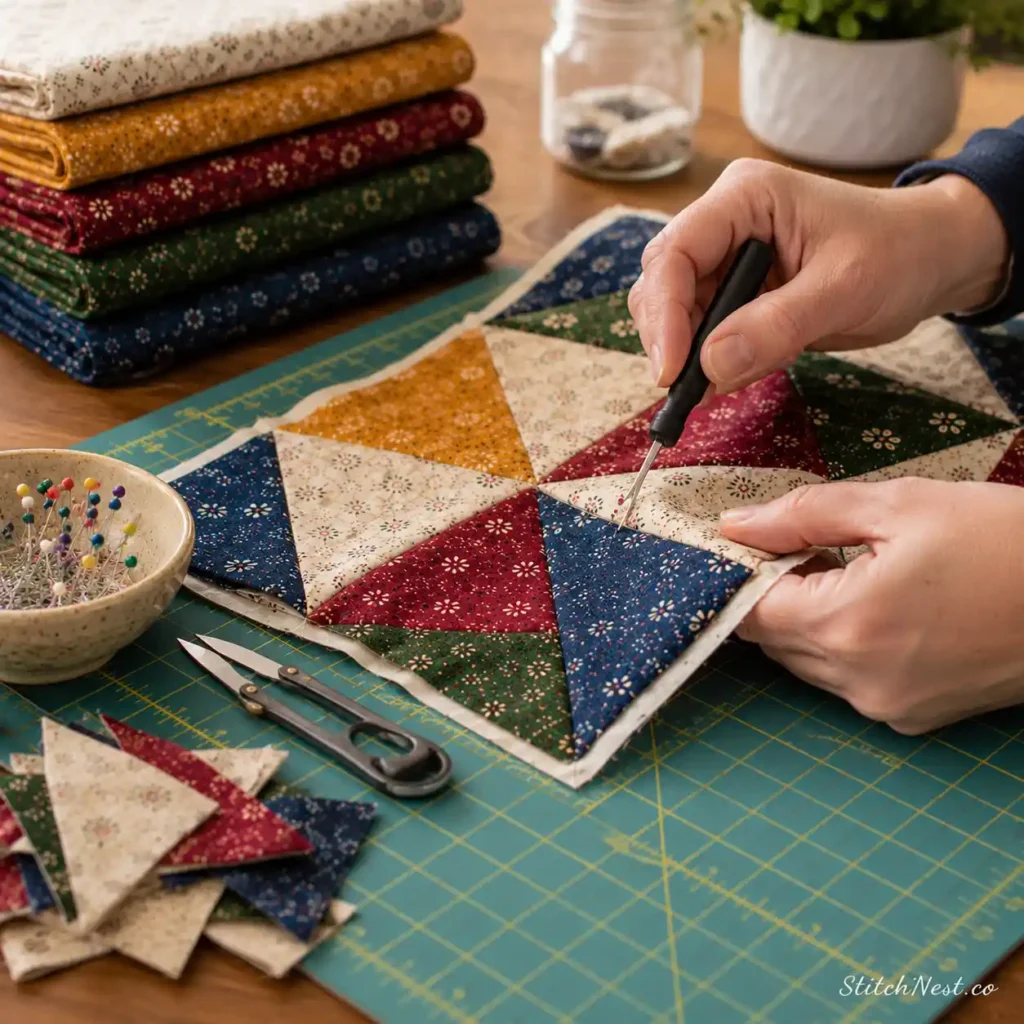
Every quilter owns a seam ripper. Nobody likes using it, but everyone needs one. Even experienced quilters occasionally sew pieces together incorrectly or discover that a seam needs adjustment.
A comfortable seam ripper helps fix mistakes without damaging fabric or creating unnecessary frustration. The good news is that using a seam ripper doesn’t mean you’re doing something wrong. It simply means you’re quilting. If you haven’t grabbed one yet, here’s one by Clover that will get the job done!
7. Iron and Ironing Board
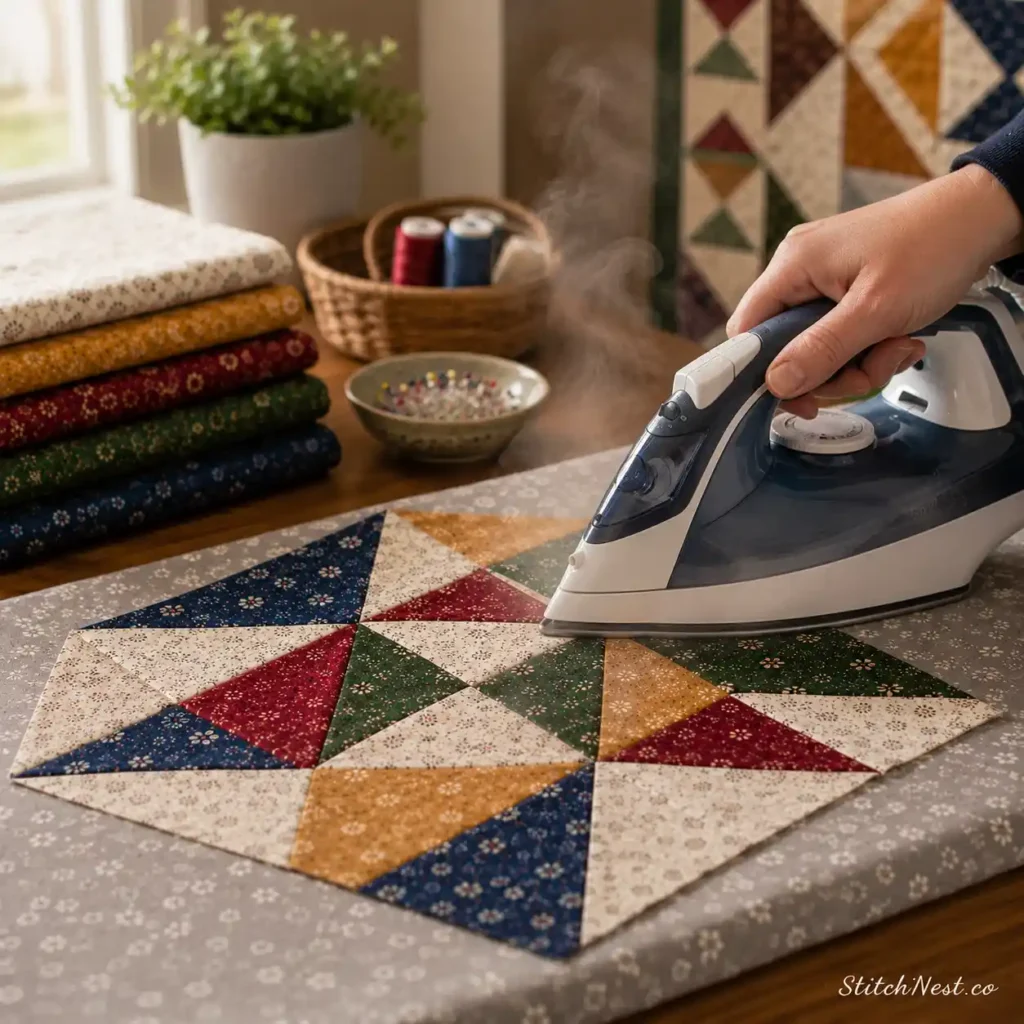
If accurate cutting is the foundation of quilting, pressing is what keeps everything looking crisp and professional. Many beginners underestimate how often they’ll use an iron. In reality, you’ll probably press fabric before cutting, after sewing blocks, after joining rows, and again before quilting.
Good pressing improves accuracy, helps seams lie flat, and makes piecing much easier throughout the entire project. You’ll quickly discover that quilting and pressing go hand in hand. Quick, grab yours here!
If you’re looking for a quilting technique that looks impressive without requiring advanced blocks, take a look at these free Bargello quilt patterns.
8. Quarter-Inch Presser Foot
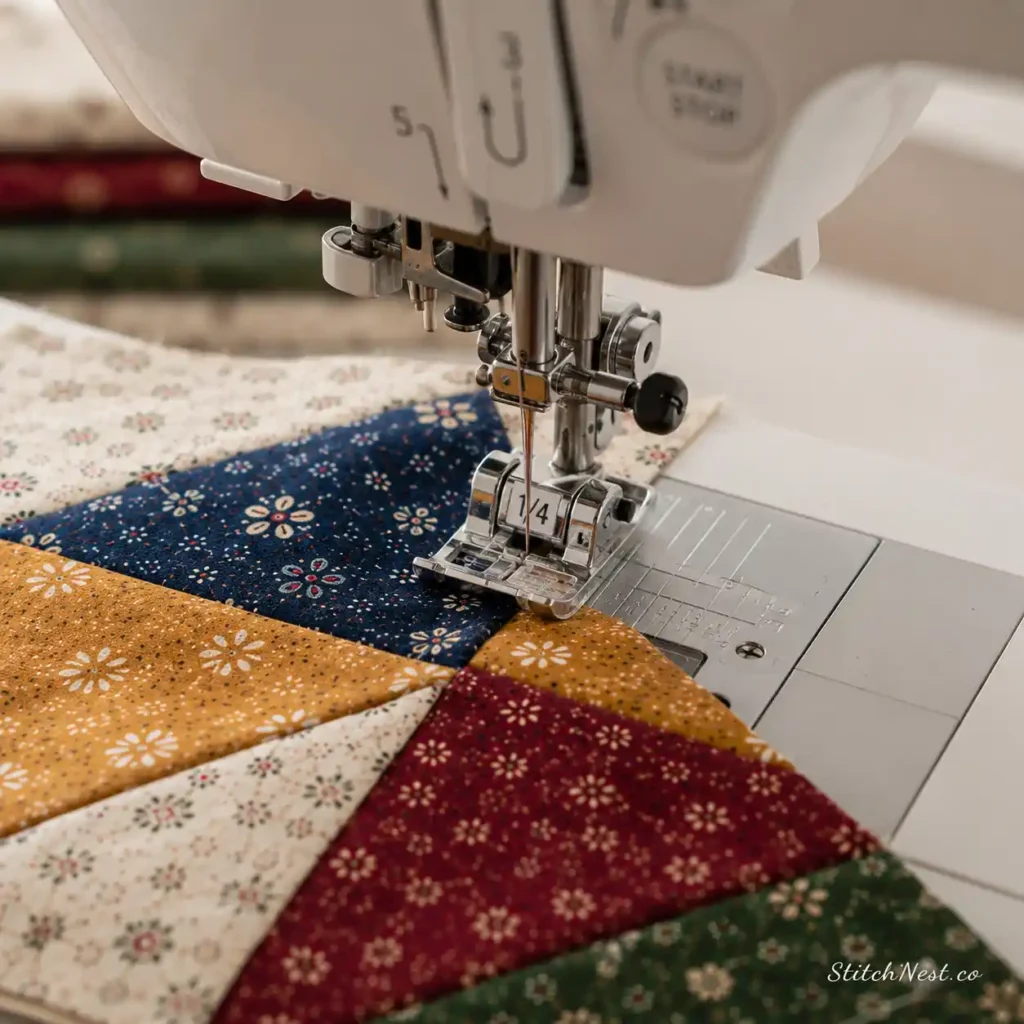
Quilting relies heavily on consistent quarter-inch seams. Even small variations can affect how well blocks fit together later. A quarter-inch presser foot helps maintain accurate seam allowances without constantly measuring or guessing.
For beginners, this tool often solves fitting problems they didn’t even realize were caused by inconsistent seam widths. It’s a simple upgrade that can make a surprisingly big difference in your results. Just buy a Quarter-Inch Presser Foot for your sewing machine brand.
Once you’ve gathered your basic quilting tools, the next step is learning a few reliable blocks. These easy quilt blocks every beginner should learn are a great place to start and will help you build confidence with your new tools.
9. Fabric Marking Pen
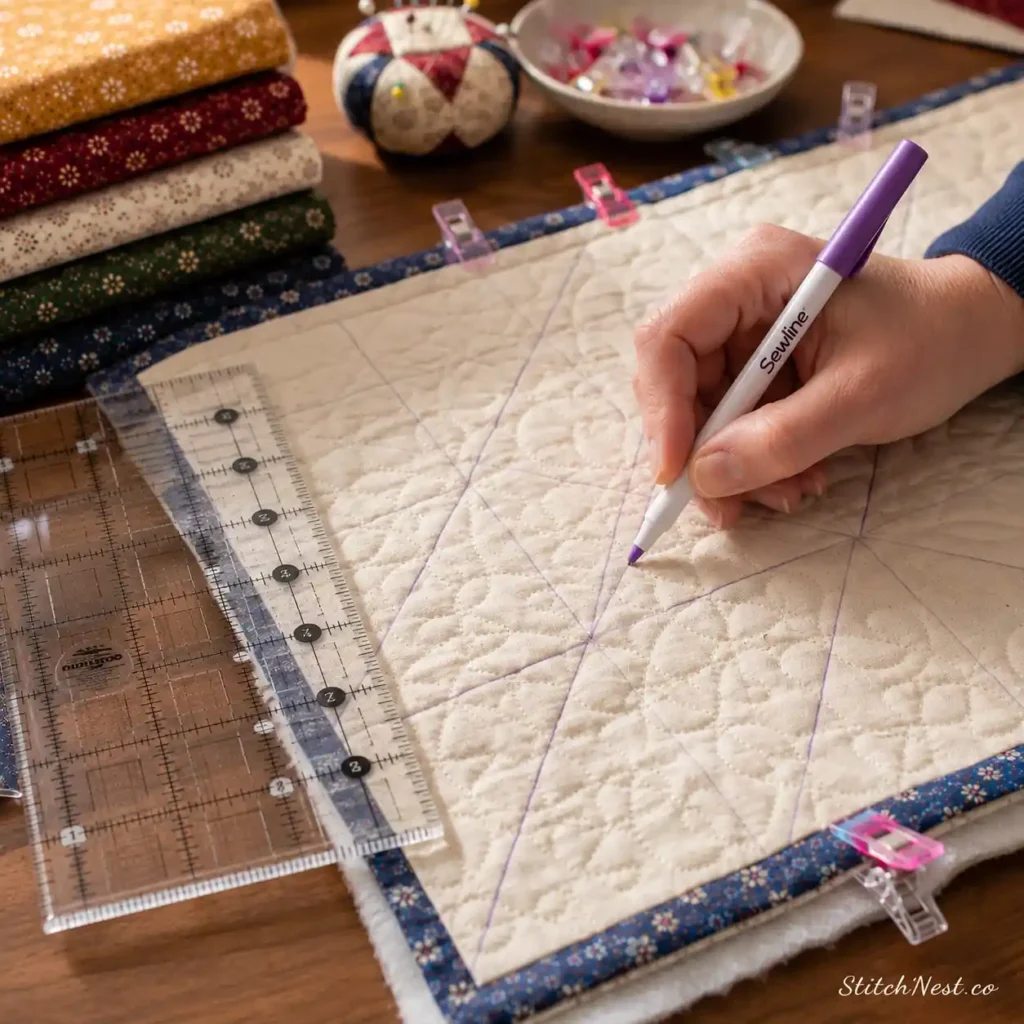
There will be times when you need to mark quilting lines, center points, or sewing guides. A washable fabric marking pen makes those tasks much easier and disappears when you’re finished. Many beginners skip this tool initially, only to realize how useful it becomes once they start quilting larger projects or experimenting with more detailed designs. We recommend this one by Clover; it’s also water-soluble!
10. Thread Snips
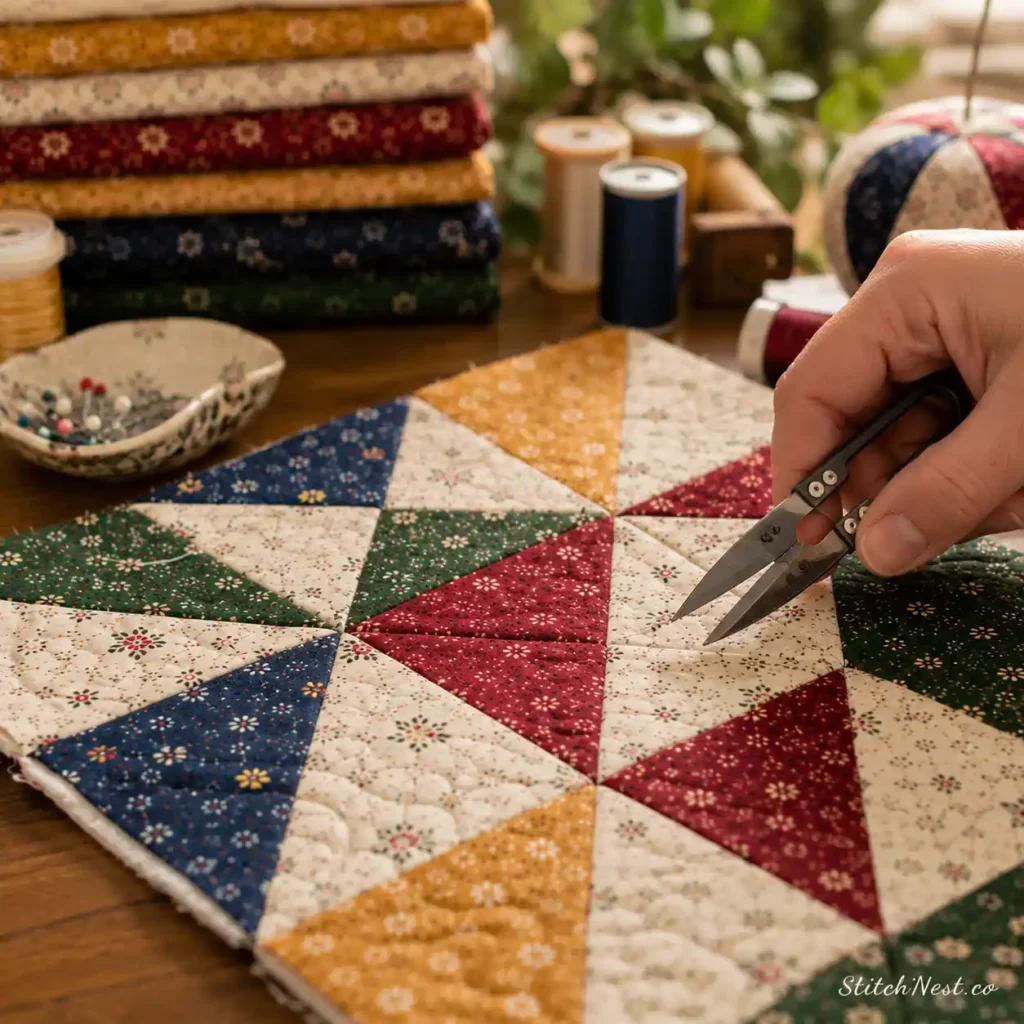
Thread snips may seem like a small tool, but they quickly become one of the most-used items near your sewing machine. Instead of constantly reaching for larger scissors, you can quickly trim thread tails and keep your workspace tidy. Once you start using thread snips regularly, you’ll understand why so many quilters keep a pair within arm’s reach at all times. Here’s one of the best ones on the market by Gingher!
11. Walking Foot
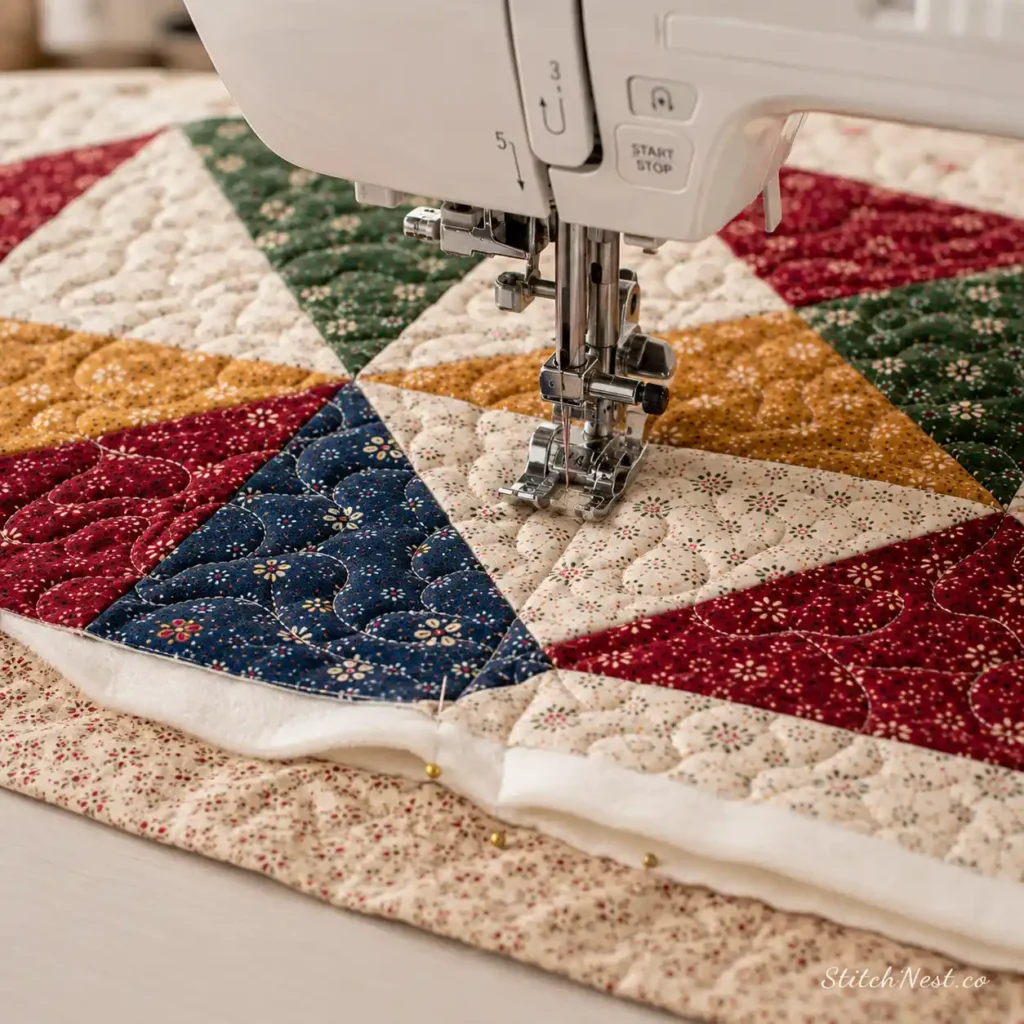
A walking foot isn’t something every beginner needs immediately, but it’s often one of the first upgrades quilters purchase. When you’re quilting multiple layers together, a walking foot helps feed the fabric evenly through the machine. This reduces shifting, puckering, and uneven stitching.
If you’re planning to quilt your own projects rather than sending them to a longarm quilter, a walking foot can be incredibly helpful. Quilters consider it one of the best investments they made after learning the basics. Grab yours here!
12. Storage Organizer
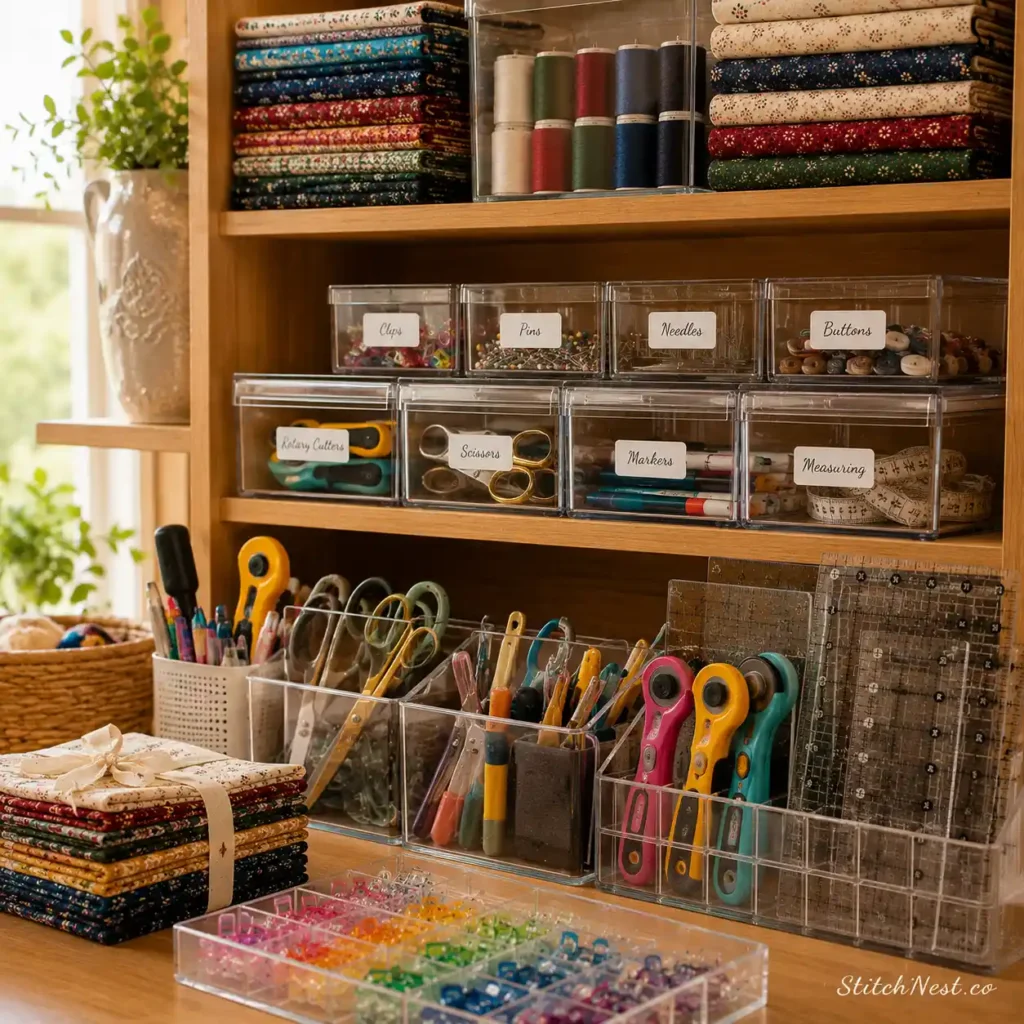
Quilting tools have a funny way of multiplying. One ruler becomes three. One rotary cutter becomes a cutter plus spare blades. Then come clips, markers, thread, binding tools, and fabric scraps.
A storage organizer helps keep everything accessible and prevents valuable tools from disappearing into random drawers around the house. You don’t need anything elaborate. Even a simple organizer can make your sewing space feel much more functional. Check out this ArtBin storage box; it’ll last you a long time.
Common Beginner Mistakes
- One of the biggest mistakes new quilters make is spending money on fabric before investing in basic tools. Beautiful fabric is important, but accurate cutting and sewing matter just as much.
- Another common issue is trying to use household scissors for quilting. Fabric deserves its own dedicated cutting tools if you want clean, accurate results.
- Many beginners also skip pressing because they’re eager to keep sewing. Unfortunately, unpressed seams can create problems that become much harder to fix later.
- Finally, don’t assume you need every quilting gadget you see online. A few reliable tools will take you much further than a collection of products you rarely use.
Looking for something to sew once your quilting supplies arrive? Browse these quilt ideas, patterns, and inspiration for every skill level for projects ranging from simple beginner quilts to more advanced designs.
You don’t need a professional sewing room or dozens of specialty gadgets to start quilting. Most beautiful quilts begin with a cutting mat, a rotary cutter, a ruler, a sewing machine, and a willingness to learn. Start with the essentials, learn how each tool works, and upgrade gradually as your skills grow. The tools you use most often are usually the ones that make quilting easier, more accurate, and more enjoyable.