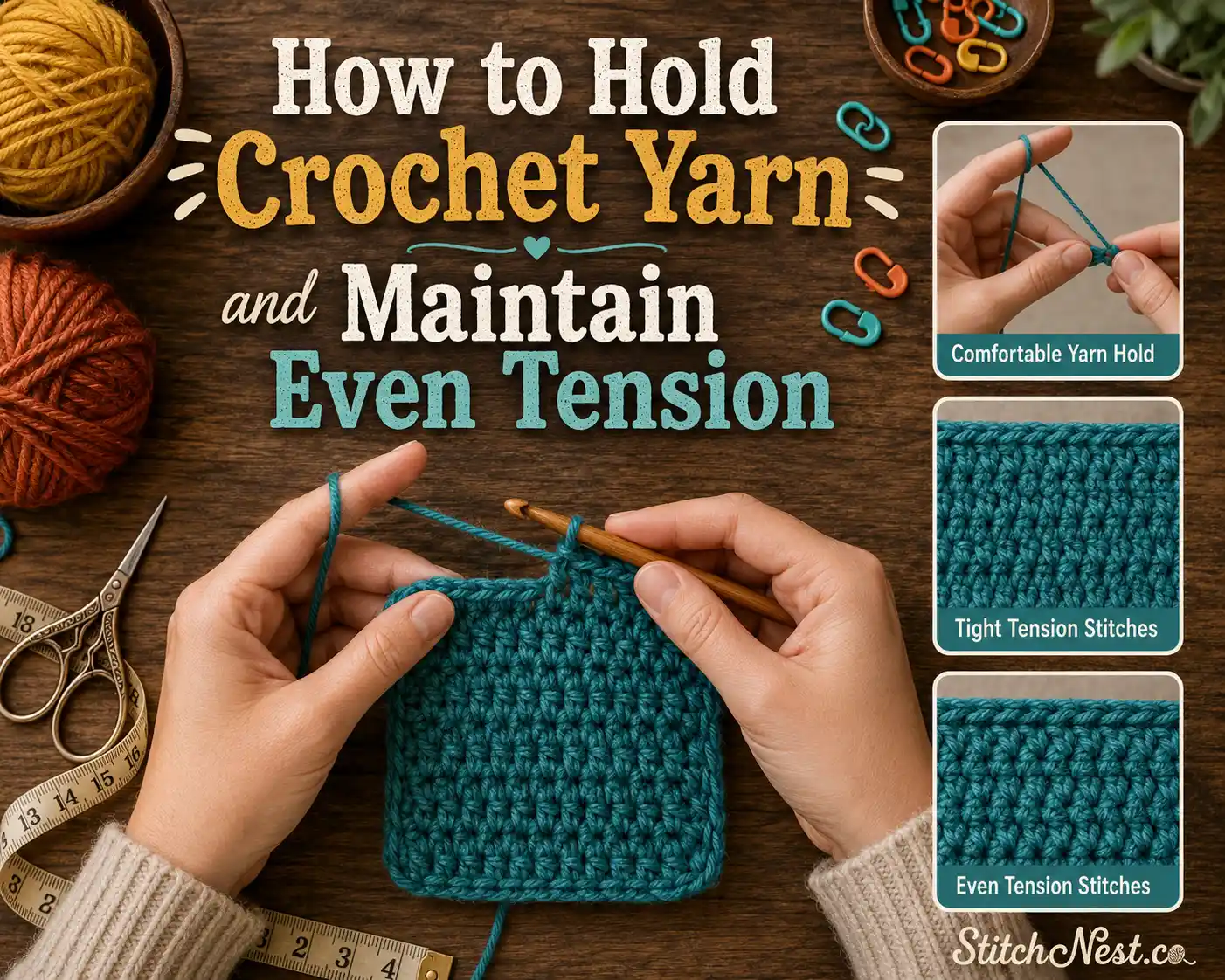
If you’ve ever looked at someone crocheting effortlessly and wondered how their stitches all seem to come out the same size, the answer usually comes down to one thing: tension. Learning crochet stitches is only half the battle. The other half is learning how to control the yarn as it moves through your fingers. That’s the part many beginners don’t expect. One minute your stitches are loose and floppy; the next they’re so tight you can barely get the hook through them. Then somehow the next row is different all over again. So here’s how to hold crochet yarn and maintain even tension!
Things You Will Need
- Lightweight cotton yarn that feels soft and breathable for practice sessions. Smooth, light-colored yarn makes it much easier to see your stitches as you learn.
- A crochet hook that works well with your yarn and feels natural in your hand.
- Stitch markers to keep track of rows, turning points, and pattern repeats.
- Yarn needle for weaving in ends neatly once your project is finished.
- Measuring tape to check your gauge and project size as you go.
Why Tension Feels So Difficult When You’re Learning Crochet
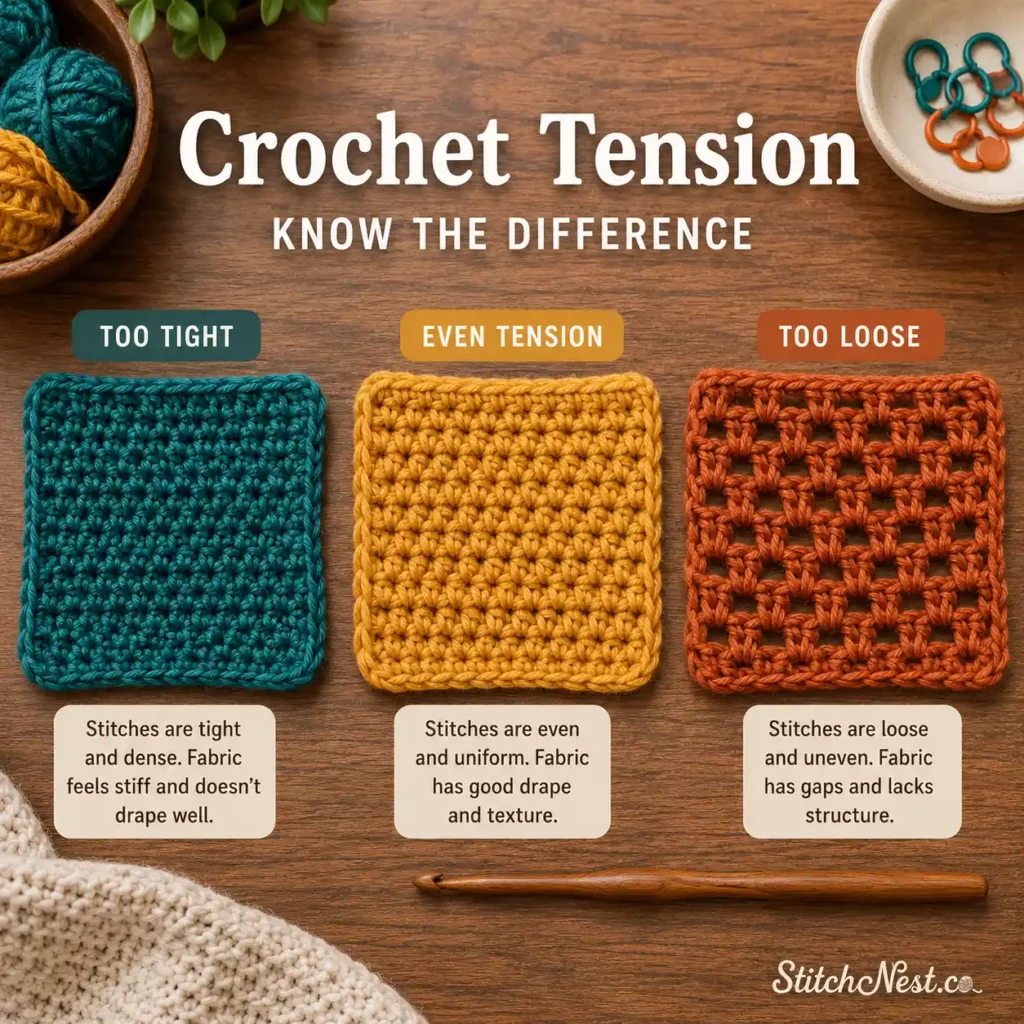
When people talk about crochet tension, they’re simply talking about how the yarn flows through your hands while you work. Good tension creates stitches that are consistent in size. Poor tension creates stitches that vary from one row to the next.
The reason beginners struggle is that they’re trying to learn several skills at the same time. You’re learning where to place the hook, how to pull through loops, how to read your stitches, and how to control the yarn all at once. That’s a lot for your hands and brain to process.
Many new crocheters think their stitches are the problem when the real issue is yarn control. In fact, once the yarn starts moving smoothly through your fingers, your stitches often improve without you consciously changing anything else.
Another thing worth knowing is that consistency matters far more than tightness. Beginners often assume tight stitches are better stitches. They aren’t. A row of evenly sized stitches is almost always more important than a row of extremely tight stitches.
Pro Tip: If your hands feel sore after ten or fifteen minutes of crocheting, you’re probably using more force than necessary. Crochet should feel controlled, not like you’re wrestling with the yarn.
Finding a Yarn Hold That Actually Feels Comfortable
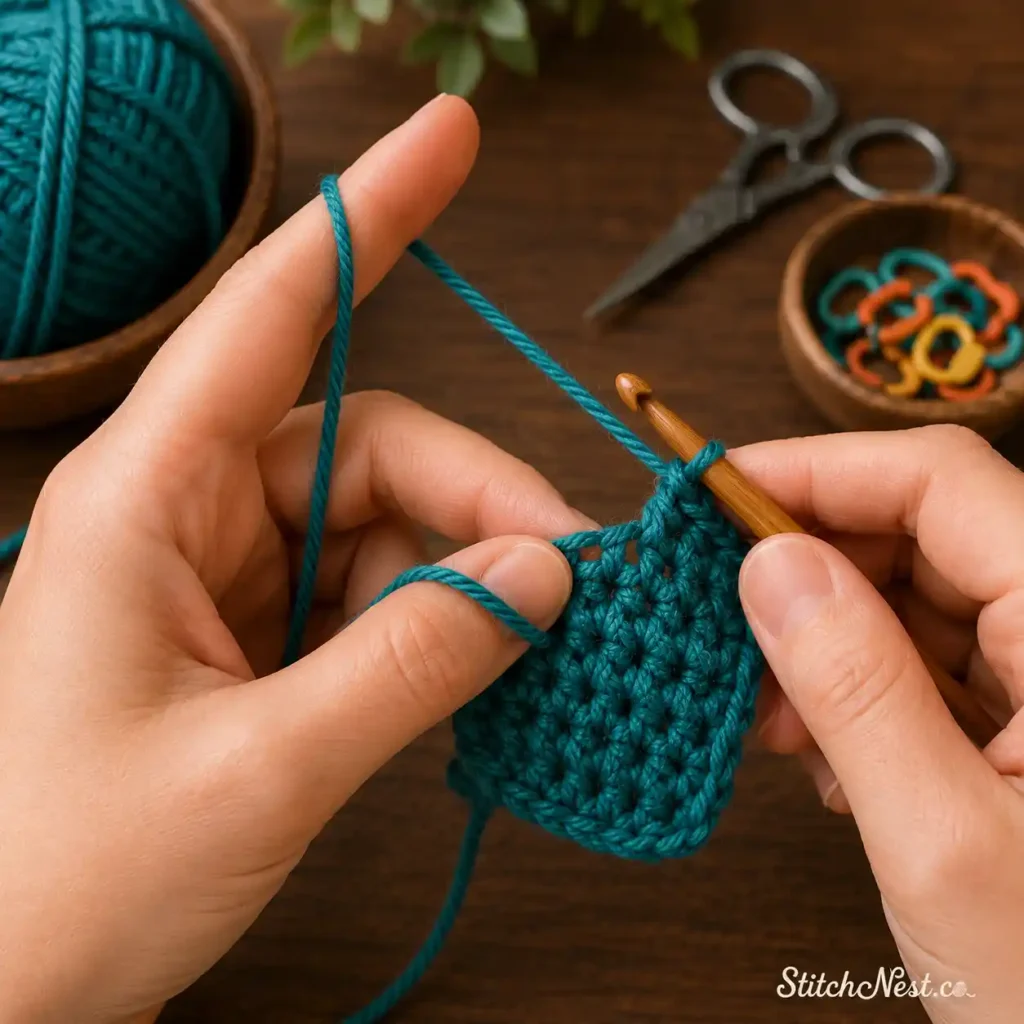
If you’ve watched crochet tutorials online, you’ve probably noticed that everyone seems to hold their yarn differently. Some crocheters wrap it around their pinky. Others weave it through several fingers. Some barely wrap it at all. That’s because there isn’t one perfect yarn hold.
Most crocheters guide the yarn through their non-dominant hand and allow it to travel over or around a few fingers before reaching the hook. The index finger usually acts as the guide, helping control how much yarn reaches each stitch. Beyond that, there are countless variations.
What you’re looking for is a setup that creates gentle resistance. The yarn should slide when you pull it with the hook, but it shouldn’t race through your fingers on its own. If it feels like you’re dragging the yarn through mud, it’s too tight. If it feels like it’s slipping away from you, it’s too loose.
Crochet patterns become much easier once you recognize the common abbreviations and instructions!
One mistake beginners make is trying to copy an experienced crocheter finger for finger. What works perfectly for one person may feel completely unnatural for someone else. Hand size, finger length, and even the way you sit can affect which yarn hold feels best. Spend some time experimenting. Crochet a small swatch using one yarn hold, then try another. Before long, you’ll find one that feels far more natural than the others.
Here’s the thing. If you’re constantly stopping to adjust the yarn, your current setup probably isn’t working for you. A comfortable yarn hold should feel almost automatic after a few rows.
A simple way to test your yarn hold is to stop crocheting for a second and gently pull the working yarn with your hook hand. The yarn should move smoothly without jerking or catching. If it suddenly releases all at once, you need more control. If it barely moves, you may be wrapping it too tightly around your fingers.
What Causes Tight and Loose Tension
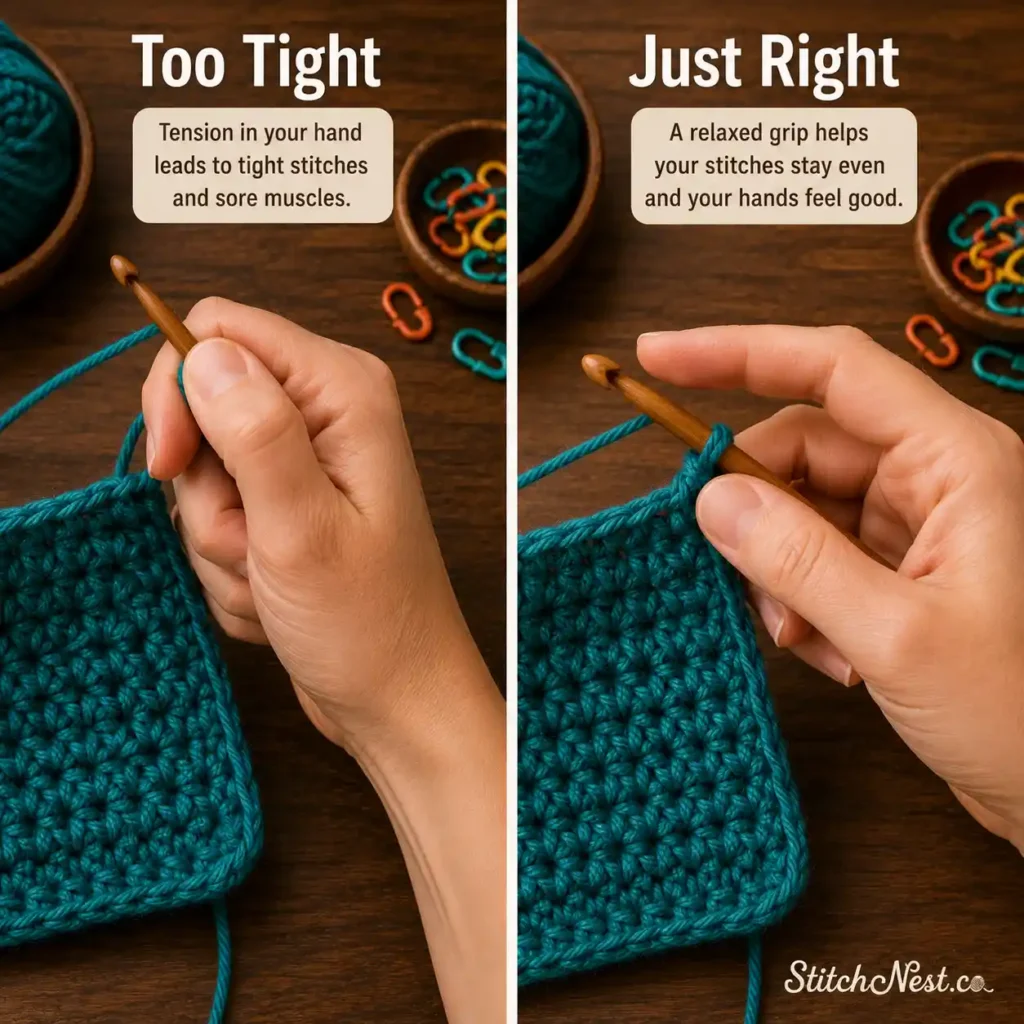
Tension isn’t controlled by your yarn hand alone. Your hook hand plays a major role too.
One of the most common beginner habits is gripping the hook very tightly. It usually happens without realizing it. You’re concentrating on every stitch, so your hand gradually tightens around the hook. As the grip tightens, the stitches often tighten too.
The opposite can happen as well. If your grip becomes too relaxed and the yarn flows too freely, the stitches may become loose and uneven.
A good way to check your tension is to pay attention to how the hook moves. It should slide into stitches comfortably. You shouldn’t have to force it. If you’re struggling to insert the hook, your tension is probably too tight.
Shoulder tension can also affect your crochet more than most people realize. Many beginners raise their shoulders slightly when concentrating. That tension travels down the arms and eventually reaches the hands.
Before you tackle your next pattern, make sure you’re comfortable with the most common crochet abbreviations. This Crochet Abbreviations Cheat Sheet for Beginners can save you a lot of confusion later.
If your stitches seem to get tighter as you work, pause for a moment. Roll your shoulders. Shake out your hands. Then continue crocheting. You’ll often notice an immediate difference.
Hand fatigue creates another common problem. Your first ten rows may look completely different from your last ten rows simply because your hands became tired.
Quick Tip: If Row 1 looks looser than Row 10, don’t assume you’re improving. In many cases, tired hands are causing the stitches to tighten gradually throughout the project.
Why Your Foundation Chain Never Matches the Rest of the Project
Almost every crocheter has experienced this at some point.
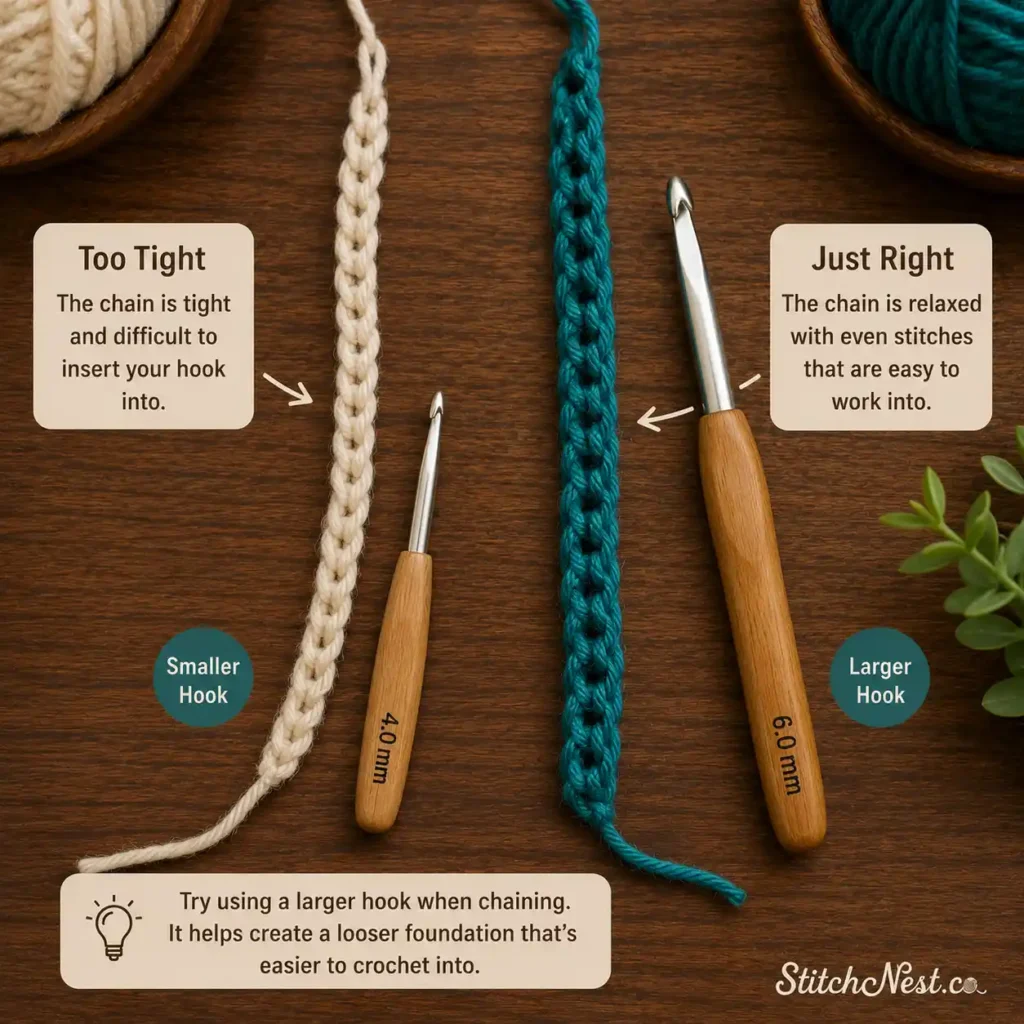
You carefully chain twenty, thirty, or even a hundred stitches. Everything looks fine. Then you begin Row 1 and suddenly the hook won’t fit through the chains. The entire row feels awkward and cramped.
This happens because beginners often make foundation chains much tighter than the stitches that follow.
When you’re creating chains, it’s easy to pull each loop snug without realizing it. By the time the chain is complete, the loops are significantly tighter than the rest of the project.
One simple solution is to use a hook that’s one size larger when making the foundation chain. Once the chain is finished, switch back to your regular hook and continue crocheting.
Many experienced crocheters still use this trick, especially for blankets, garments, and larger projects.
You can also look into foundation crochet stitches later on. These combine the foundation chain and first row into a single step and often create a much more flexible edge.
If you liked this, you’ll love our beginner’s guide to crochet hooks, check it out!
The Biggest Tension Mistake Beginners Make
The biggest mistake isn’t loose stitches.
It isn’t tight stitches.
It’s constantly trying to fix every stitch.
Many beginners pull on loops, tighten every stitch individually, and stop every few minutes to adjust something. In the process, they interrupt the natural rhythm that helps create even tension. On the other hand, experienced crocheters rarely obsess over individual stitches. Instead, they focus on maintaining a steady rhythm and letting the stitches settle into place naturally.
Crochet fabric often looks slightly uneven during the first few rows. That’s completely normal. As more rows are added, the stitches begin balancing each other out. Another mistake is comparing your stitches to photos online. Those pictures often show projects made by people with years of experience. Your goal isn’t perfection. Your goal is improvement.
A slightly uneven swatch made with relaxed hands will usually look better than a perfectly measured swatch made with tense hands and sore fingers.
Practical Tips That Actually Help
- If you’re trying to improve your tension, use a smooth, light-colored yarn when practicing. Dark yarn hides stitches, and textured yarn makes it harder to see what’s happening. A simple worsted-weight yarn allows you to focus on technique instead of fighting the material.
- Practice one stitch repeatedly rather than jumping between several different stitches. Consistency develops faster when your hands repeat the same motion over and over.
- Short practice sessions often work better than marathon crochet sessions. Ten focused minutes every day can improve tension more effectively than an hour spent feeling frustrated.
- It also helps to stop judging your tension after only a few stitches. Crochet fabric changes as it grows. Many stitches look uneven at first but settle into a much more balanced appearance after several rows.
Remember that different projects require different tension. Amigurumi usually benefits from tighter stitches. Shawls often benefit from looser stitches. Garments fall somewhere in the middle. Learning how to adjust tension for different projects is part of becoming a more confident crocheter.
Love crocheting flowers? Our DIY crochet hibiscus flower tutorial walks you through every step and shows you how to create a realistic bloom you can add to bags, hats, hair clips, and more.
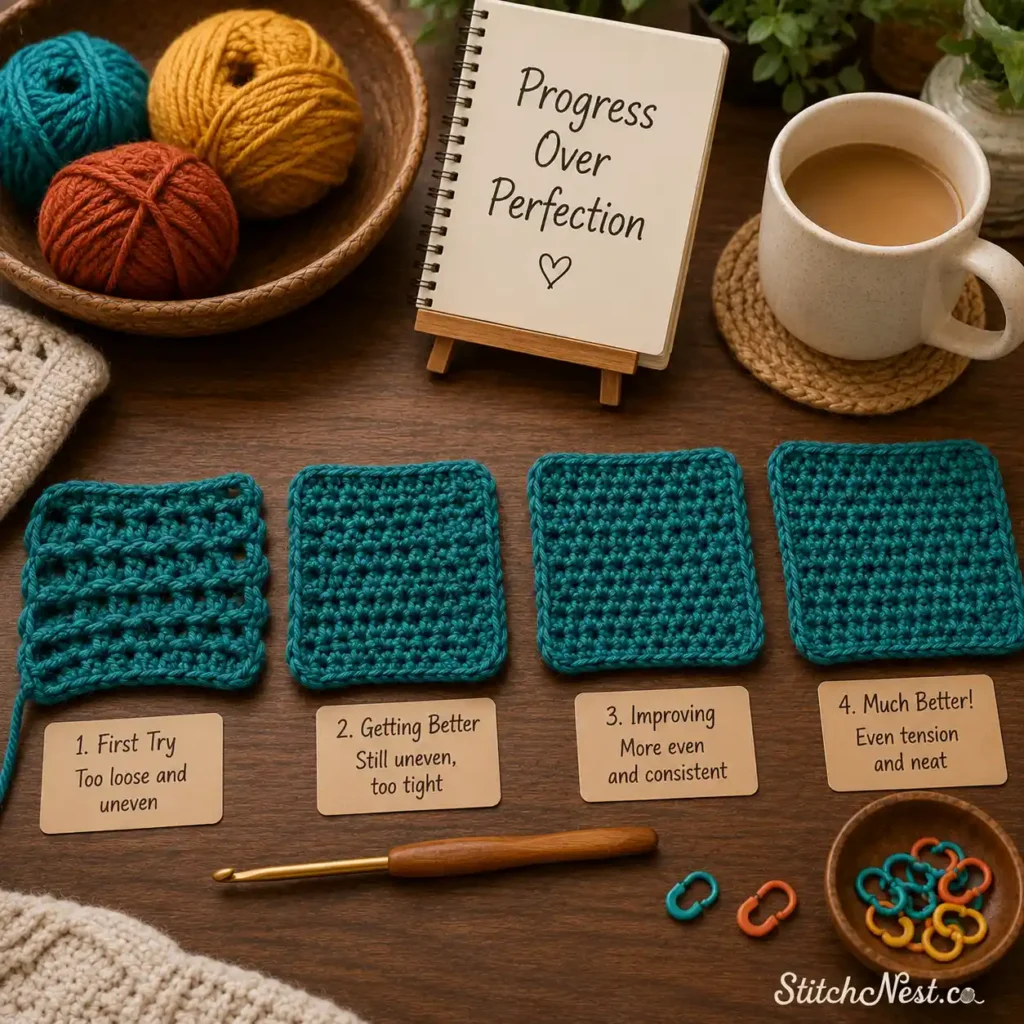
Here’s the thing! Some days your tension will simply be different than others. Fatigue, stress, posture, and even the type of yarn you’re using can affect your stitches. Don’t panic if a practice swatch looks slightly different from one you made last week. Consistency develops over months of crocheting, not over a single afternoon.
As you continue crocheting, you’ll make small adjustments without even thinking about them. Your hands will learn what works. Your tension will become more reliable. Eventually you’ll realize you’ve crocheted several rows without thinking about yarn control at all. So keep practicing, stay patient with yourself, and trust that consistency comes with experience. Every project teaches your hands a little more than the one before it.