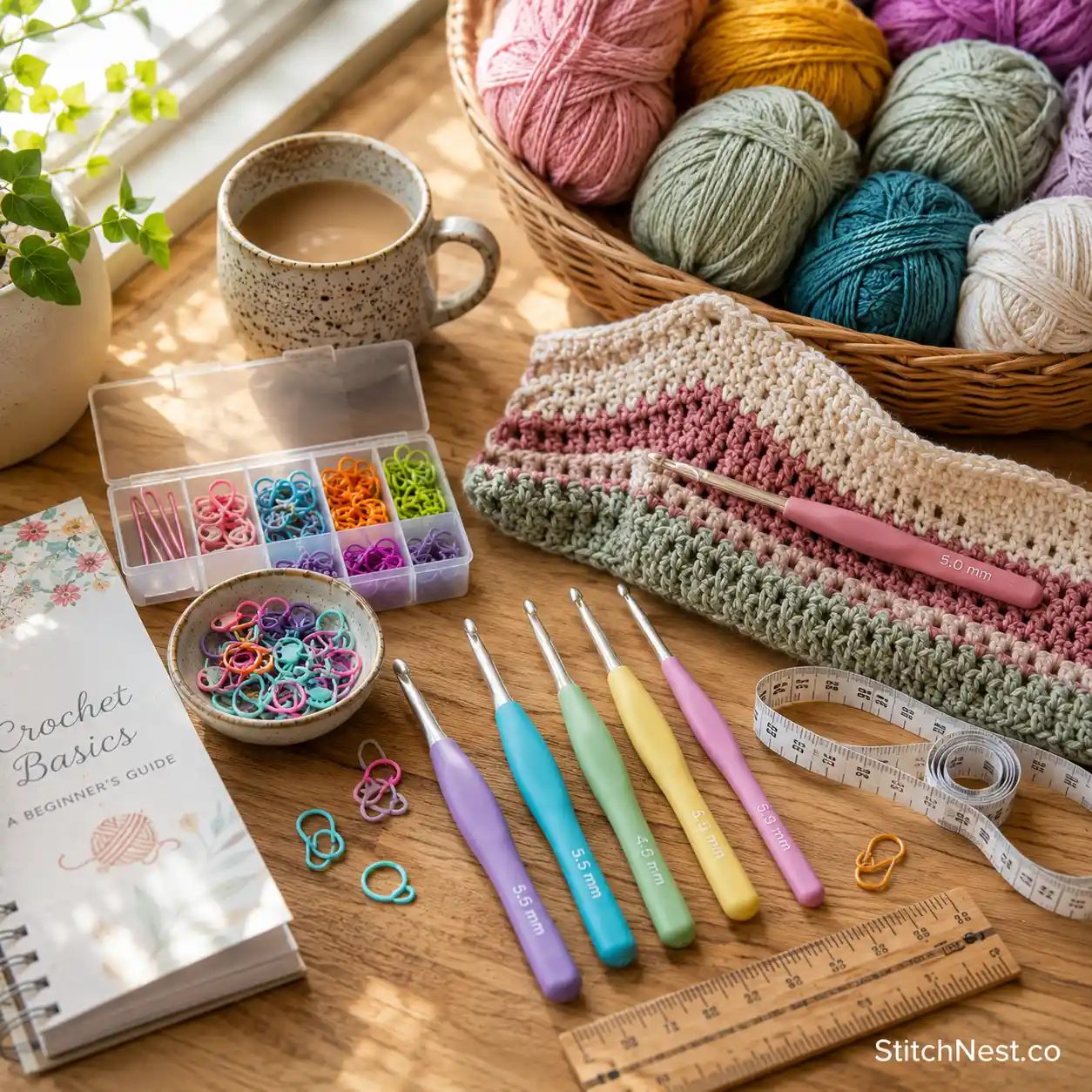
If you’ve ever walked into a craft store planning to buy a crochet hook and ended up staring at an entire wall of options, you’re in good company. Most beginners assume they need yarn, a hook, and a pattern. Then they discover hook sizes, letters, millimeters, ergonomic handles, aluminum shafts, wooden hooks, and enough choices to make their head spin. The good news is that crochet hooks are much easier to understand than they first appear. Once you know how hook sizes affect your stitches and which styles work best for different projects, you’ll feel much more confident choosing the right tool. Let’s start with this beginner’s guide to crochet hooks and work our way through everything that actually matters.
What Is a Crochet Hook?
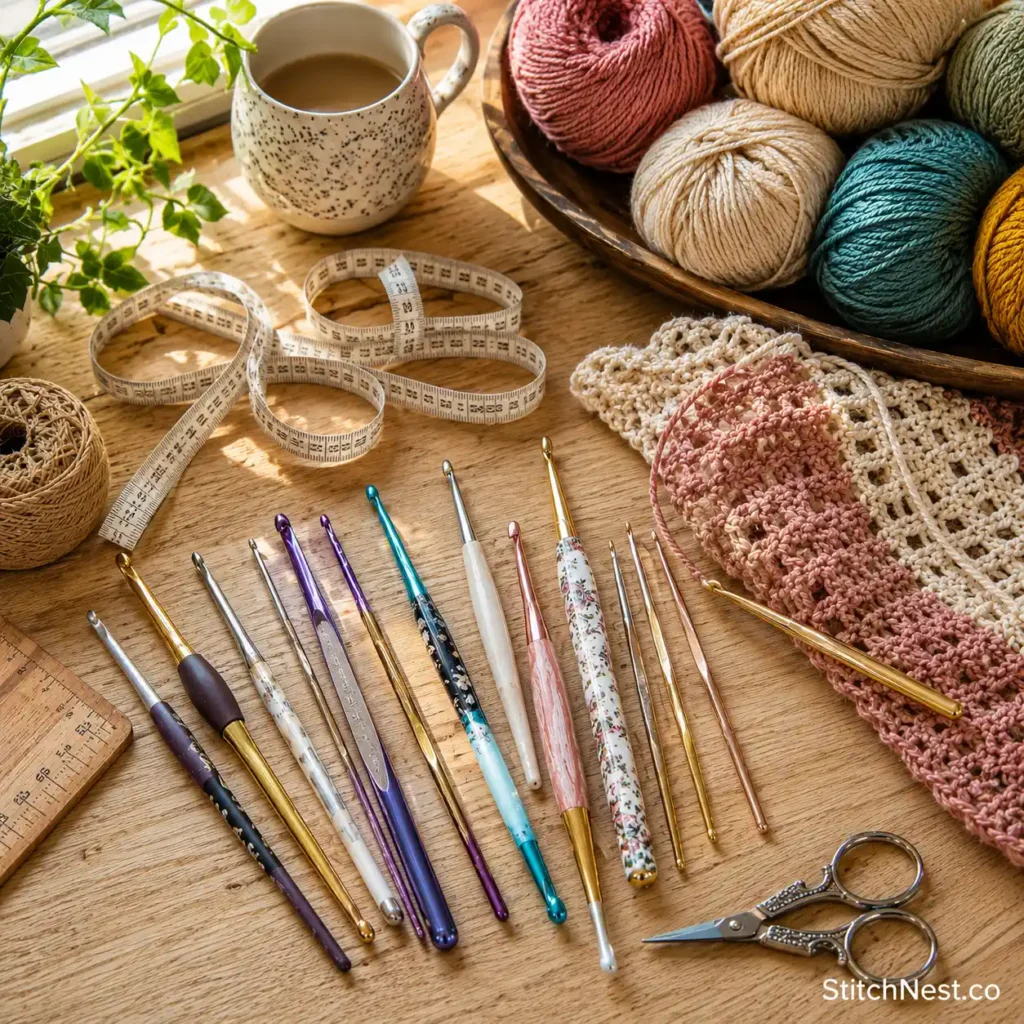
A crochet hook is the tool used to pull yarn through loops and create stitches. Every crochet project begins with one, whether you’re making a dishcloth, baby blanket, granny square, stuffed animal, or sweater.
At first glance, hooks don’t seem all that different from one another. But the reality is that a hook plays a major role in how your finished project looks and feels. Two crocheters can use the same yarn and the same pattern but end up with noticeably different results simply because they’re using different hook sizes. That’s one reason experienced crocheters often talk about hooks almost as much as yarn.
Many beginners spend a lot of time searching for the “best” crochet hook. Most experienced crocheters will tell you there isn’t one. The best hook is the one that feels comfortable in your hand and produces the fabric you’re trying to create.
Understanding Crochet Hook Anatomy
Every crochet hook has a few basic parts:
- Handle
- Shaft
- Throat
- Hook
- Tip
When you’re new to crochet, these details may not seem important. After a few projects, you’ll start noticing differences immediately. Some hooks have deeper grooves that hold yarn securely. Others have sharper tips that slip more easily into tight stitches. Some feel smooth and fast. Others give you a little more control over each stitch.
That explains why two crocheters can sit side by side working on the same pattern and still prefer completely different hooks.
Crochet patterns become much easier once you recognize the common abbreviations and instructions.
Beginner’s Guide to Crochet Hooks | Sizes Explained
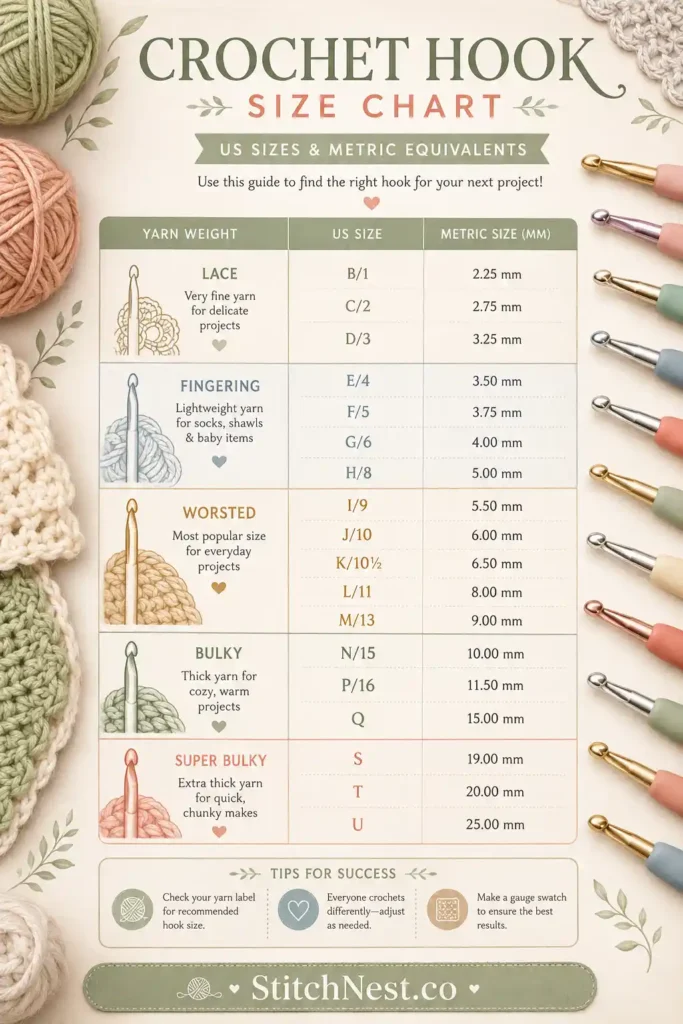
Hook sizing is often the first thing that confuses beginners. In the United States, crochet hooks are usually labeled with both letters and metric measurements. A hook may say H-8 on the package, but you’ll also see 5 mm listed nearby.
One pattern might call for an H-8 hook, and another might ask for 5 mm. They’re the same size. That’s why experienced crocheters usually pay attention to the millimeter number first. It avoids confusion when patterns come from different countries. You can save the image above for quick reference.
Here’s a quick reference: When a pattern calls for a specific hook, always pay attention to the millimeter measurement first.
And here’s a tip worth remembering: Pattern designers usually recommend a hook size as a starting point, not a rule. If your stitches run tight, you may need a larger hook. If your stitches run loose, you may need a smaller one.
How Hook Size Changes Your Crochet
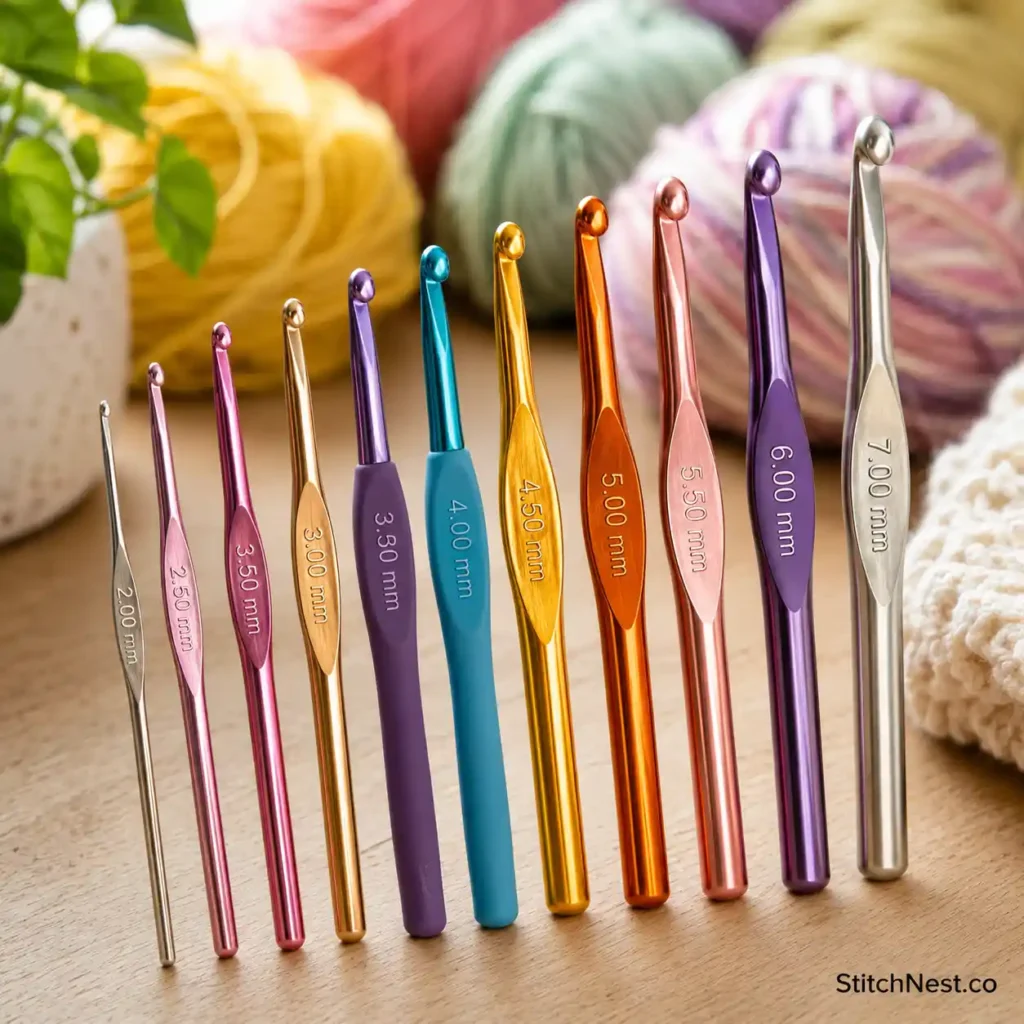
One of the biggest “aha” moments in crochet comes when you realize the hook controls the fabric just as much as the yarn does.
A larger hook creates bigger loops. Those larger loops create a looser fabric with more drape. That’s why shawls, lightweight blankets, and airy scarves often use larger hooks. On the other hand, a smaller hook creates tighter stitches. The fabric becomes firmer, denser, and more structured.
Think about amigurumi, the small stuffed animals that are popular with crocheters. Most amigurumi patterns intentionally use smaller hooks because tighter stitches help keep stuffing from peeking through. Now imagine making the same blanket twice using identical yarn. One version uses a 4 mm hook and the other uses a 6 mm hook.
The larger-hook version will likely feel softer, drape more easily, and grow much faster. The smaller-hook version will feel sturdier and show stitch texture more clearly.
Worth remembering – If a project feels stiff compared to the pattern photos, don’t rush out and buy different yarn. Try increasing your hook size first. Even such a small adjustment can make a surprising difference.
Before you tackle your next pattern, make sure you’re comfortable with the most common crochet abbreviations. This Crochet Abbreviations Cheat Sheet for Beginners can save you a lot of confusion later.
Beginner’s Guide to Crochet Hooks | Types of Crochet Hooks
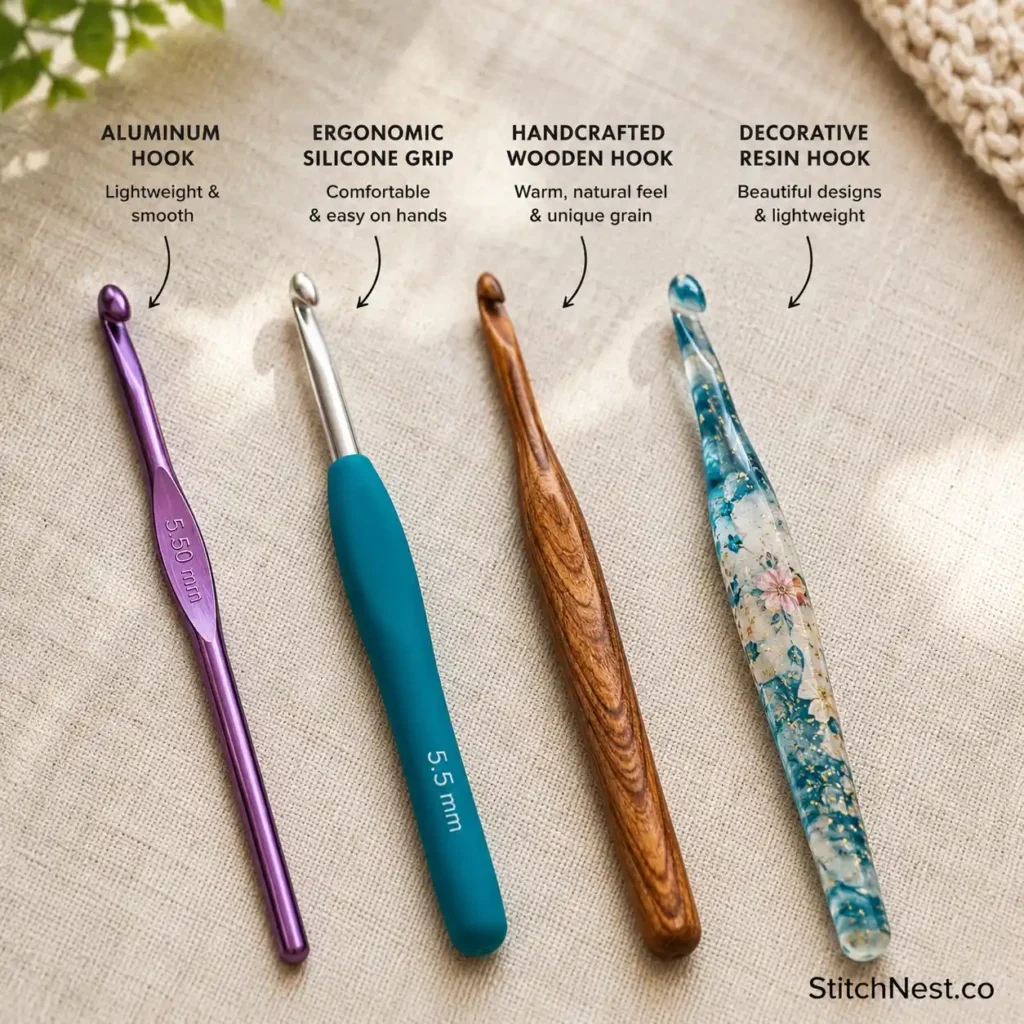
Aluminum Hooks
Most crocheters start here. Aluminum hooks! If you walk into any craft store today, chances are the first hook you’ll pick up is aluminum. Many of us learned with one, dropped it on the floor a hundred times, and still use it years later. A simple aluminum hook can last for years, making it one of the smartest purchases a beginner can make.
Ergonomic Hooks
Long crochet sessions can be tough on your hands. Ergonomic hooks have larger handles designed to reduce strain and improve comfort. Many crocheters switch to ergonomic hooks after making their first large blanket or wearable project and never go back.
Wooden Hooks
Wood hooks feel completely different from aluminum. They offer a little more grip, which many crocheters appreciate when working with slippery yarns. They also feel warmer in the hand during long crafting sessions.
Resin Hooks
Resin hooks tend to catch your eye first. Swirls, colors, glitter, and handcrafted designs make them popular with crocheters who enjoy collecting beautiful tools as much as using them.
Fun Fact – Ask a group of crocheters about their favorite hook brand, and you’ll probably start a lively debate. Hook preferences can become surprisingly personal after a few years in the craft.
Love crocheting flowers? Our DIY crochet hibiscus flower tutorial walks you through every step and shows you how to create a realistic bloom you can add to bags, hats, hair clips, and more.
Which Hook Should a Beginner Buy?
If you’re buying your very first hook, don’t overcomplicate it.
A 5 mm (H-8) hook paired with a medium-weight yarn is one of the easiest combinations for learning basic stitches.
Why? The stitches are large enough to see clearly but not so large that they become awkward to manage.
Many beginner scarves, dishcloths, blankets, and granny square projects use this size range, so you’ll get plenty of use out of it. So a quality 5 mm ergonomic hook is often a better investment than purchasing a giant set immediately.
It’s also the hook people reach for most often. If you ask ten experienced crocheters which hook gets the most use, you’ll hear different answers. Still, the 5 mm hook shows up again and again because it works with many popular yarns and beginner-friendly patterns.
Hook Sizes for Popular Crochet Projects
Different projects tend to gravitate toward certain hook sizes.
- Dishcloths are commonly made with 4 mm to 5 mm hooks because they create durable fabric that holds up well during regular use.
- Blankets often use hooks between 5 mm and 6 mm. That range balances stitch definition with reasonable progress.
- Amigurumi patterns frequently use 2.5 mm to 3.5 mm hooks because tight stitches create a cleaner finished toy.
- Wearables vary quite a bit depending on yarn choice, but many fall somewhere between 4 mm and 6 mm.
These aren’t strict rules. They’re simply common starting points you’ll notice appearing repeatedly across patterns.
Common Crochet Stitches and Hook Sizes
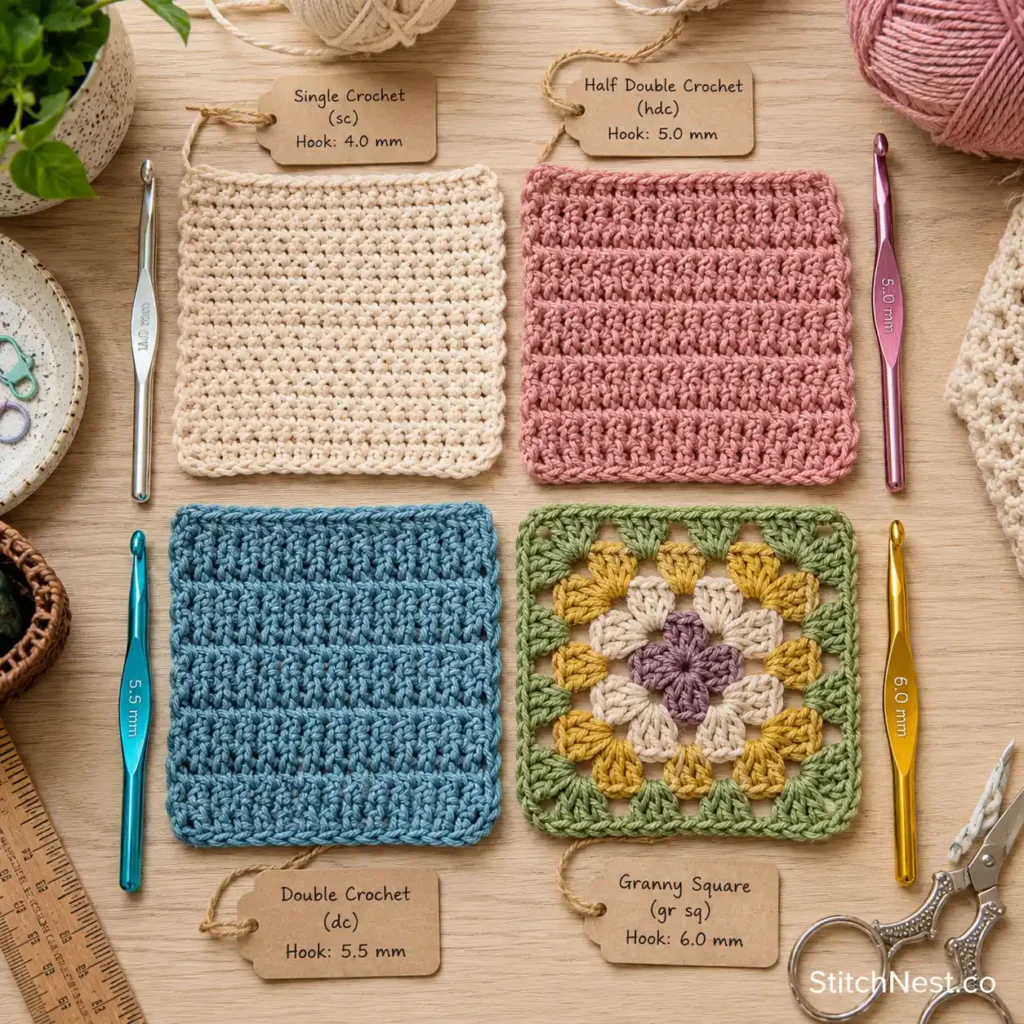
Many beginners assume certain stitches require specific hook sizes. In reality, the stitch is only part of the equation. The hook you choose changes how that stitch behaves, which is why the same stitch can look completely different from one project to another.
Single Crochet
Single crochet naturally creates a firm, structured fabric, which is one reason it appears so often in dishcloths, baskets, amigurumi, and sturdy bags. Pair it with a smaller hook and the fabric becomes even denser. A larger hook softens the stitch and gives it a little more flexibility. If you’re making something that needs to hold its shape, single crochet and a slightly smaller hook are often a reliable combination.
Half Double Crochet
Many crocheters consider half double crochet the workhorse of the craft. It works up faster than single crochet but still creates a fabric with good structure. That’s why you’ll see it used in blankets, scarves, hats, and home décor projects. A 5 mm or 5.5 mm hook is a common starting point because it creates stitches that are easy to see without making the fabric feel too loose.
Want a project you can finish in an afternoon? This cute crochet ghost is one of our fastest and most satisfying seasonal makes.
Double Crochet
Double crochet creates taller stitches and a more open texture. With a larger hook, the fabric develops beautiful drape that works well for shawls, lightweight throws, and garments. A smaller hook brings the stitches closer together and highlights their texture. If you’ve ever picked up a crochet blanket that feels soft and airy, chances are good it was made with double crochet and a generously sized hook.
Granny Squares
Granny squares are often where beginners first notice how much hook size matters. A smaller hook creates compact squares with defined corners, while a larger hook opens up the spaces and gives the square a lighter appearance. Most granny square patterns use hooks between 4 mm and 5.5 mm, though the best choice depends on the yarn and the look you’re hoping to achieve.
One thing worth remembering is that stitches don’t exist on their own. The yarn, hook, and stitch all work together. If a project doesn’t look quite right, changing your hook size is often the first adjustment worth trying.
If your stitches never seem to look the same from one row to the next, this guide on how to hold crochet yarn and maintain even tension can help.
Practical Tips for Beginner Crocheters
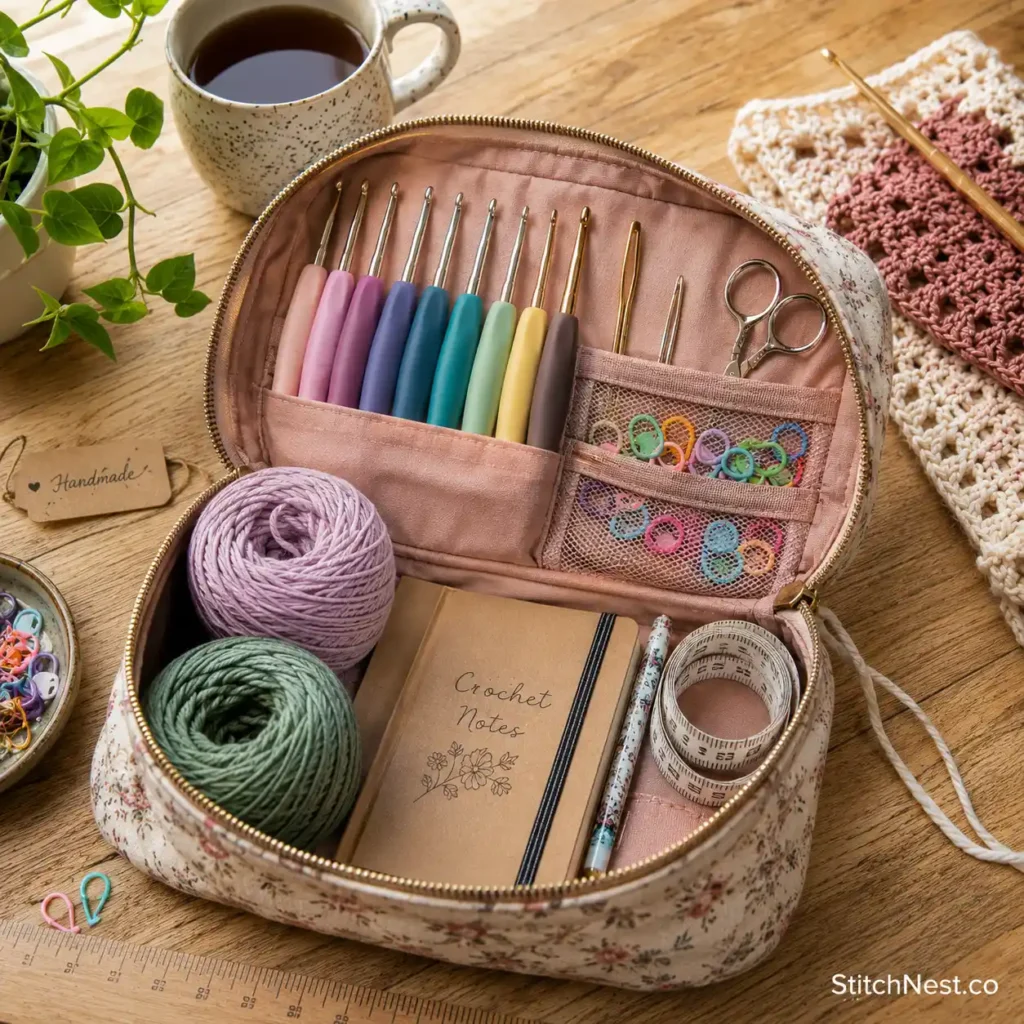
- Keep a small notebook or phone note listing the hook size used for each project. Months later, you’ll be grateful when you want to recreate a favorite result.
- Pay attention to how your hands feel during longer crochet sessions. Discomfort is often a sign that a different hook style may work better for you.
- Don’t assume expensive hooks automatically produce better crochet. Comfort and technique matter far more than price.
Common Beginner Mistakes You Should Avoid
One of the most common mistakes is buying a large hook set before learning which sizes you’ll actually use. Many crocheters discover they reach for the same few hooks repeatedly and rarely touch the rest.
Another issue comes from ignoring gauge. It’s tempting to skip the swatch and start crocheting immediately, especially when you’re excited about a new project. Unfortunately, that shortcut often leads to blankets that are too small, sweaters that don’t fit, or projects that look very different from the pattern photos.
Almost every crocheter has finished a project, held it up, and wondered why it looks nothing like the pattern photo. Before assuming you’ve done something wrong, check your hook size. That tiny number stamped on the handle causes more beginner frustration than almost anything else. More often than not, the issue isn’t skill. A different hook size, a different yarn, or a small tension adjustment is usually the real solution.
If you’re looking for a beginner-friendly amigurumi project, our DIY Crochet Ladybug Tutorial teaches you how to crochet an adorable 3D ladybug with step-by-step instructions, helpful tips, and plenty of finishing advice.
Crochet hooks may look simple, but they influence nearly every part of a project. Understanding hook sizes, materials, and styles will save you time, frustration, and unnecessary purchases. Start with a comfortable 5 mm hook, spend time learning how different sizes affect your stitches, and don’t be afraid to experiment. Before long, you’ll have a favorite hook that somehow ends up in your hand every time you start a new project.