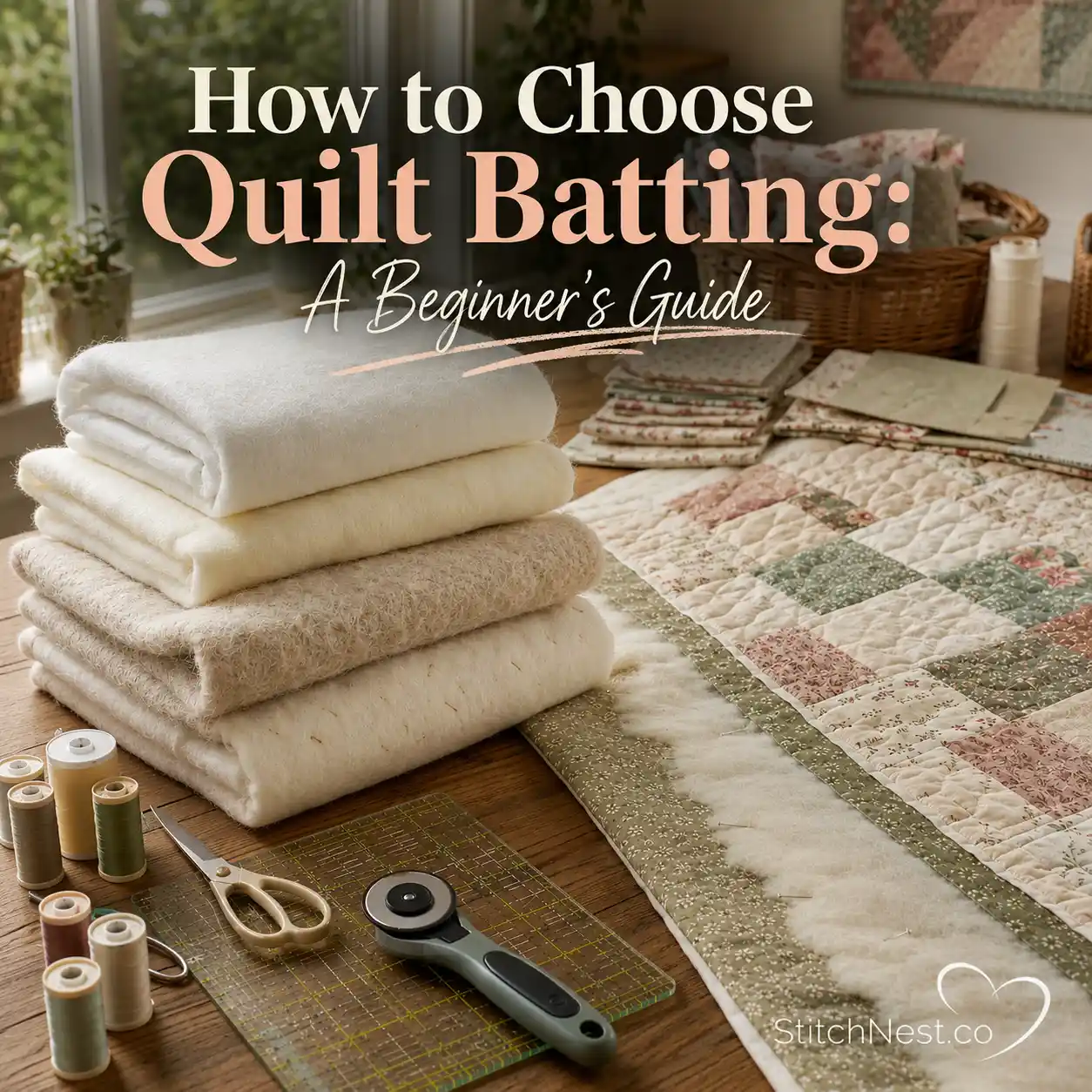
If you’ve ever walked into a quilt shop and stared at shelves full of batting rolls, wondering which one to buy, you’re definitely not alone. Batting is one of the most important parts of a quilt, yet it’s often the least understood. Many beginners spend weeks choosing fabrics and patterns, only to grab the first batting they see. The truth is, your batting affects how warm your quilt feels, how it drapes, how much your quilting stitches stand out, and even how well it holds up after years of use. We’ll walk through everything you need to know, from batting fibers and loft to sizing, quilting distance, and how to choose the best batting for different projects.
What Is Quilt Batting?
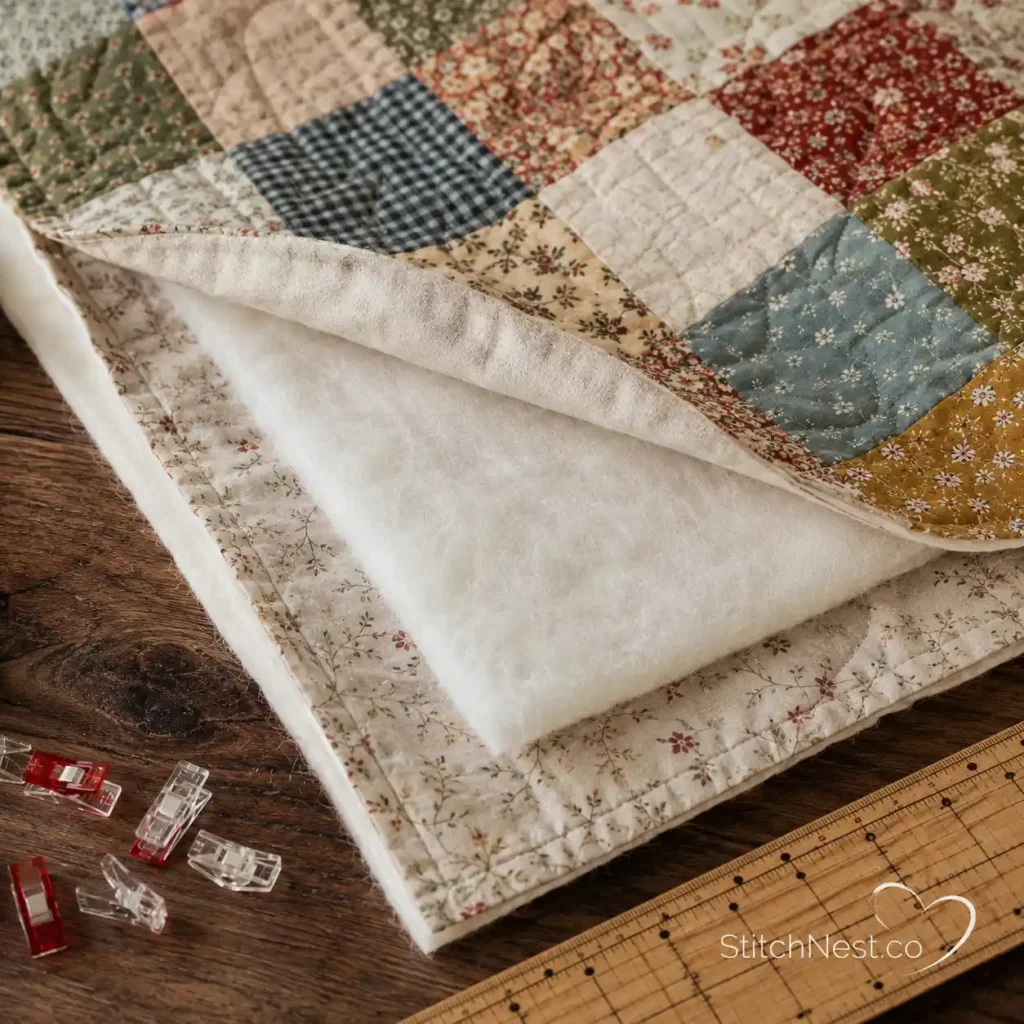
Quilt batting is the middle layer of a quilt, sandwiched between the quilt top and the backing fabric. Think of it as the part that gives your quilt its body. Without batting, a quilt would simply be two layers of fabric stitched together with very little structure or warmth.
Batting adds softness, insulation, and shape. It also affects how your quilting stitches appear once the quilt is finished. Some battings create a flat, traditional look, while others give the quilt more loft and make stitched designs stand out with extra texture.
Although batting stays hidden inside the quilt, it plays a huge role in the finished result. Two quilts made from the exact same fabrics can look completely different simply because they use different types of batting.
Quick Tip: If you’re making your very first quilt, don’t overthink batting. Choosing a good-quality cotton or cotton blend batting is usually a safe and beginner-friendly option.
If you’re just getting started, our guide to quilting tools for beginners: everything you need to start quilting will help you build a solid toolkit before choosing your batting.
Why Batting Matters More Than Most Beginners Realize
Many new quilters think batting is only there to add warmth, but it does much more than that.
The batting determines how your quilt feels when someone wraps up in it. It affects how flexible the quilt is, how heavy it feels, and how much texture appears after quilting. It even influences how often you’ll need to quilt because every batting has a recommended maximum distance between quilting lines.
Imagine two identical quilt tops. One uses low-loft cotton batting, and the other uses lofty polyester batting. The cotton quilt will lie flatter with crisp stitch definition, while the polyester version will have puffier sections between quilting lines. Neither is better; they’re simply designed for different results.
That’s why experienced quilters usually choose their batting before they even start piecing the quilt top. Knowing how you want the finished quilt to look makes every other decision easier.
Types of Quilt Batting
One of the first things you’ll notice is that batting comes in several different fibers. Each has its own strengths, and none of them is perfect for every project.
1. Cotton Batting
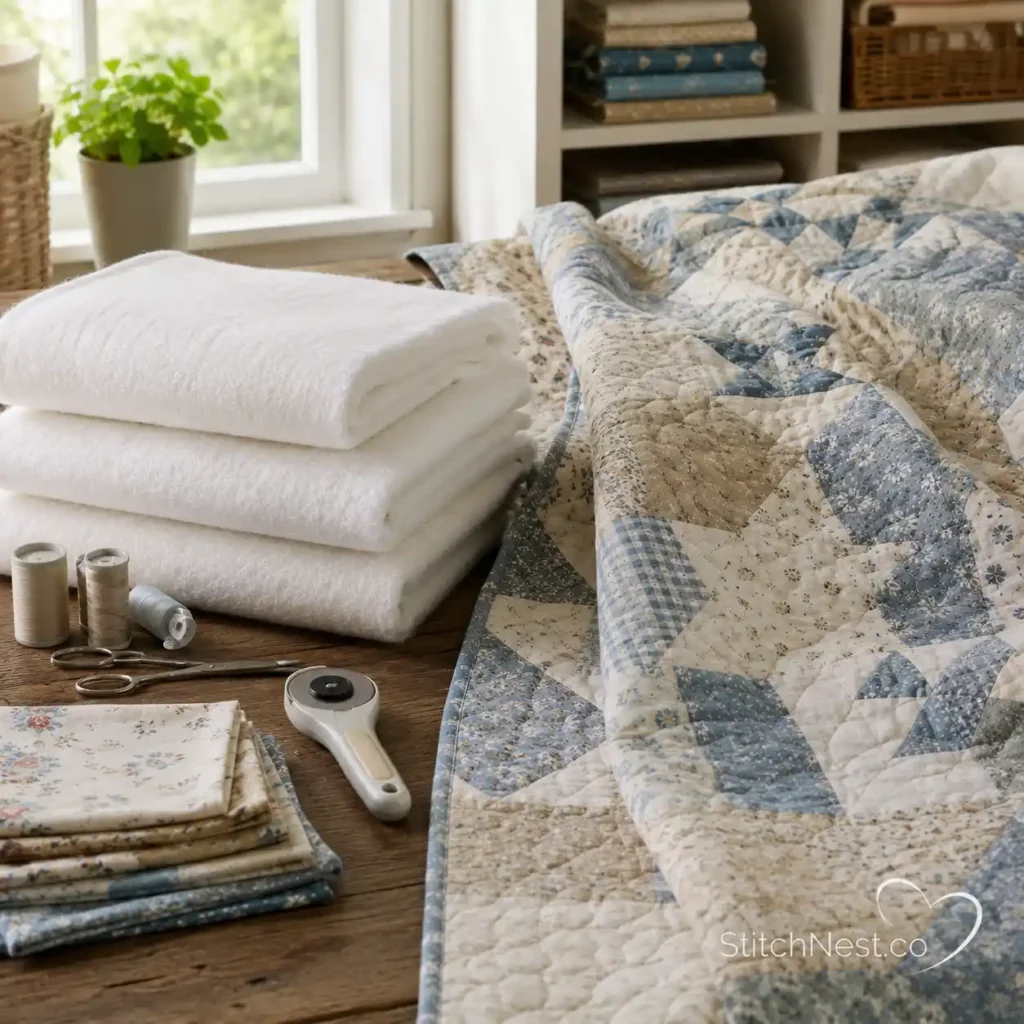
Cotton batting is one of the most popular choices for everyday quilts, and for good reason. It creates a smooth, traditional finish with very little loft, allowing piecing and quilting stitches to take center stage.
It also becomes softer with each wash, making it a favorite for quilts that will actually be used instead of displayed. Many baby quilts, bed quilts, and lap quilts are made with cotton batting because it feels comfortable without becoming overly bulky.
If you’re looking for dependable all-around batting, Warm & Natural Cotton Batting is one of the most popular choices among home quilters. It offers beautiful stitch definition, washes well, and works for everything from baby quilts to bed quilts.
Cotton batting does shrink slightly after washing, which creates that beautiful crinkled texture many quilters love. If you’ve ever admired an older quilt with gentle puckering around the quilting lines, there’s a good chance cotton batting played a role.
That slight shrinkage is one of the reasons many traditional quilts develop the soft, textured look people associate with handmade quilts. If you’d rather keep your quilt looking smoother after washing, a polyester or cotton-poly blend may be a better choice.
Quick Tip: Cotton batting is an excellent first choice because it behaves predictably and works well for almost every beginner quilting project.
Cotton batting is also a great choice for many of the beginner-friendly projects featured in our classic Ohio Star quilt patterns you’ll love sewing roundup.
2. Polyester Batting
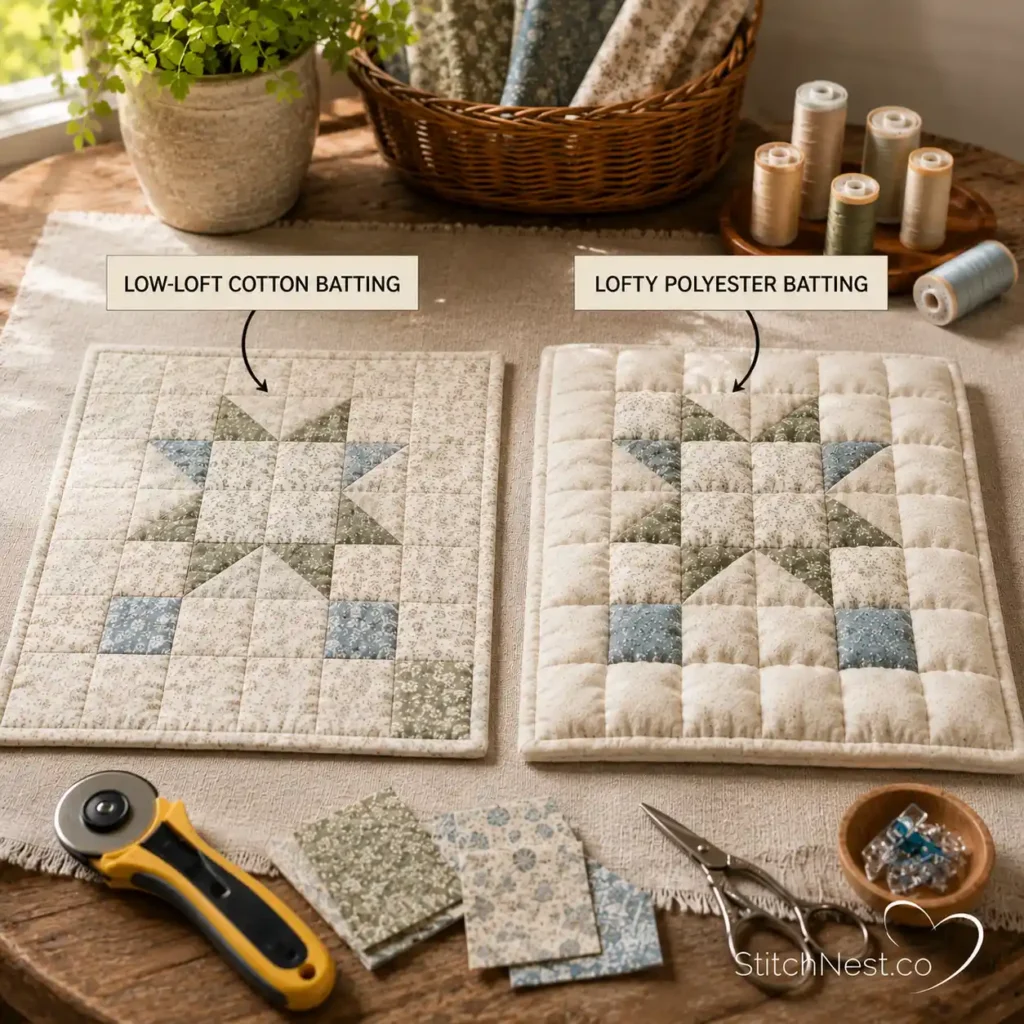
Polyester batting is known for its loft. Instead of lying flat, it creates fuller areas between quilting stitches, giving quilts a softer, puffier appearance.
It resists shrinking much better than cotton and stays lightweight even in larger quilts. That makes it popular for comforters, children’s quilts, and decorative quilts where extra loft is part of the design.
Because polyester has more loft, you may notice the layers shifting a little more during basting than they would with cotton batting. Taking a little extra time to pin or spray baste thoroughly usually keeps everything nicely in place.
One thing to keep in mind is that polyester can make quilting stitches appear less defined than cotton. If your quilting design is the main feature of the quilt, cotton or wool may highlight those stitches more clearly.
If you’re planning a decorative wall quilt, you’ll find plenty of inspiration in our free Bargello quilt patterns every quilter should bookmark collection.
3. Wool Batting
Wool batting has earned a loyal following among experienced quilters because it combines warmth, loft, and excellent stitch definition.
Despite being warm, wool isn’t especially heavy. It naturally traps air, making quilts feel cozy without weighing them down. Many show quilts and heirloom quilts use wool batting because quilting designs stand out beautifully against its gentle loft.
Wool also springs back well after being compressed, helping quilts maintain their shape over time.
It’s also naturally breathable, so many quilters enjoy using wool throughout the year instead of saving it only for winter quilts.
The only downside is cost. Wool batting is usually more expensive than cotton or polyester, so many quilters save it for projects they plan to keep for years.
4. Bamboo Batting
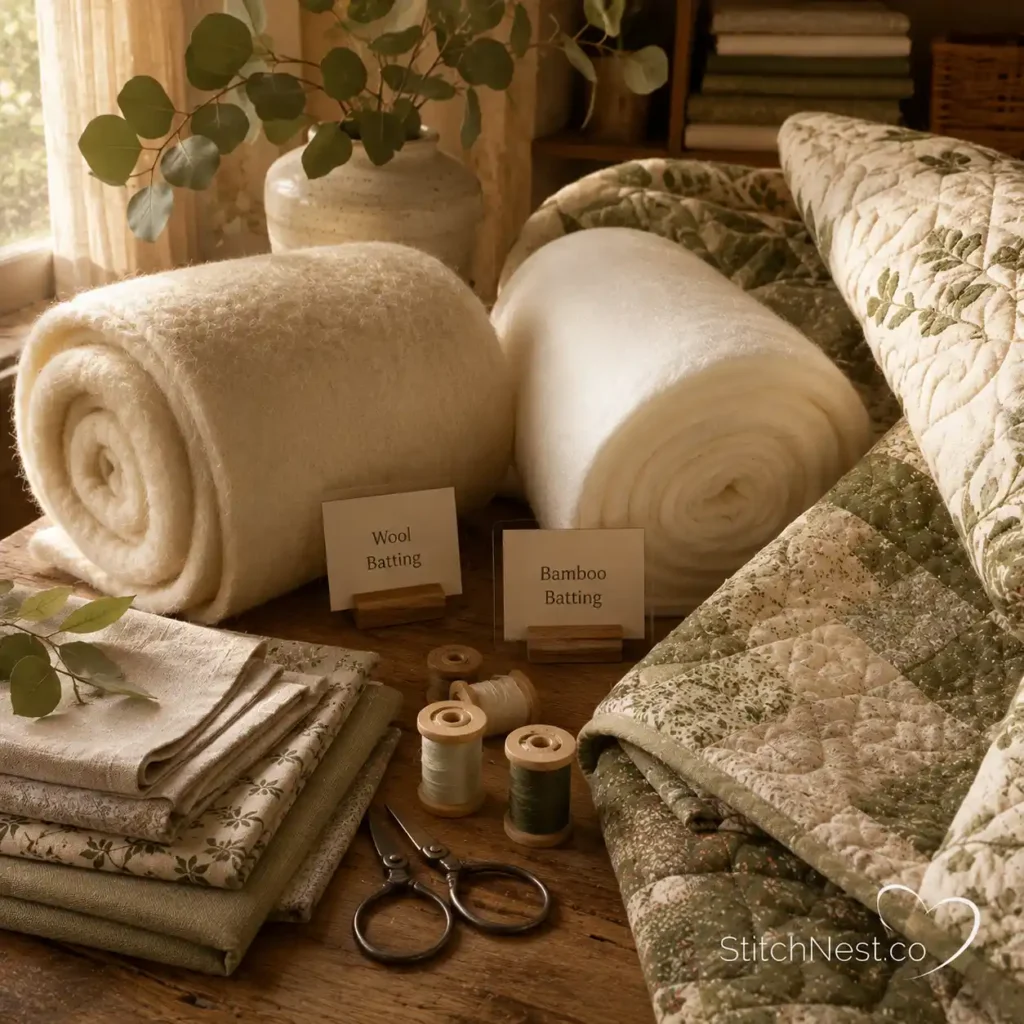
Bamboo batting is becoming more common, especially among quilters looking for lightweight options.
It drapes beautifully and produces quilts that feel soft and smooth without excessive loft. Bamboo batting can wrinkle a little more as you’re putting the quilt sandwich together, so smooth it carefully before basting to prevent small folds from getting trapped inside.
People often blend it with cotton to improve durability and reduce stretching. If you’re making a summer throw or a quilt that needs to feel light without losing softness, bamboo blends are definitely worth considering.
5. Cotton-Poly Blend Batting
Can’t decide between cotton and polyester? A blend gives you a little of both.
Cotton-poly batting combines the natural appearance of cotton with the added loft and durability of polyester. Many beginners appreciate this option because it’s forgiving to work with and performs well in a wide range of projects.
Blended batting is especially useful when you’re unsure exactly how the finished quilt will be used.
Sometimes all you need is a fresh layout to fall in love with quilting all over again. These Walkabout quilt pattern ideas you’ll want to save are a great place to start.
What Does Loft Mean?
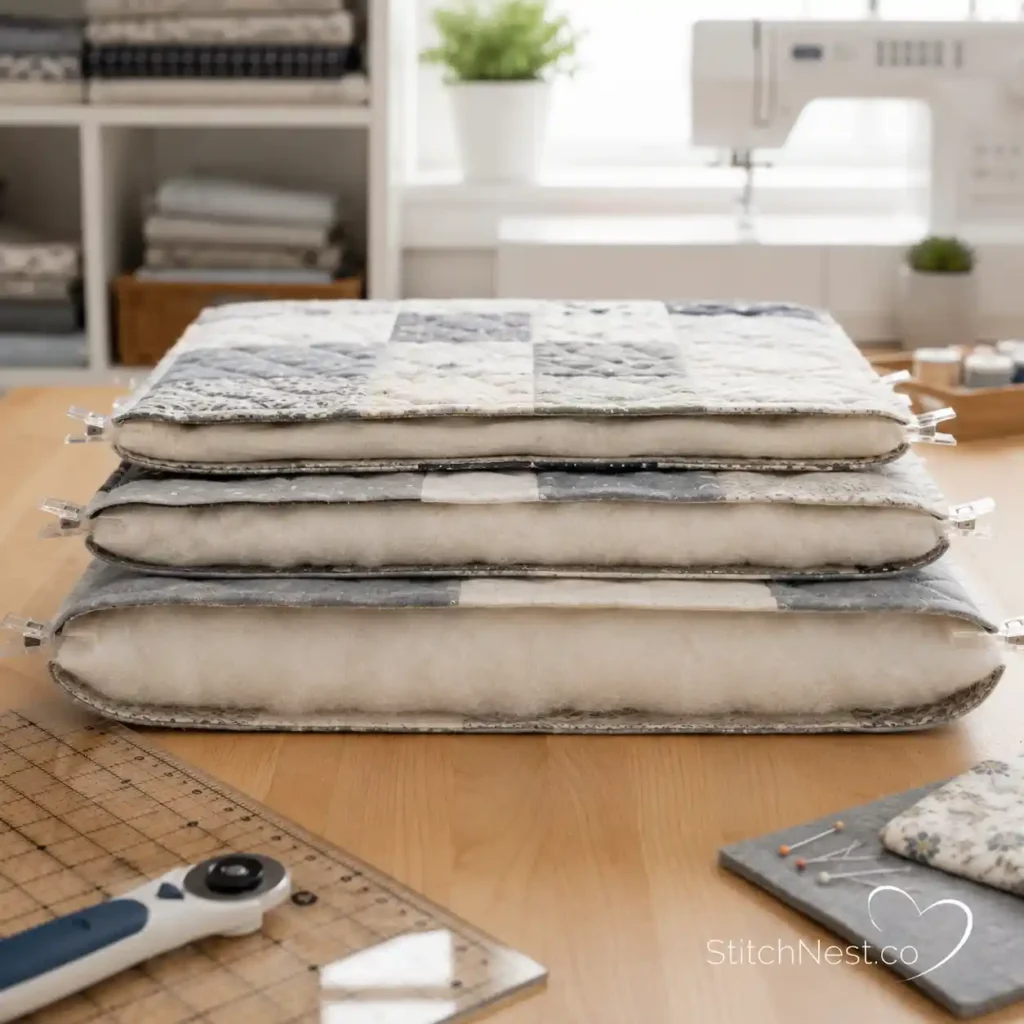
One of the most confusing terms for beginners is loft.
Loft simply describes how thick or fluffy the batting is.
Low-loft batting creates flatter quilts with crisp stitch definition. High-loft batting produces puffier quilts where the areas between quilting stitches rise higher.
Neither is right nor wrong. The choice depends entirely on the look you’re hoping to achieve.
For example, traditional patchwork quilts often use low-loft cotton batting because it lets the piecing shine. Decorative quilts with large quilting motifs may benefit from higher loft because the stitching creates a beautiful raised texture.
Quick Tip: If you’re unsure which loft to choose, medium or low loft is usually the easiest place to start. It’s forgiving, easy to quilt, and works well for most everyday projects.
What Is Scrim?
As you shop for batting, you’ll probably come across the word “scrim.”
Scrim is a very thin stabilizing layer added to some battings during manufacturing. Its job is to help the batting hold together, stretch less, and remain stable during quilting.
Batting with scrim is often easier for beginners because it shifts less during basting and quilting. That’s especially helpful on larger quilts where managing several layers can feel challenging.
Batting without scrim usually feels softer and drapes more naturally, but it often requires slightly more careful handling.
Neither option is better. They simply offer different characteristics depending on the project you’re making.
Needle-Punched Batting Explained
Needle-punched batting goes through a manufacturing process where thousands of tiny needles repeatedly pass through the fibers. This locks everything together without the need for heavy adhesives.
The result is batting that’s stronger, more stable, and less likely to pull apart during quilting.
Many high-quality cotton battings are needle-punched, which is one reason they hold up so well through years of washing and regular use.
As a beginner, you don’t need to memorize manufacturing methods, but knowing what needle-punched means helps when comparing different products at the quilt shop.
Your favorite fabrics don’t have to stay on quilts. These free quilted laptop sleeve patterns with step-by-step tutorials are another fun way to put them to good use.
How Batting Changes the Look of Your Quilt
One of the biggest surprises for new quilters is seeing how much batting changes the finished appearance of a quilt.
Cotton batting creates flatter quilts where piecing and stitch definition remain the stars of the show. Polyester batting adds more puffiness between quilting lines, creating a softer, fuller appearance. Wool batting gives quilts a beautiful texture without becoming overly bulky, making quilting designs stand out exceptionally well. Bamboo blends produce quilts with wonderful drape and a lighter feel that’s perfect for warmer climates.
If you’re unsure which batting to choose, spend a few minutes looking at finished quilts made with different fibers. You’ll quickly notice how much the batting influences the final look, even when the fabrics stay exactly the same.
How Different Battings Feel After Quilting
The way a quilt feels is just as important as the way it looks. Cotton batting creates a quilt that’s soft, flexible, and slightly heavier, making it a favorite for everyday use. Polyester batting feels lighter and loftier, with more puff between the quilting lines. Wool gives quilts a cozy feel without adding much weight, and bamboo blends produce a smooth drape that many quilters love for throws and summer quilts.
If you’re making a quilt that’s meant to be used every day, think about how it will feel when someone wraps up in it, not just how it will look once it’s finished.
Choosing the Right Batting for Your Project
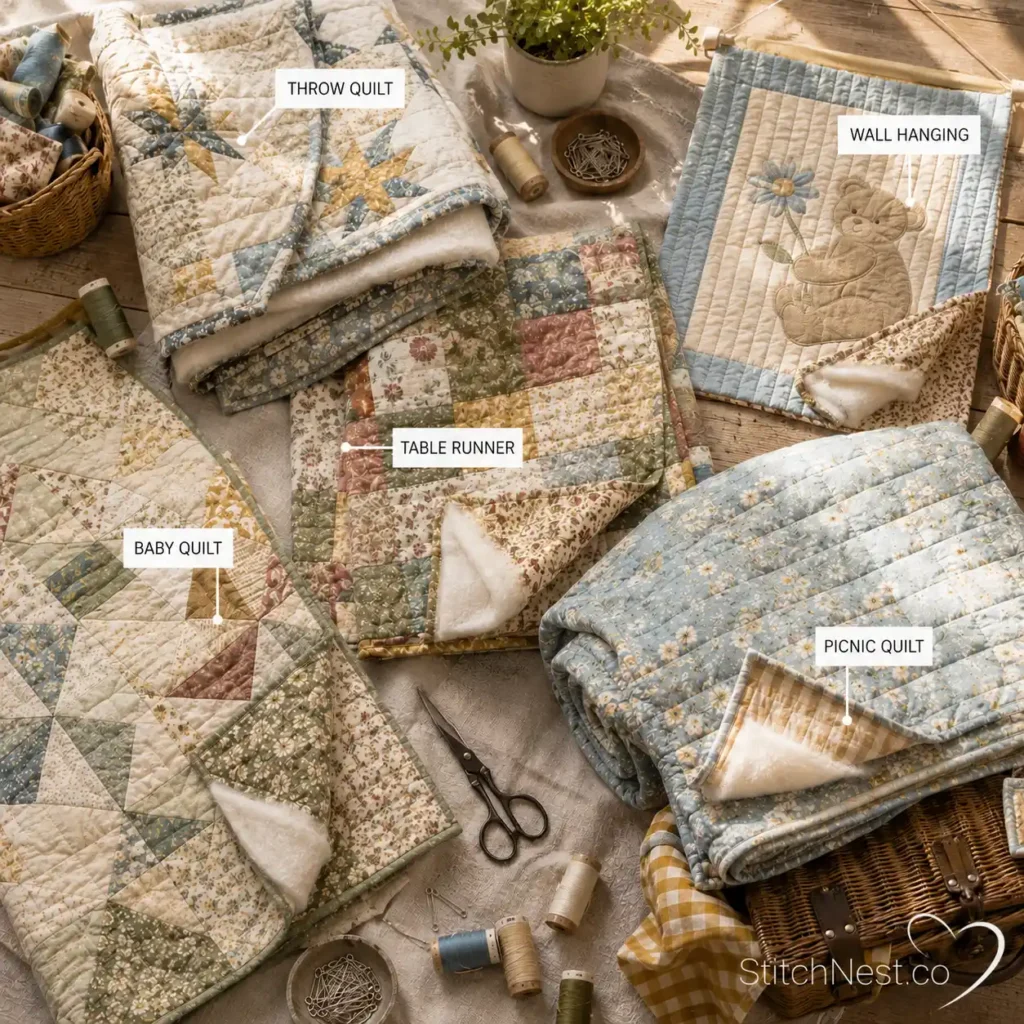
The best batting isn’t necessarily the most expensive one. It’s the one that matches the project you’re making. A wall hanging has different needs than a baby quilt, and a quilt that gets used every night calls for something different than one that’s displayed on a guest bed.
Here are a few general guidelines to help you choose with confidence.
Baby Quilts
Soft cotton batting or a cotton-poly blend is usually the safest choice. Cotton breathes well, feels comfortable against the skin, and becomes softer with every wash. Since baby quilts tend to be washed often, durability matters just as much as softness. Don’t miss out on these lovely baby quilt patterns, either!
Bed Quilts
Cotton batting remains one of the most popular choices for bed quilts because it provides comfortable warmth without feeling bulky. If you live in a colder climate and want a little extra insulation, wool batting is another excellent option.
Table Runners and Placemats
Low-loft cotton batting helps these projects lie flat on the table. Thick batting can make corners bulky and prevent the project from sitting smoothly. Looking for a smaller project to practice on? Try these beautiful floral table runners that are perfect for trying different batting options.
Wall Hangings
Wall quilts don’t need warmth, so this is a great opportunity to focus on appearance. Cotton batting produces crisp quilting lines, while polyester or wool can create more dramatic texture if that’s the look you’re after.
Heirloom Quilts
Many experienced quilters choose wool batting for heirloom projects because it offers beautiful stitch definition, excellent drape, and long-lasting resilience. Although it costs more, it can make special quilts feel even more luxurious.
Hobbs Heirloom Premium Cotton Batting is a favorite for quilts you’ll treasure for years. It produces excellent stitch definition and gives finished quilts a soft, traditional feel.
Summer Quilts
Lightweight cotton or bamboo blends work beautifully when you want a quilt that feels comfortable without trapping too much heat. These fibers drape nicely and keep the quilt feeling light.
Picnic Quilts
Cotton-poly blend batting is a great choice for picnic quilts because it balances softness with durability. It folds easily, isn’t overly bulky to carry, and holds up well if the quilt gets washed regularly after outdoor use.
Quick Tip: If you’re buying batting for the first time, a good-quality 100% cotton batting is hard to beat. It works well for nearly every beginner project and gives you a reliable starting point before experimenting with other fibers.
How Much Batting Do You Need?
Batting should always be slightly larger than your quilt top.
A good rule is to leave at least 4 inches of extra batting on every side. That extra fabric gives you room to baste the quilt sandwich securely and helps prevent shifting during quilting.
For example:
- Baby Quilt: Add about 8 inches to both the length and width.
- Throw Quilt: Plan for several extra inches all the way around.
- Queen or King Quilt: Double-check measurements before purchasing because batting sizes vary between manufacturers.
Buying batting that’s too small is one of the few mistakes that’s difficult to fix once quilting has started. Measuring and trimming become much easier with a quality cutting mat. The Fiskars Self-Healing Cutting Mat has easy-to-read grid lines, a durable self-healing surface, and plenty of space for trimming quilt blocks and larger fabric pieces.
Should You Pre-Wash Quilt Batting?
This is one of those quilting questions that doesn’t have one universal answer.
Most batting manufacturers recommend not pre-washing batting because handling it before quilting can stretch or distort the fibers. Once it’s quilted between the top and backing, the batting stays securely in place and washes beautifully.
Some quilters intentionally choose cotton batting because they love the slight crinkle that develops after the first wash. Others prefer polyester because it shrinks very little and keeps the quilt looking smooth.
Instead of pre-washing the batting itself, simply follow the manufacturer’s care instructions once the quilt is finished.
Quick Tip: If you’ve already pre-washed your quilt fabrics, don’t worry about matching that by washing the batting too. The batting and fabric don’t need identical preparation.
How Close Should You Quilt Your Batting?
Every batting has a maximum quilting distance, which tells you the largest recommended space between quilting lines.
For example, one batting might recommend quilting every 4 inches, while another allows up to 8 inches.
Why does this matter?
Quilting keeps the batting from shifting, bunching, or wearing unevenly after repeated washing. Ignoring the manufacturer’s recommendations can shorten the life of your quilt.
Before starting any quilting project, take a quick look at the batting packaging. You’ll usually find the recommended quilting distance printed there.
Pairing beginner-friendly batting with a simple pattern is one of the easiest ways to build confidence. Our Liberty Stars quilt patterns are a great place to begin.
Basting Your Quilt Sandwich
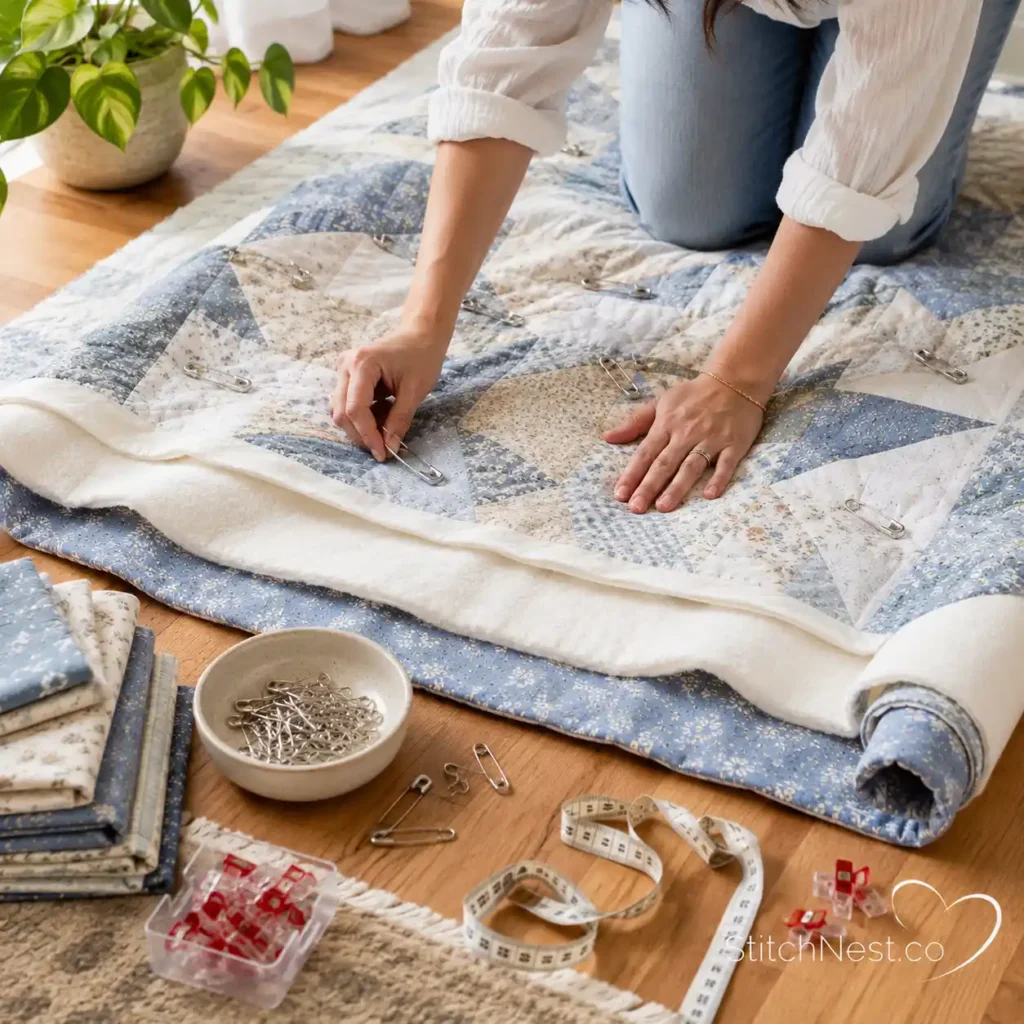
Before quilting, you’ll create what’s known as the quilt sandwich:
- Quilt backing
- Batting
- Quilt top
These three layers need to stay perfectly aligned during quilting.
Many beginners use curved safety pins because they’re inexpensive and reusable. Others prefer spray basting, especially for smaller quilts, because it speeds up the process and holds everything securely.
Curved safety pins make pin basting much easier, especially on larger quilts. Dritz Curved Safety Pins are sturdy, easy to handle, and a staple in many quilting rooms.
Whichever method you choose, work from the center outward. Smooth each layer as you go instead of trying to pull wrinkles toward the edges afterward.
If you notice wrinkles forming underneath the backing, stop and smooth the layers before adding more pins or adhesive. It’s much easier to fix a wrinkle during basting than after you’ve started quilting.
Quick Tip: A large table or clean hard floor gives you much more room to smooth the backing properly before adding the batting. Taking your time here makes quilting much easier later.
If you prefer spray basting, Odif 505 Temporary Fabric Adhesive is one of the most trusted products available. It holds the layers securely without leaving a sticky residue and washes out after quilting.
How Batting Affects Your Quilting Stitches
One thing beginners rarely expect is that batting changes the appearance of every quilting stitch.
Cotton batting tends to produce crisp, well-defined stitching because the surface stays relatively flat. Polyester batting softens that effect by allowing the quilt to puff slightly between stitch lines. Wool batting creates beautiful definition with extra dimension, making feathers, curves, and other quilting motifs stand out.
Pellon Nature’s Touch Cotton Batting is another beginner-friendly option that’s easy to quilt and widely available. It’s a solid choice if you’re making your first quilt.
This doesn’t only affect decorative quilting. Even simple straight-line quilting can look noticeably different depending on the batting inside the quilt.
If you’re especially proud of your quilting design, it’s worth choosing batting that complements it rather than simply choosing the least expensive option.
If you’re making a strip quilt, batting can completely change the finished look. Browse our layer cake quilt patterns that never get old and jelly roll quilt patterns to see how different quilting styles work with a variety of batting options.
Storing Quilt Batting
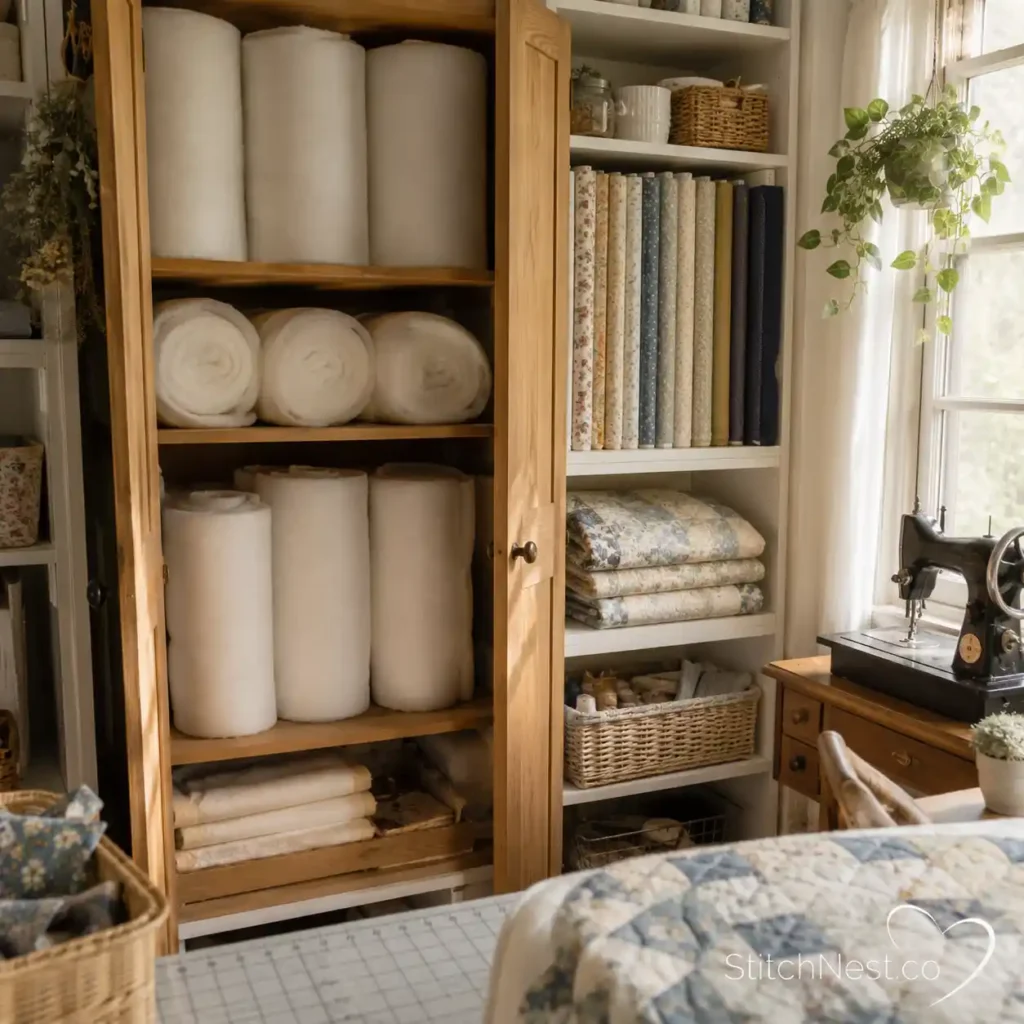
Batting lasts a long time when stored properly.
Keep it in a dry space away from direct sunlight and avoid compressing it under heavy boxes for long periods. Leaving batting tightly folded for months can create stubborn creases that take time to relax.
If possible, store batting loosely rolled instead of folded. Many quilters slide the roll under a guest bed or keep it standing upright in a sewing room closet.
Common Beginner Mistakes
One mistake many beginners make is choosing batting simply because it’s the least expensive option. Batting affects the warmth, drape, and appearance of your quilt, so it’s worth picking one that matches your project instead of focusing only on price.
Another common mistake is ignoring the manufacturer’s recommended quilting distance. Even beautiful quilting can’t prevent batting from shifting if the quilting lines are too far apart. Before you begin quilting, take a quick look at the packaging so you know how closely the layers should be stitched together.
Some beginners also buy batting that’s exactly the same size as the quilt top. Always leave several extra inches around all four sides because the layers can shift slightly during basting and quilting.
Finally, don’t assume every quilt should use the same batting. A table runner, baby quilt, wall hanging, and king-size bed quilt all have different purposes, so choosing batting based on the project usually leads to much better results.
If quilting has become a regular hobby, the AccuQuilt GO! Fabric Cutter can save hours of cutting time and improve accuracy across every project. It’s a bigger investment, but many experienced quilters consider it one of the best upgrades for their sewing room.
Frequently Asked Questions
What’s the best batting for beginners?
A good-quality 100% cotton batting or cotton-poly blend is usually the easiest place to start. Both are forgiving to work with and suit a wide variety of quilting projects.
Is expensive batting worth it?
For everyday quilts, many mid-range battings perform exceptionally well. Premium batting often becomes worthwhile for heirloom quilts, show quilts, or projects where you want the very best stitch definition and drape.
Can I layer two battings together?
Yes. Some experienced quilters combine two battings to achieve a specific look or extra warmth. It’s usually best to become comfortable quilting with a single batting first before experimenting with layered combinations.
Does batting have a right and wrong side?
Some products do. Batting with scrim usually has a recommended side that should face the quilt top. Always check the manufacturer’s instructions before assembling your quilt sandwich.
Can batting be pieced together?
Yes. Small leftover pieces can often be zigzag stitched or butted together for smaller projects like placemats, table runners, or wall hangings. Many quilters save batting scraps instead of throwing them away.
Can I use leftover batting scraps?
Absolutely. Small batting scraps are perfect for placemats, mug rugs, table runners, wall hangings, potholders, and other small quilting projects. Many quilters save leftover pieces and join them with a zigzag stitch or place them edge-to-edge inside smaller projects instead of throwing them away.
Batting may sit hidden inside your quilt, but it has a bigger impact than many beginners realize. It influences warmth, weight, drape, stitch definition, durability, and even the personality of the finished quilt. Once you understand what each type of batting offers, choosing the right one becomes much less intimidating.
As you make more quilts, you’ll probably find yourself reaching for different battings depending on the project. That’s completely normal. Every quilt teaches you something new, and batting becomes another tool that helps you create exactly the finish you’re looking for. Start with a dependable cotton batting, pay attention to how your finished quilt feels after it’s washed, and let each project guide your next choice.