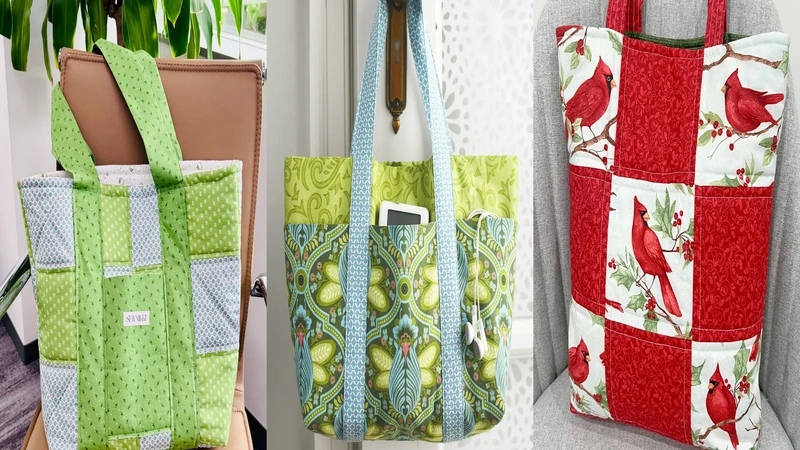
Quilted handbag patterns give you a practical way to turn patchwork, scraps, denim, and favorite quilt blocks into bags you will actually carry. These projects range from roomy everyday totes to compact purses with clever pockets, flat bottoms, zipper closures, and reversible construction. You will also find useful ways to add structure without making your bag difficult to sew.
Things You’ll Need
- Rotary cutter with a self-healing cutting mat
- High-quality cotton fabric bundles
- Acrylic quilting rulers for precise shapes
- Sewing machine with quilting foot attachment
- Soft batting for a cozy finished feel
Quilted Handbag Patterns to Sew
Looking for the pattern or tutorial? You’ll find the source link right below each image. Some featured projects are shared for inspiration, so not every image includes a step-by-step tutorial!
1. Sew Easy Big Tote Bag
Skill Level: Beginner
Time to Make: About 2 hours
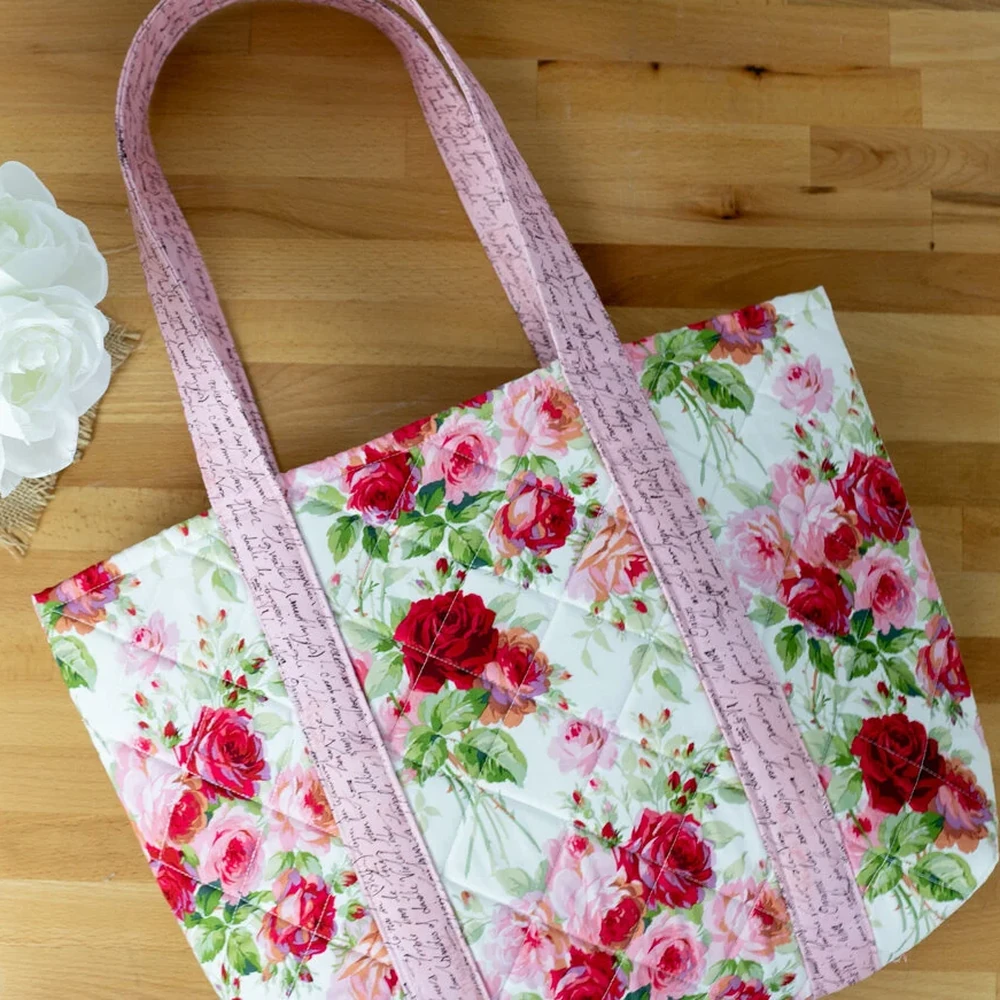
Roomy enough for everyday hauling, this big tote uses flexible foam stabilizer to give the body shape without making it rigid. Quilting is optional, so you can keep the sewing simple if you are short on time.
Firm interfacing on the straps helps prevent stretching under a heavy load. Keep your quilting lines simple if you want to finish the bag quickly.
2. Modern Fans Quilted Tote
Skill Level: Beginner
Time to Make: About 3 to 4 hours
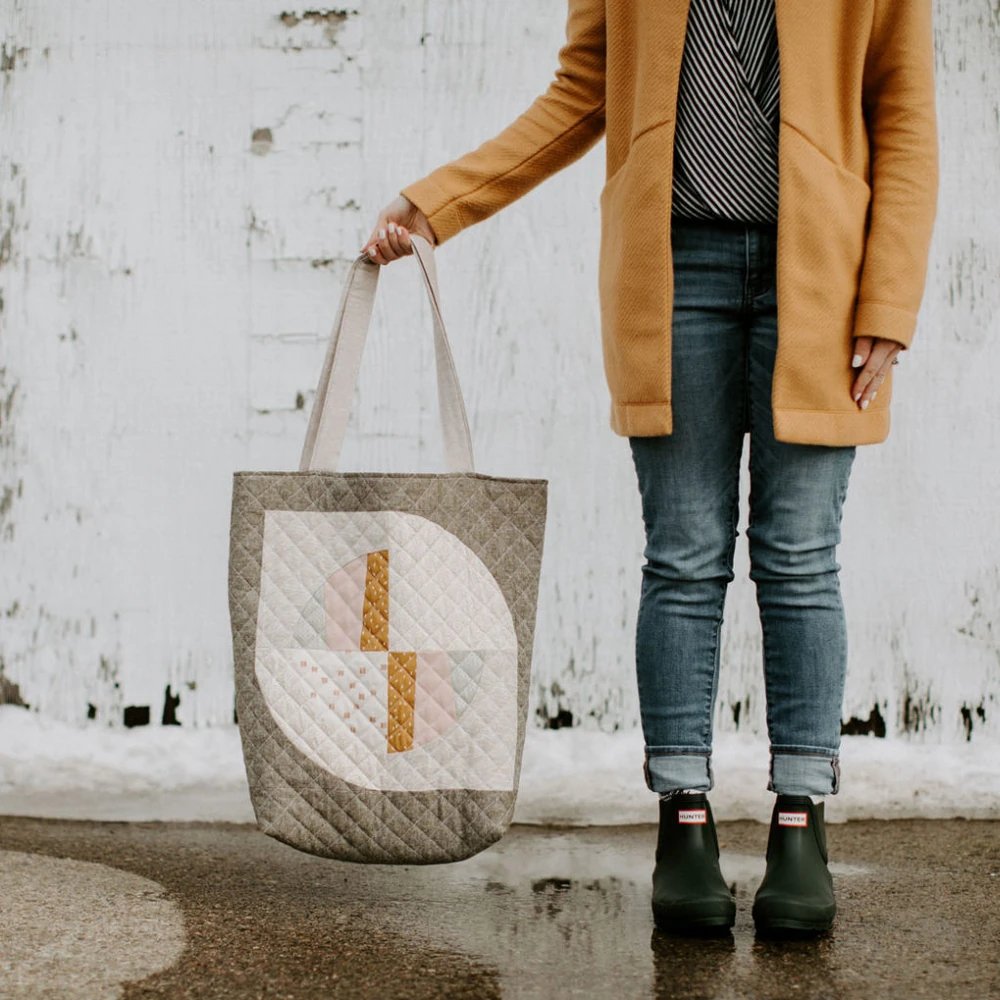
Curved Modern Fans blocks turn a practical tote into a small quilting exercise without the commitment of a full quilt. Four blocks form one circular unit before sashing builds the front.
Two layers of batting or fusible fleece give the tote more body if you prefer structure. Curves are easier to manage here because the project stays small enough to correct mistakes without wasting a large quilt top.
3. Pick a Pocket Purse
Skill Level: Beginner
Time to Make: About 2 to 3 hours
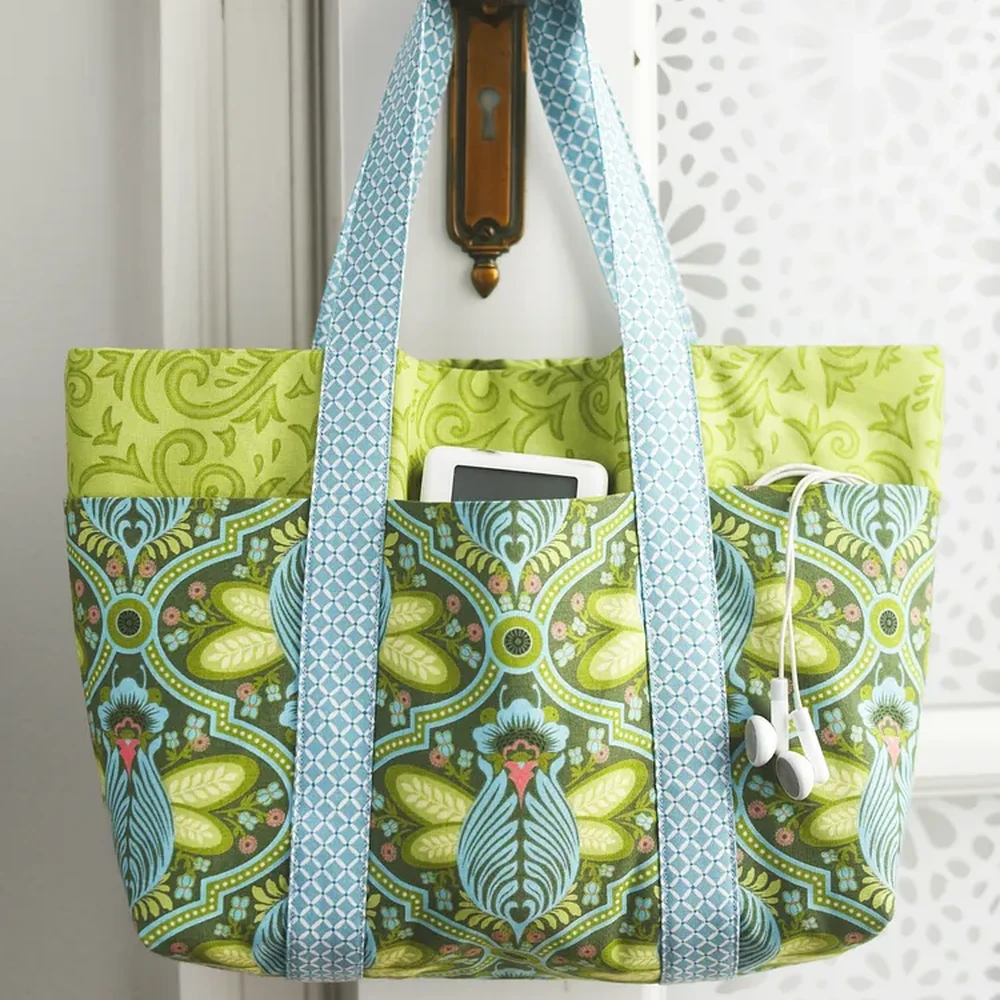
Six outside pockets are created through the strap construction, giving this compact purse useful storage without separate pocket pieces added later.
The finished bag measures a comfortable size, and the flat bottom gives it enough depth to stand open. Choose three fabrics with different scales so the pockets remain easy to see.
4. Quilted Tote Bag With Charm Squares
Skill Level: Beginner
Time to Make: About 2 to 3 hours
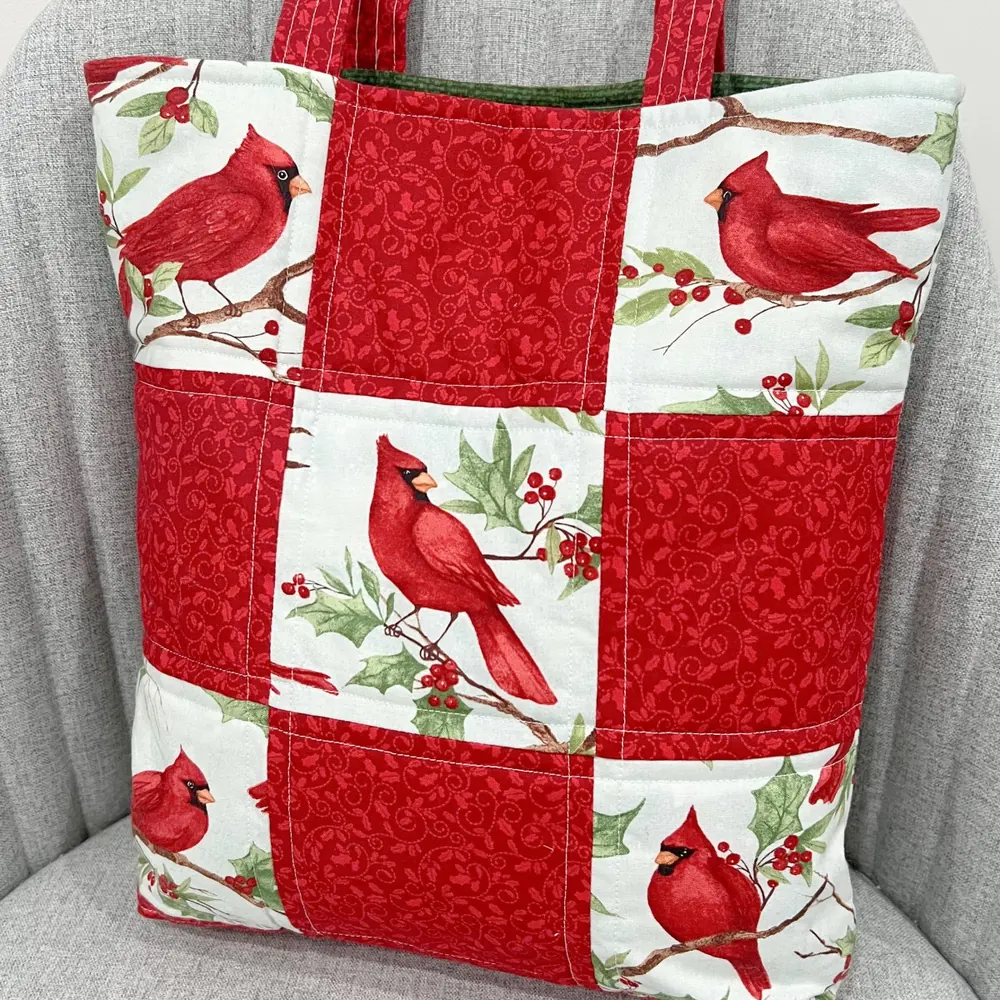
Using 5 inch charm squares keeps the patchwork portion simple. Nine squares form each main side, followed by a separate bottom strip. You can also divide the squares into 2 1/2 inch pieces for a smaller scale design.
If your scrap bin is overflowing, these mini heart quilt ideas show another way to turn small pieces into useful quilted projects.
5. Large Patchwork Tote Bag
Skill Level: Confident Beginner
Time to Make: About 4 to 5 hours
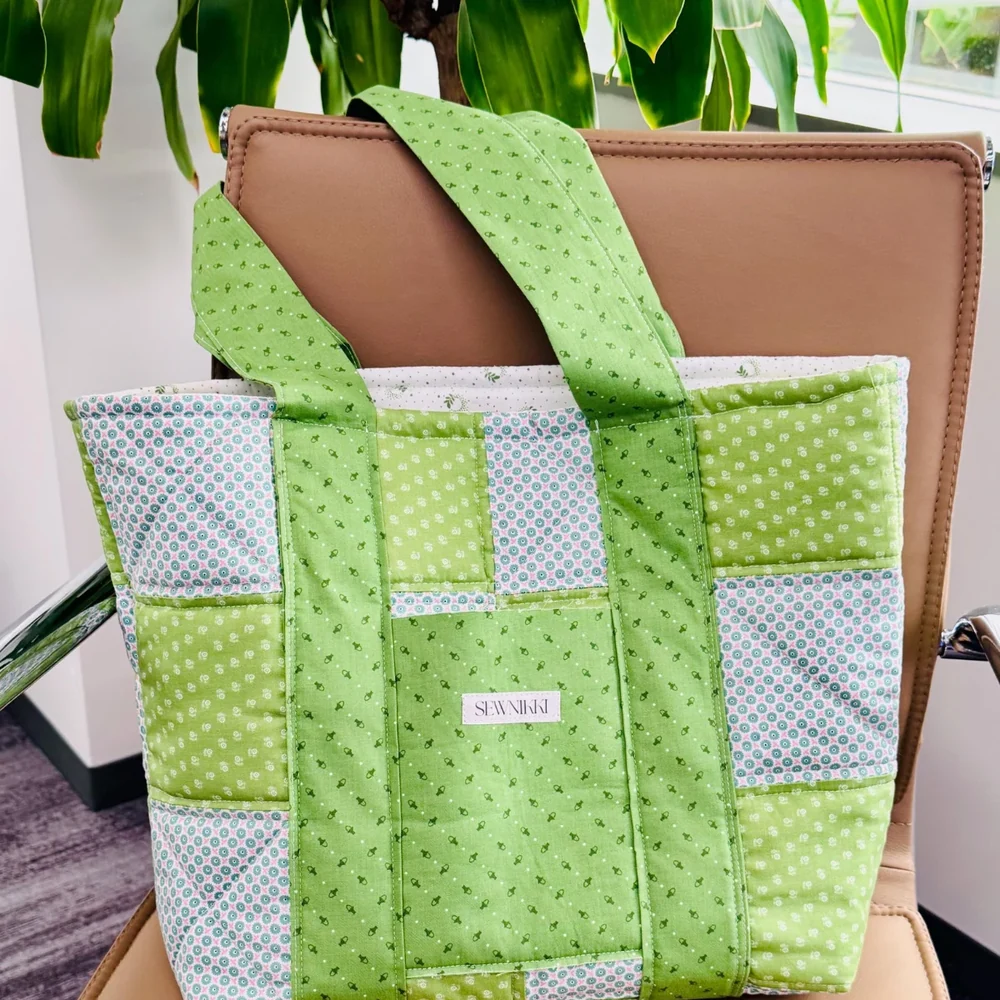
This roomy tote uses patchwork panels and heavy batting for structure. Long straps run from the base upward, which helps spread the load instead of placing all the stress at the top edge. A divided inner pocket and outer pocket make it useful for work, shopping, or craft supplies.
You can use a Janome HD3000 sewing machine when sewing several layers and heavier bag components. These scrap quilting projects can also help you plan a fabric palette from what you already have.
6. Fronds Quilted Beach Bag
Skill Level: Intermediate
Time to Make: About 5 to 6 hours
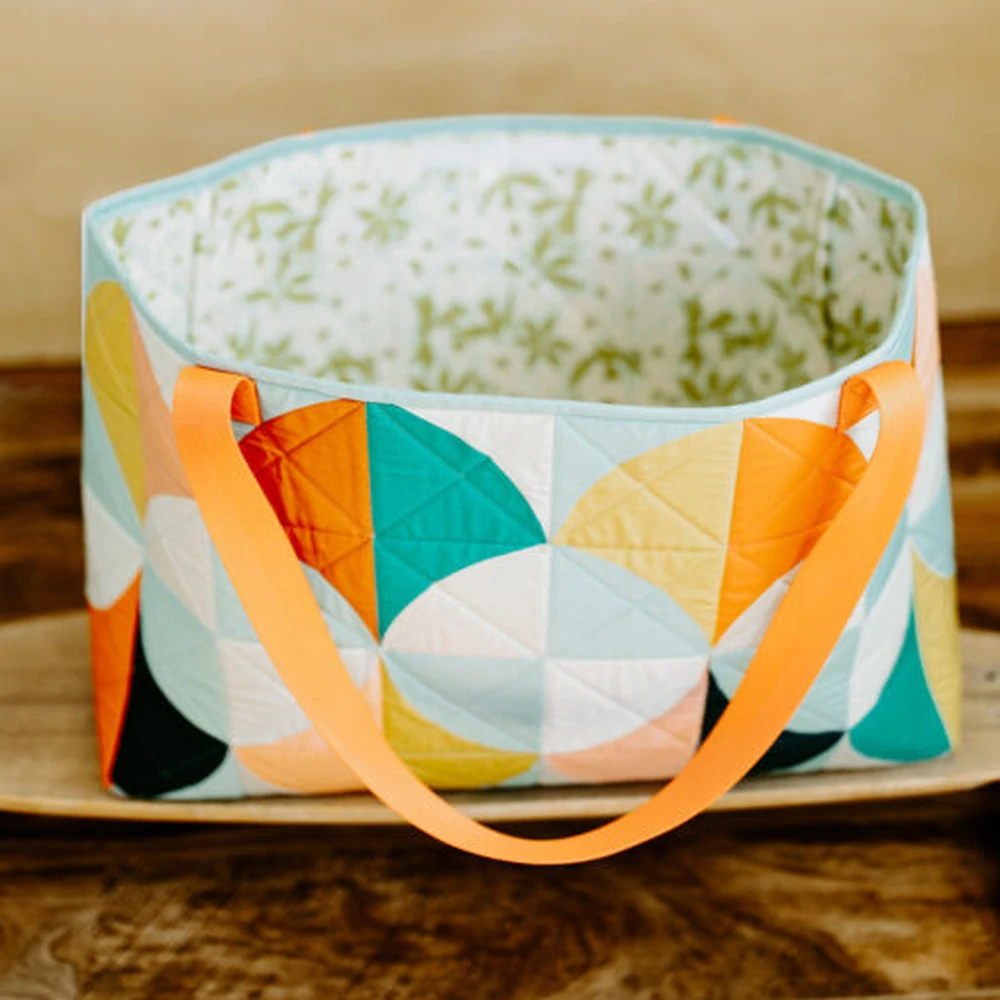
This large beach bag measures about 24 by 16 by 8 inches and combines curved quilted blocks with a waxed canvas bottom, foam stabilizer, vinyl, webbing, and a Velcro closure.
That construction suits a bag that may carry damp towels or sit on wet ground. Keep waxed canvas away from high heat and use clips instead of pins. For another summer bag idea, these coastal crochet bags make a natural companion project.
7. Modern Quilted Tote With Zipper
Skill Level: Intermediate
Time to Make: About 5 to 6 hours
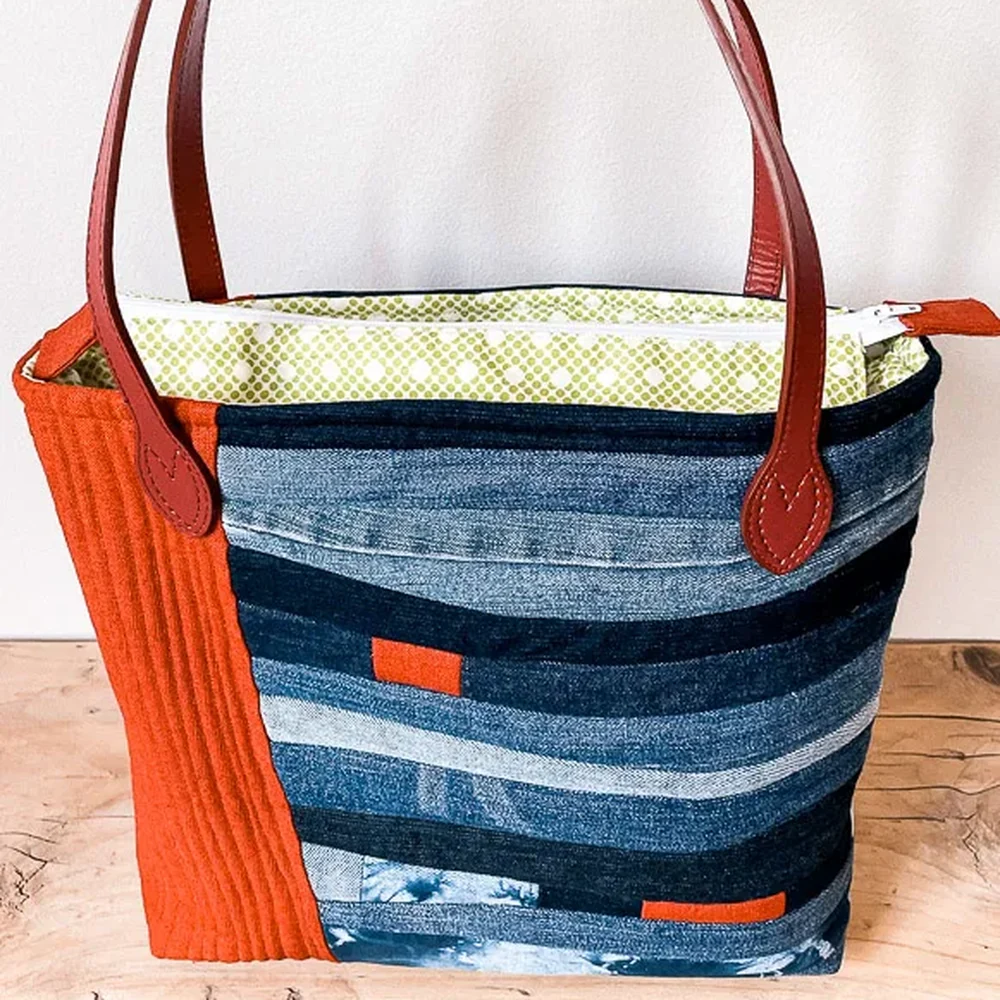
Denim scraps work especially well here because the wavy panels turn small pieces into a planned design. Foam stabilizer supports the body, and a recessed zipper secures the opening. Mark each wave before sewing so the pieces stay in order. A long stitch length helps when you reach bulky sections.
A Brother CS7000X sewing machine is useful for general bag making, but always test your machine on the full layered thickness before sewing the final seams.
8. Quilted Flat Bottom Tote
Skill Level: Beginner
Time to Make: About 3 to 4 hours
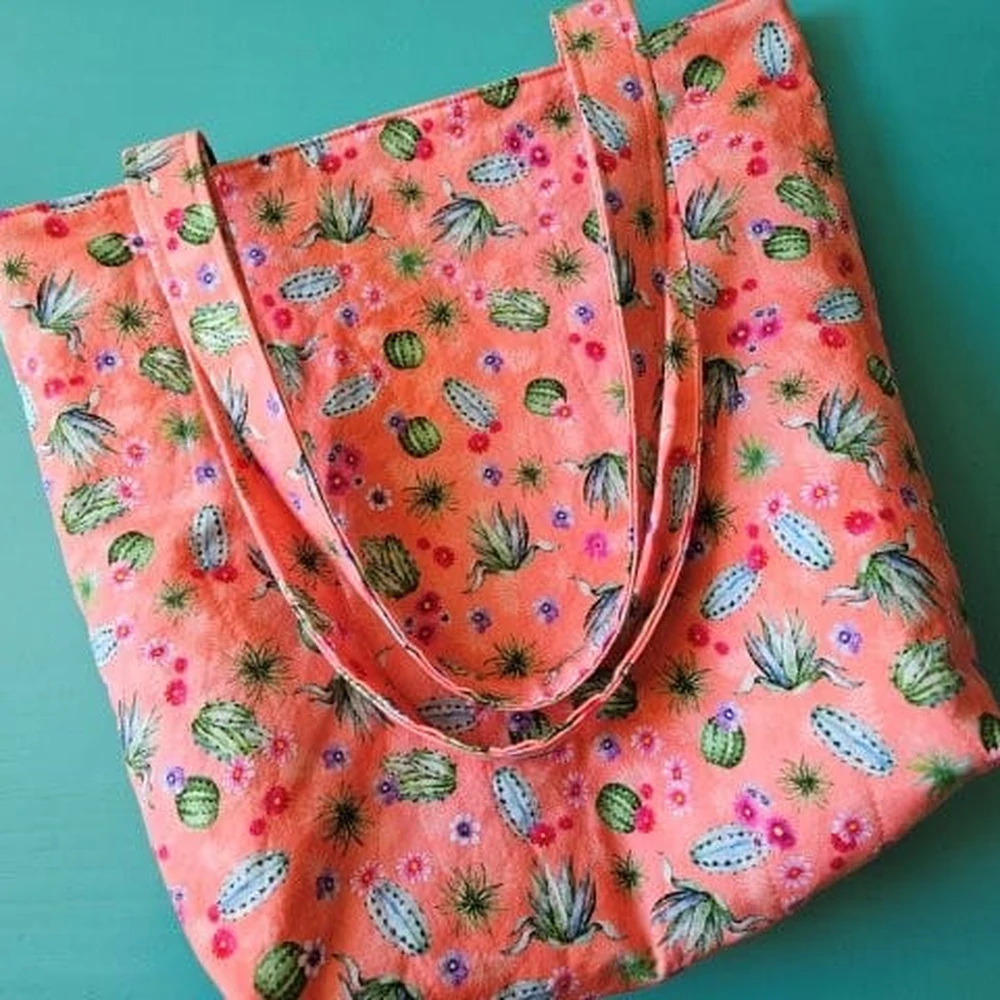
This tote teaches one of the most useful bag construction techniques, creating a flat base from a simple sewn shell. Cutting a 2 inch square from each bottom corner produces a 4-inch finished base. Change the corner measurement to change the depth. Quilt the outer panels first, then assemble the bag and lining separately.
Accurate corner markings matter because uneven cutouts create a tilted base. A good pair of fabric cutting scissors makes trimming the quilted layers easier.
9. Quilted Tote From Any Quilt Block
Skill Level: Confident Beginner
Time to Make: About 4 hours
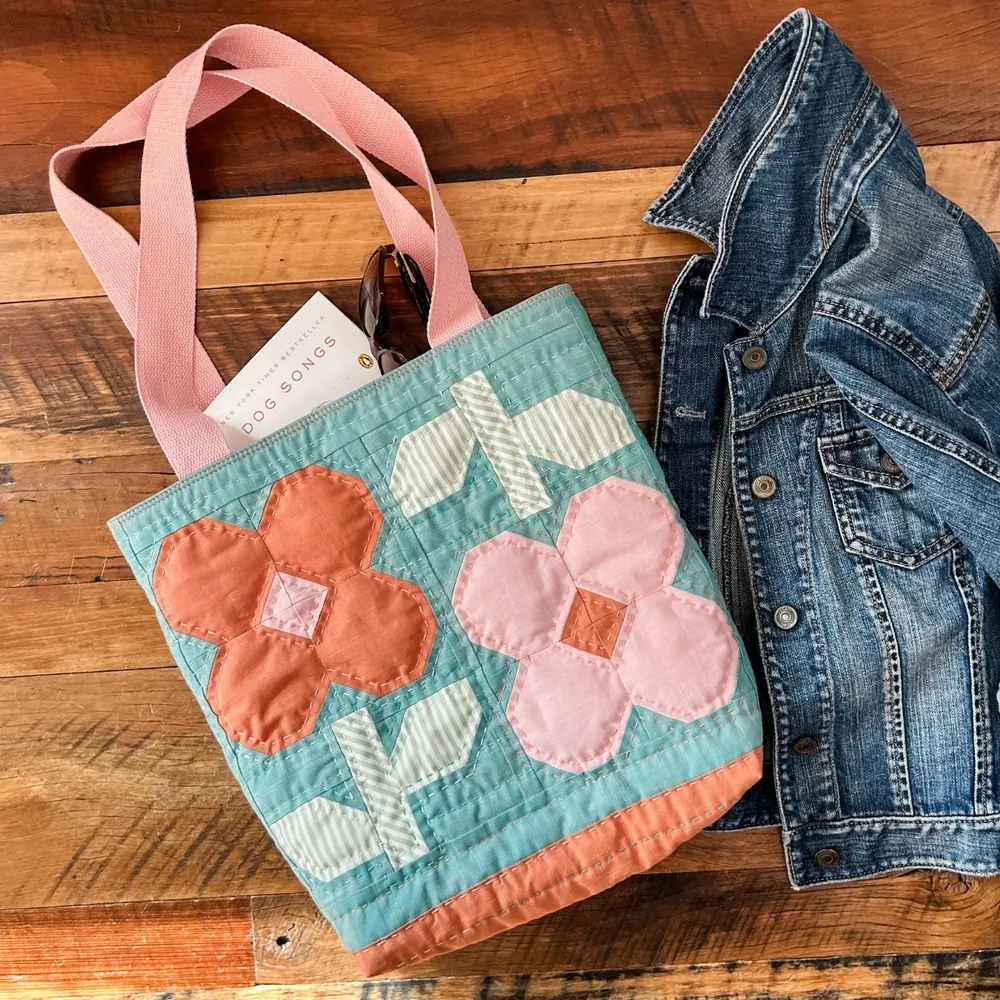
This project gives an orphan quilt block a useful second life. The finished tote shown measures about 13 by 13 by 4 inches, and smaller blocks can be enlarged with fabric strips. Add extra width along the bottom so important block details do not disappear around the base.
Quilt and trim the panels after quilting because the stitched layers can shrink slightly. These miniature quilt patterns are another good source of blocks for future bags.
10. Paradigm Quilted Tote
Skill Level: Beginner
Time to Make: About 3 to 4 hours
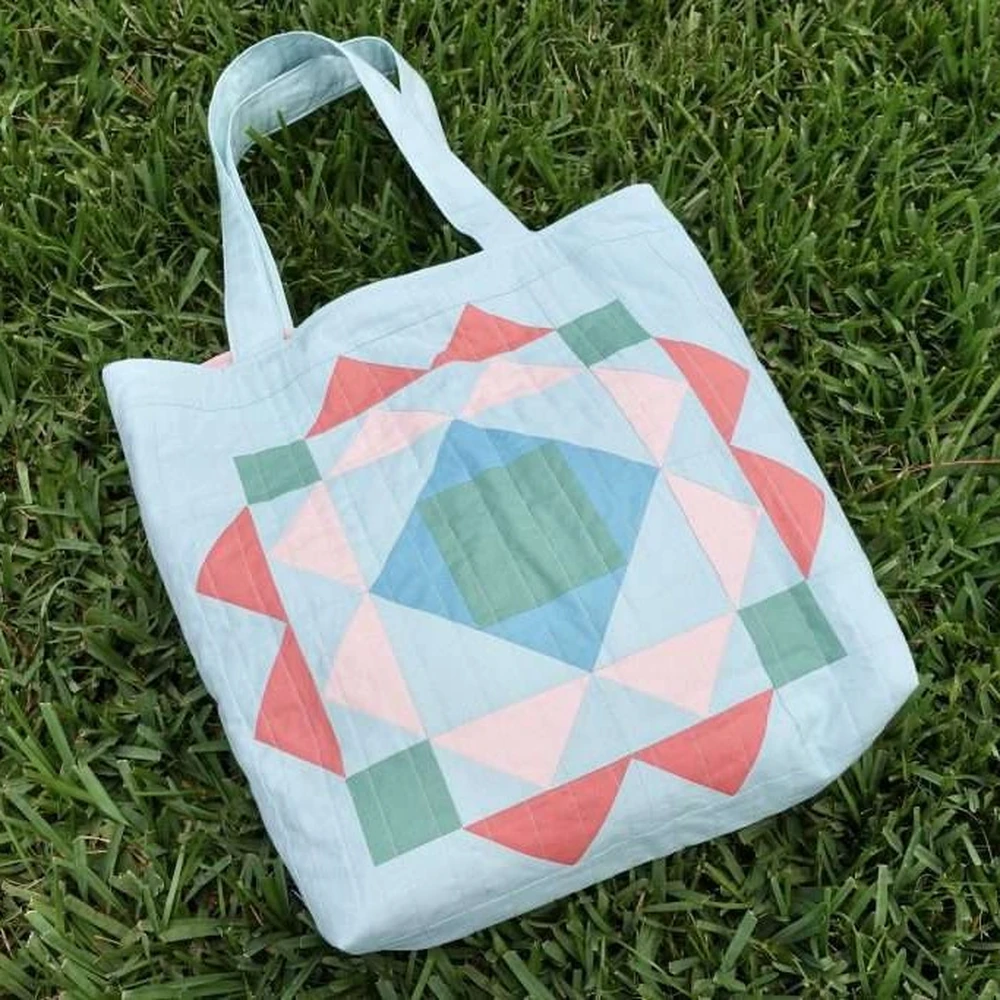
Turning two pillow-size mini quilts into a tote lets you use a small quilt design without making a full-size quilt. You do not need a complete quilt sandwich because the lining covers the batting. Straight quilting lines spaced about 1 inch apart keep the mini quilts manageable under a domestic machine.
Thin batting inside the straps helps them hold their shape. A pair of Gingher dressmaker shears is useful for cutting the layered pieces cleanly.
11. Reversible Patchwork Tote
Skill Level: Beginner
Time to Make: About 4 to 5 hours
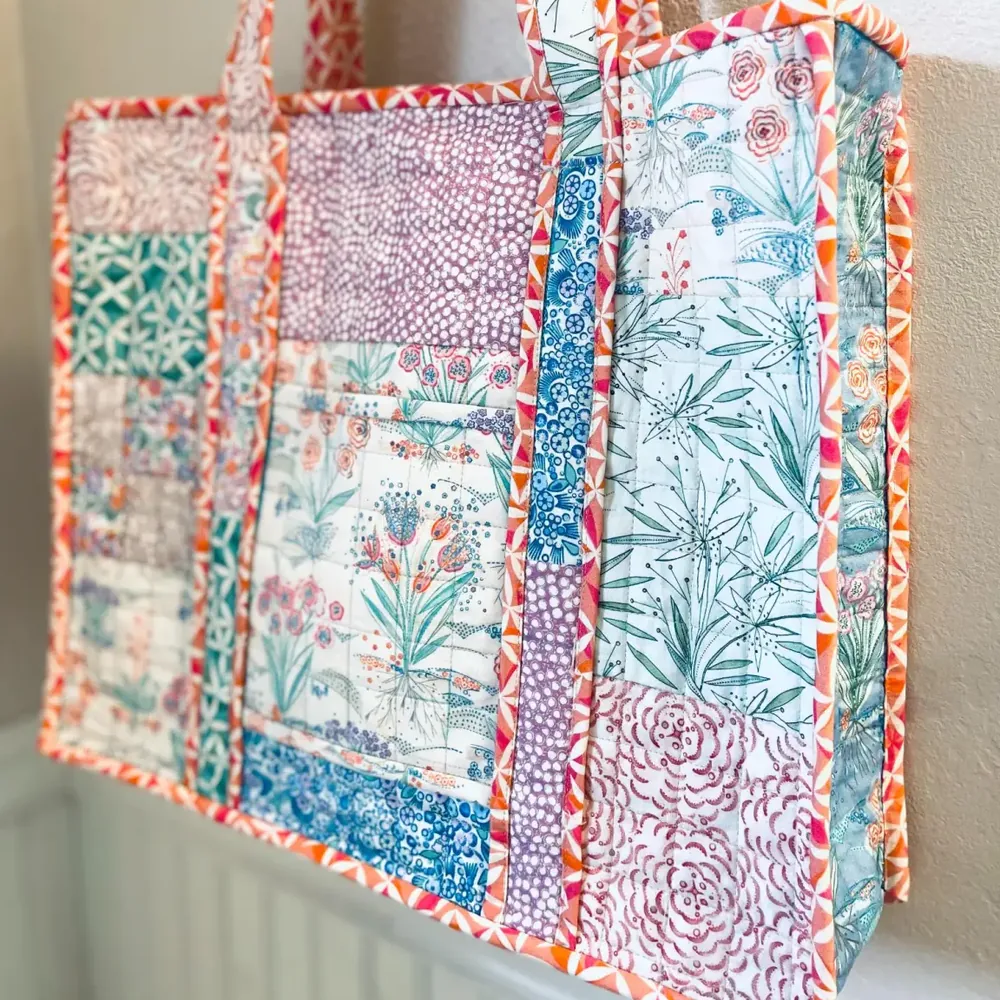
This reversible tote gives you two usable sides, a front pocket, quilted patchwork, shoulder-length handles, and finished binding. The finished size is 17 inches wide by 14 inches high with a 5-inch depth.
Fusible fleece keeps the patchwork easy to quilt on a domestic machine. Trim both quilted panels from the center so they finish at matching measurements. Tailor’s chalk makes quilting lines and seam guides easy to mark and remove.
Details that Improve Quilted Bags
Choose stabilizer according to how you want the finished bag to behave. Batting gives softness and quilting definition, but foam stabilizer gives more body. Quilters regularly point to stabilizer as a major factor in preventing a tote from collapsing. If your bag feels too soft, adding structure to the outer panels works better than putting extra layers into every seam.
Baste the quilting layers securely before stitching. Shifting batting causes wavy panels, especially when the presser foot moves the layers at different rates. A walking foot helps with thicker sandwiches, and spray basting or frequent pins keeps layers aligned. Trim panels after quilting because stitching can change their finished size. These quilted book sleeves are also useful practice for managing small quilted layers.
Use clips around bulky seams instead of forcing pins through dense layers. When a domestic machine struggles, slow down, use a longer stitch length, and reduce bulk at intersections before sewing across them. This matters around handles, boxed corners, binding, and zipper areas. Keep a quilted bookmark project in mind for leftover strips that are too small for another bag.
Color planning matters just as much as construction. Lay out your patchwork pieces before sewing and check that neighboring prints have enough contrast. A dark fabric beside another dark print can disappear after quilting. If you like using strong block designs, these French rose quilt patterns can provide ideas for a future bag panel.
Common Mistakes that Cause Trouble
Do not rush the boxed corners. Both corners need the same measurement, and the side and bottom seams need to meet accurately before you stitch across them. An uneven cut creates a crooked base that pressing will not fix. If your fabric frays easily, leave enough seam allowance for strength. You can practice this type of construction on smaller projects such as quilted sunglasses cases.
Dense layers also cause trouble at the top edge. Handles, batting, interfacing, binding, and several seam allowances can create a stack that a domestic machine cannot move cleanly. Plan the construction order so bulky sections do not meet at the same point. If the machine skips stitches or breaks needles, stop and reduce the layers rather than forcing the fabric through.
Patchwork needs a little planning before you start sewing. Take a quick photo of your layout so you can rebuild it if pieces get moved. Seasonal projects can give you useful color direction too. These fall sewing ideas are useful when you want a bag with deeper seasonal colors, and Bargello quilt patterns offer ideas for directional fabric layouts.
Small appliqué blocks can work on bags too, but keep dense stitching away from areas that receive heavy wear. These animal applique quilts can provide motifs for a child’s tote or a gift bag. For Halloween, you can also borrow ideas from these free bat sewing patterns and turn a small bat motif into a pocket or patch.
Use the same approach for patriotic or floral themes. A small motif often works better on a bag than a full quilt block because the finished piece has less room for the design to breathe. These Fourth of July quilted decor ideas offer more seasonal direction, and crochet flower summer bags show how floral color combinations can translate into a fabric bag.
Once you finish one quilted handbag, those leftover pieces start looking like future bag panels instead of scraps. Keep the momentum going with these cute animal quilt ideas for another project.