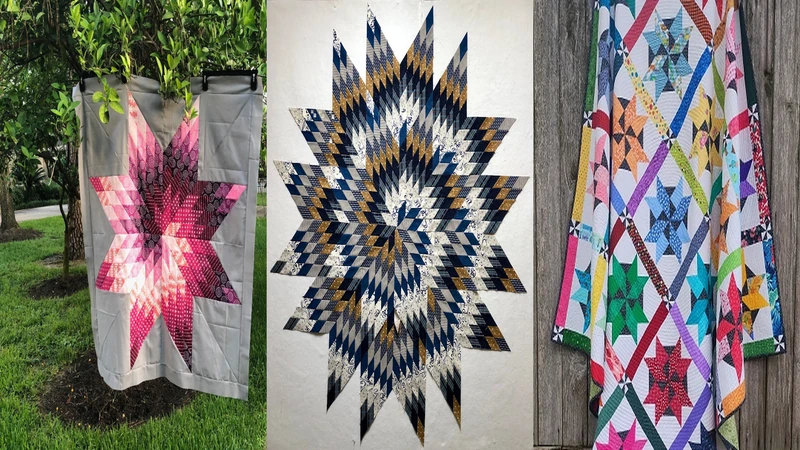
Stand in front of a spiral star quilt and notice what your eyes do, because they refuse to sit still. The colors seem to swirl outward from the center, and somehow the whole thing feels like it is quietly turning. That motion comes from a surprisingly orderly process, a handful of strip sets, some careful angles, and a good dose of patience. Here are spiral star quilt patterns you can use to pour some warmth and spruce up your home! They’ll leave everyone gazing in awe!
Spiral Star Quilt Ideas Worth the Adventure
Looking for the pattern or tutorial? You’ll find the source link right below each image. Some featured projects are shared for inspiration, so not every image includes a step-by-step tutorial!
1. Red, White and Blue Spiral Star Quilt Pattern
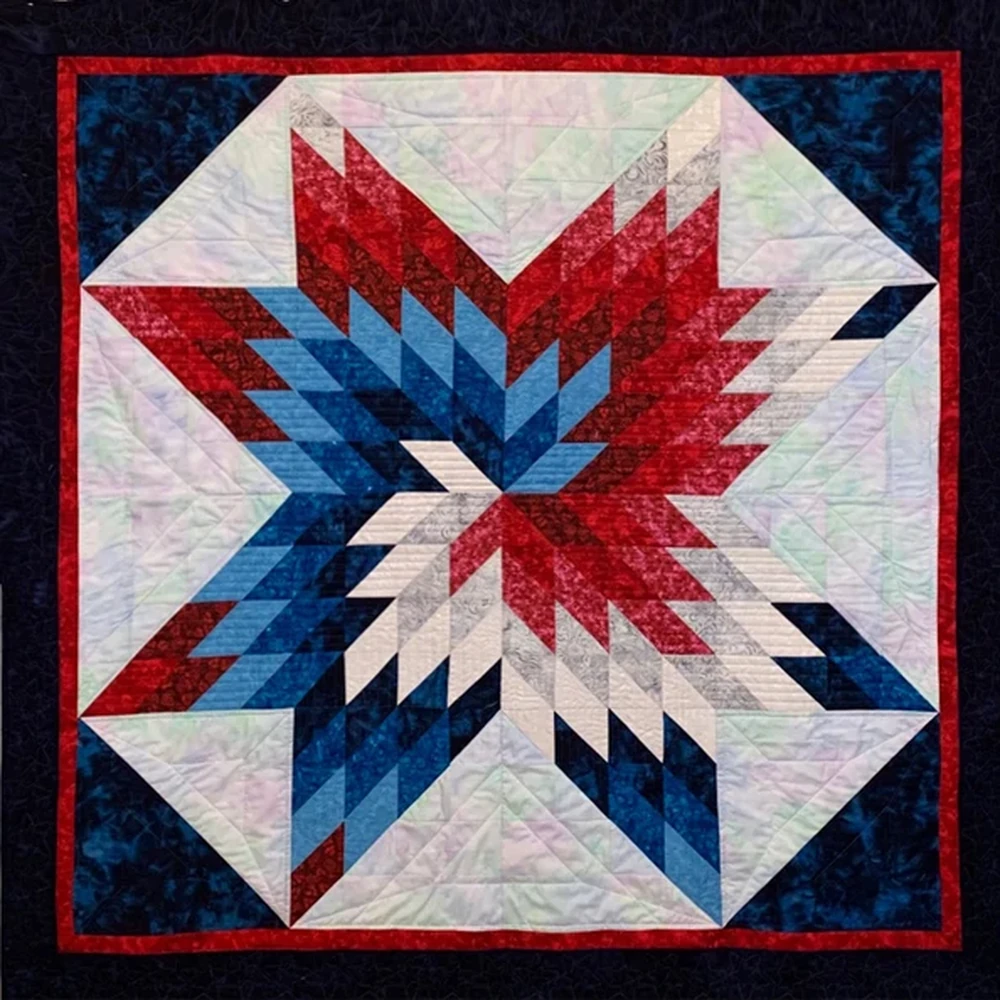
Skill Level: Intermediate
Time to Make: About 28 hours
There is a reason red, white and blue shows up in so many star quilts, since those three colors carry plenty of contrast without any help. That contrast is a gift and a challenge at the same time, because strong lights and darks make a star glow but also show every point that does not quite meet.
Take your time at the cutting mat, and starch your fabric before you slice, since the diagonal cuts in a star like this fall on the bias and love to stretch. Here’s what we recommend doing early. Label every strip set with a scrap of paper so nothing gets shuffled between sewing sessions.
2. Spiral Nova Star Quilt DIY Tutorial
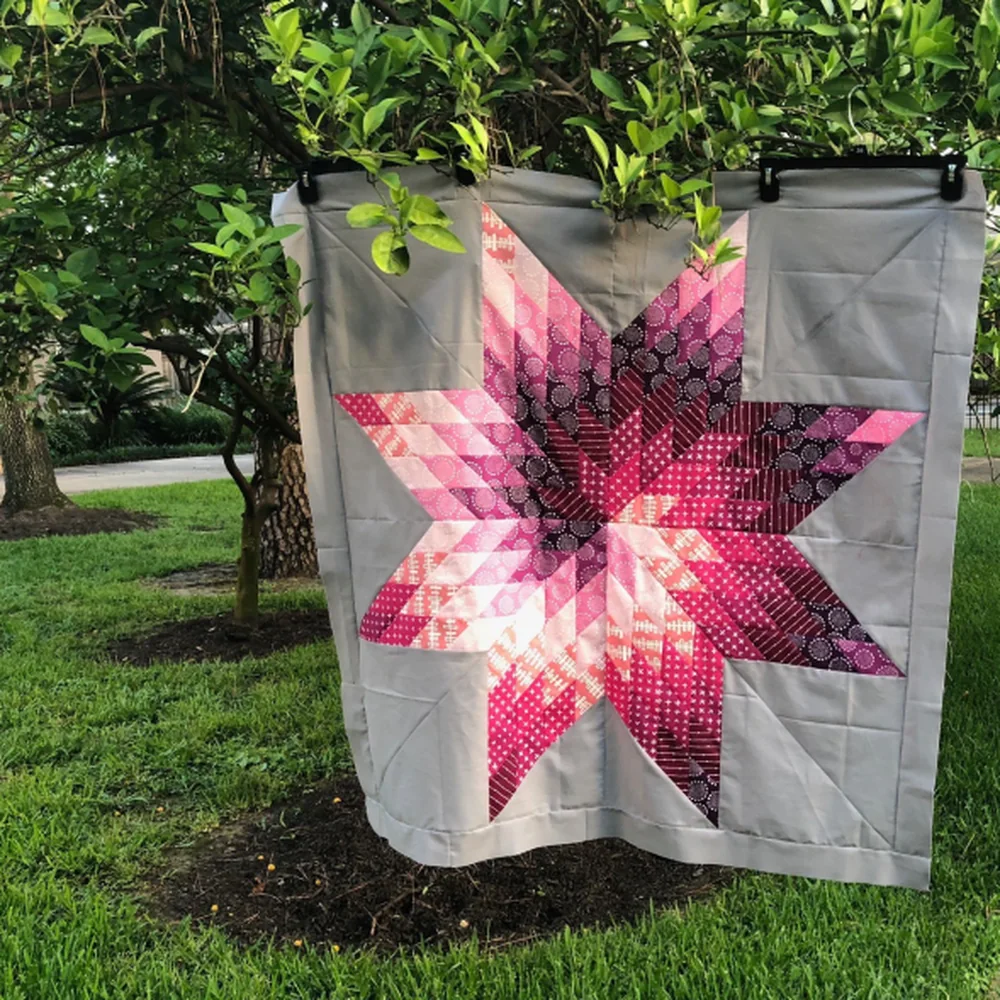
Skill Level: Intermediate
Time to Make: About 22 hours
Stars in the Lone Star family begin with strip sets, which means you sew long strips side by side and then slice across them at a 45-degree angle to make the pieces that become diamonds. A tutorial helps enormously here, because the order of the strips and the direction of each cut matter so much.
Read the whole thing once before you touch your fabric, then sew a small practice strip set from scraps. If stars are fairly new to you, a few star quilt block patterns are a gentle way to get comfortable with points before you take on something bigger.
3. Rainbow Swirl Spiral Star Quilt
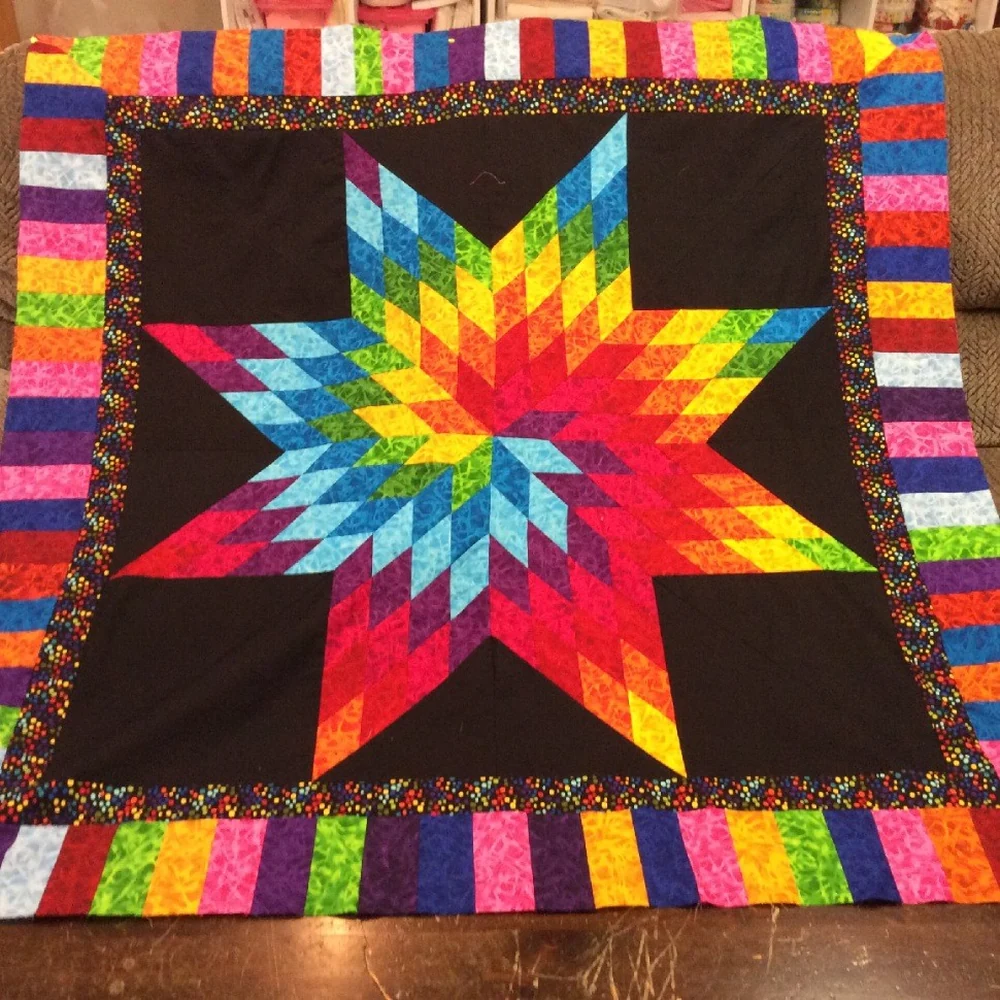
Skill Level: Intermediate
Time to Make: About 34 hours
Rainbow fabrics bring a lovely challenge, since you get to decide how each color melts into the next. Plan the order before you cut anything, and lay your strips side by side on a table so you can see whether the shifts feel smooth or jumpy.
Gradual color changes are the heart of bargello quilt patterns, and borrowing that way of thinking helps a swirl flow instead of stumble. Keep a few extra strips of every shade nearby, because one that looks too bright next to its neighbor is much easier to swap before it is sewn.
4. Spiral Star Quilt Block DIY
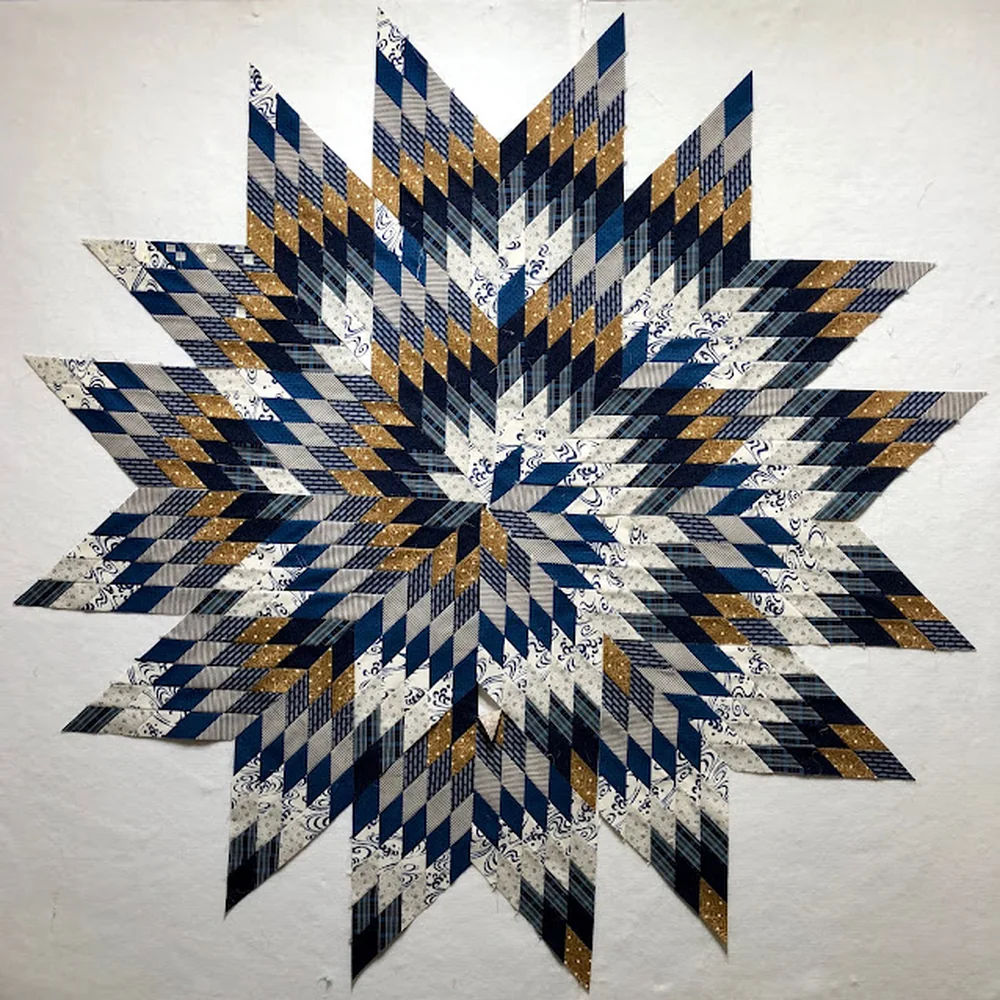
Skill Level: Confident beginner
Time to Make: About 12 hours
Making a single block is one of the smartest ways to meet a spiral star, since you learn every step at a size that will not swallow your whole weekend. Once the block is finished you have choices, and it can become a small wall piece, a table topper, or a pillow cover. Mini quilt wall hangings show how well one bold design can carry an entire project.
Check your work as you go by placing each diamond section on your cutting mat, because the 45 degree line on your ruler tells you right away if an angle has drifted.
5. Quilt of Spiral Stars Pattern
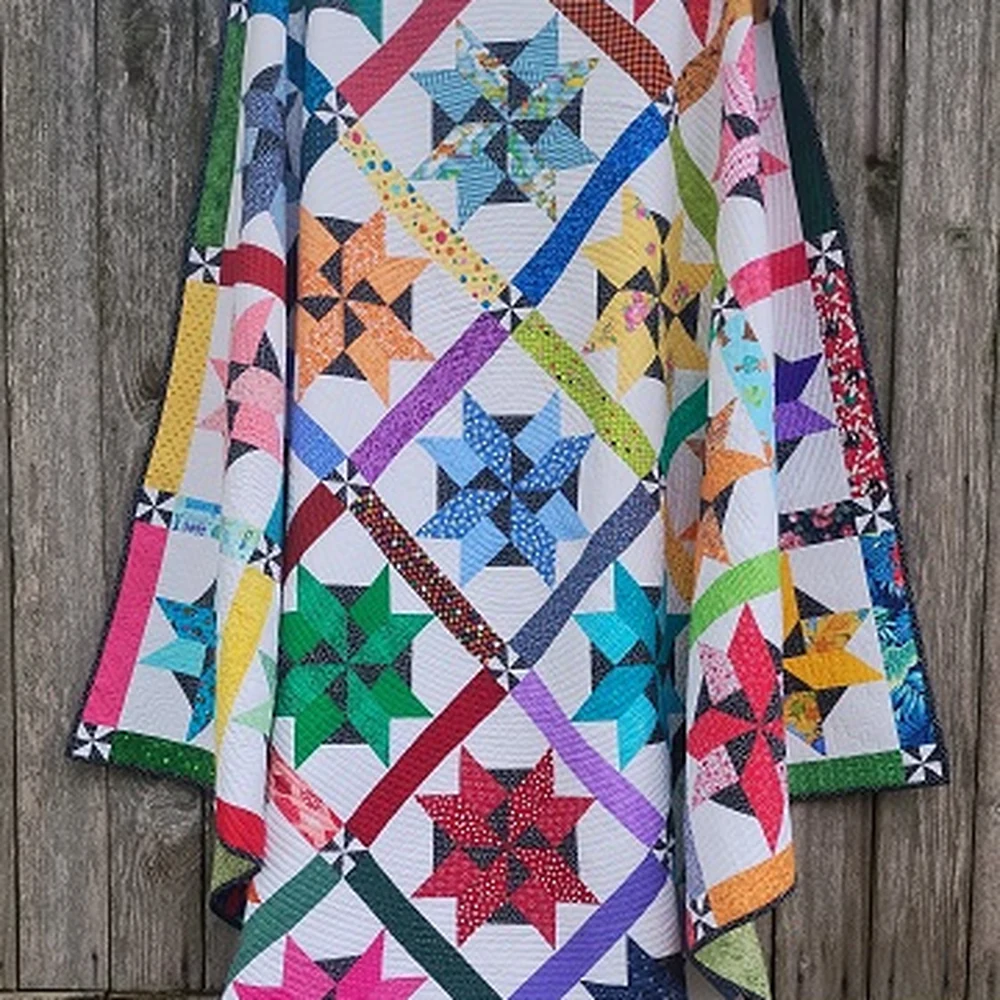
Skill Level: Intermediate
Time to Make: About 40 hours
A whole quilt of stars sounds like a mountain, but you climb it one star at a time. Treat each star as its own little project and finish it before you start the next, and the pile grows steadily without ever feeling endless.
Quilting stars separately before joining them, the way quilt as you go projects do, keeps the weight manageable, which matters a great deal with a design this dense. Pressing your seams open helps each star lie flat, and a fine pin at every seam intersection keeps everything matching.
6. Vintage Lone Spiral Star Quilt Idea
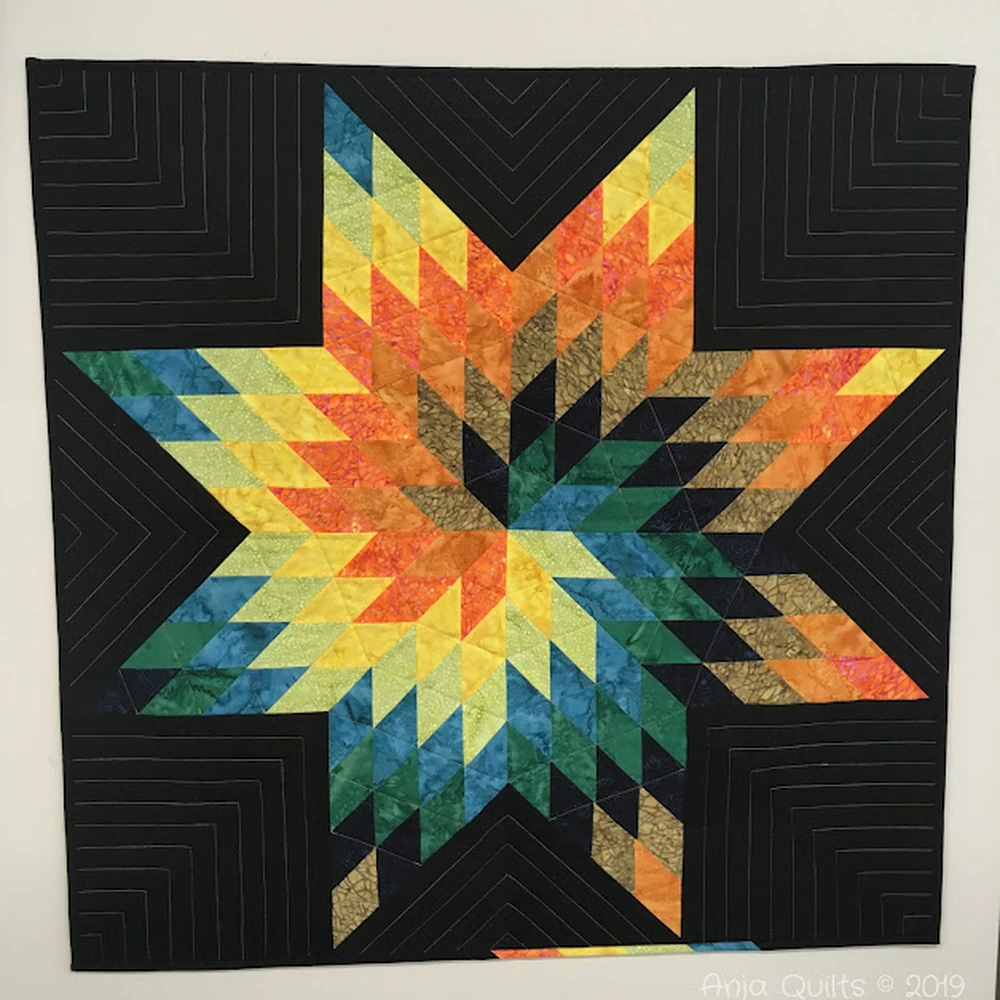
Skill Level: Intermediate
Time to Make: About 30 hours
Lone star quilts have been around for generations, and the old fashioned ones have a calm, steady charm even when the design is bold. Choosing soft, worn in fabrics gives a spiral star that lived in feeling, as though it has been on a bed for years.
That quiet confidence runs through amish quilt patterns too, and they are well worth studying if traditional star designs speak to you. Prewash your fabric before cutting, since shrinking after the star is sewn can pull those carefully matched points out of line.
Small Habits That Help Stars Behave
Strip sets are the secret engine of every spiral star, so it pays to practice keeping your strip widths steady. If your seams drift even a little, the diamonds you cut from them drift too. Spending an afternoon with strip quilt patterns is a lovely way to build that habit.
Corner squares and triangles that fill out the star are added with Y seams, also called set in seams. You stop stitching a quarter inch before the corner, then start again from the other side so the fabric never gets pleated or puckered. It feels fussy the first time, and then it clicks, usually by the second corner.
Sketching your color order before you sew saves a surprising amount of fabric. Shade a quick drawing with colored pencils, step back, and see whether the spiral reads the way you hoped. The pen and paper quilt patterns show how designers plan this way, and it works just as well for beginners.
Where Spiral Stars Lose Their Spin
Stretching the bias is the classic mistake, and it happens quietly. Tugging a diamond while you sew, or pressing with a sliding iron, can turn a crisp shape into a wobbly one before you notice. Lift and lower your iron instead of dragging it, and pin generously so the fabric does not have to be pulled into place.
Low contrast is another trap. Fabrics that look different on the shelf can turn out nearly the same lightness once sewn, and the spiral simply disappears. Snap a photo of your stack and switch it to black and white, and you will see at once whether your lights and darks really separate.
Jumping straight into a huge star without a warm up tends to end with a frustrated pile of diamonds in a drawer. Practicing on something smaller, like a classic ohio star quilt pattern, teaches you points and seams on a friendlier scale.
Rushing a seasonal deadline is the last one. Star quilts take longer than they look, and anyone who has tried to finish something patriotic in time for summer, like the ones in stunning 4th of july quilt patterns, knows how quickly a month disappears.
Finally, replace your rotary blade before you begin. A dull edge drags the fabric, and on the bias, that is all it takes to nudge a whole strip set out of line.
If shining stars are your favorite part of quilting, you will love browsing these starry night quilt patterns next.