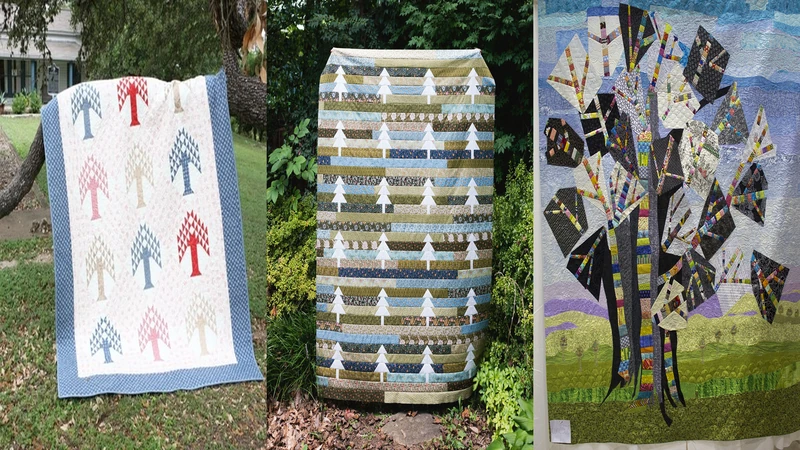
A tree is one of the friendliest things you can put in a quilt, because everyone already knows what it should look like. You don’t need to explain a trunk and a few branches, so you’re free to play with how you make it. Here are pretty tree quilt patterns, from quick pieced forests to slow, thoughtful art quilts, and each one works whether you sew it for spring, summer, fall, or winter. Pour a cup of something warm and let’s wander through the woods.
Eight Tree Quilts Worth Planting in Your Sewing Room
Looking for the pattern or tutorial? You’ll find the source link right below each image. Some featured projects are shared for inspiration, so not every image includes a step-by-step tutorial!
1. Free Jelly Trees Quilt Pattern
Skill Level: Beginner
Time to Make: A weekend
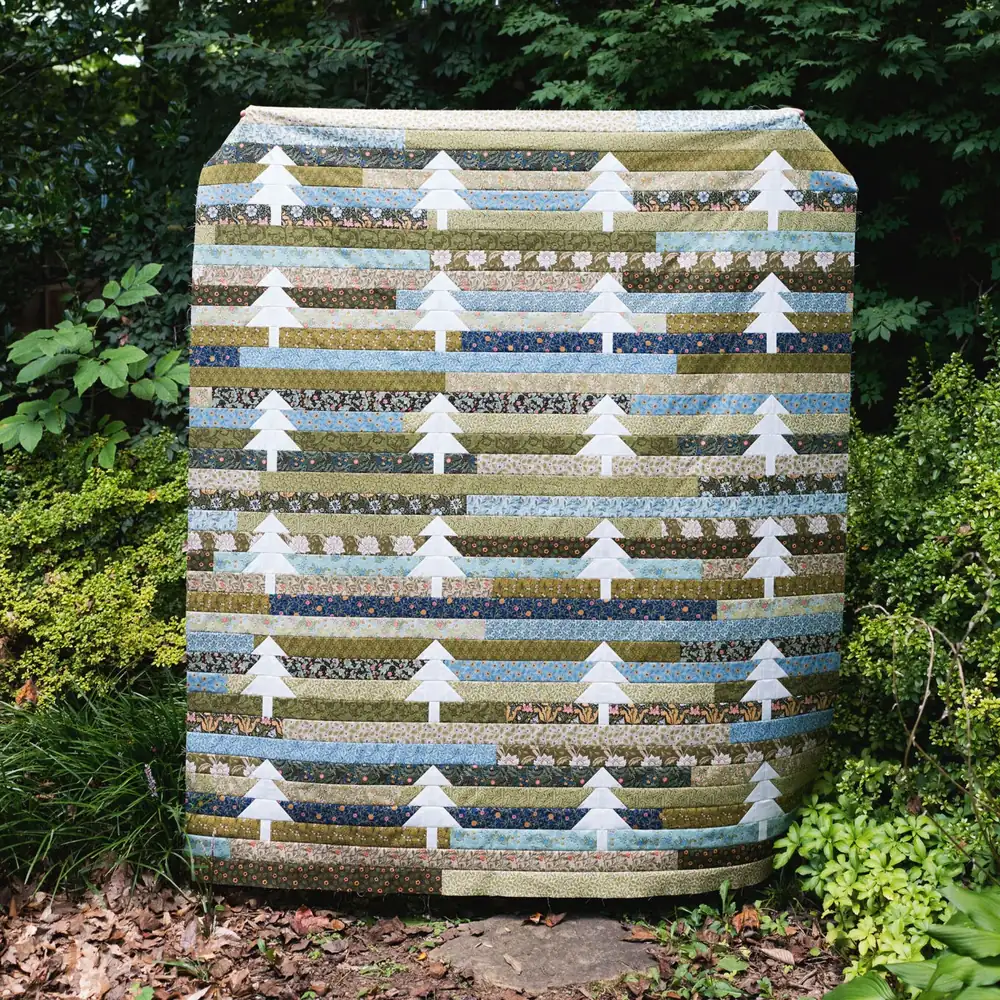
A jelly roll is a bundle of pre-cut fabric strips, and a pattern built around one saves you most of the cutting before you even begin. That head start is why this is a lovely first tree quilt.
Sew your strips into sets, then slice them into the tree shapes the pattern calls for, and keep every piece organized as you work. Pressing each seam as you go keeps the units flat, making them much easier to join into rows later.
2. Evergreen Tree Quilt Pattern and Tutorial
Skill Level: Beginner
Time to Make: A weekend
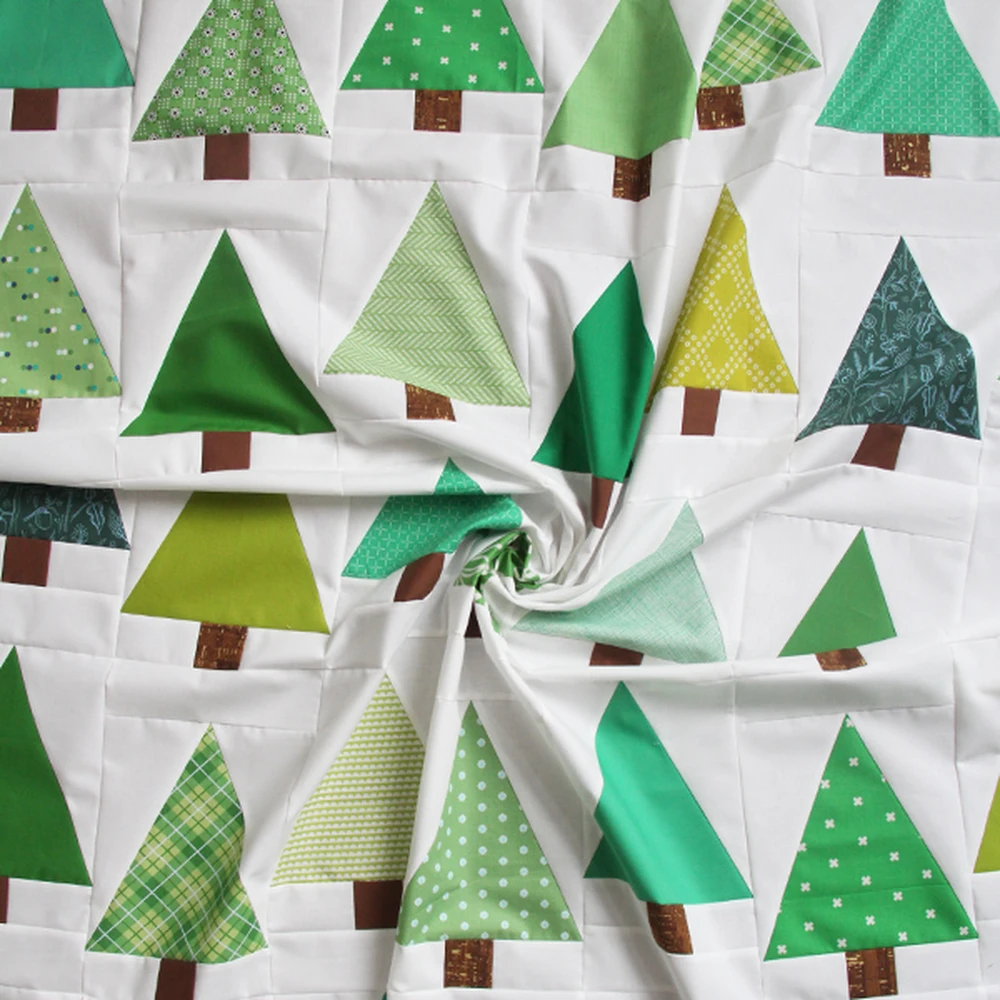
Evergreens are one of the easiest trees to piece, since the classic shape is really just a stack of triangles sitting on a small trunk. Because the shape repeats, you can chain-piece the units, feeding them through the machine one after another without snipping the thread.
Sew one tree first as a test to check your seam allowance before cutting the rest of your fabric. The practice pays off by the third tree, when everything starts to feel automatic.
3. Family Tree Quilt DIY
Skill Level: Confident beginner
Time to Make: A few weekends
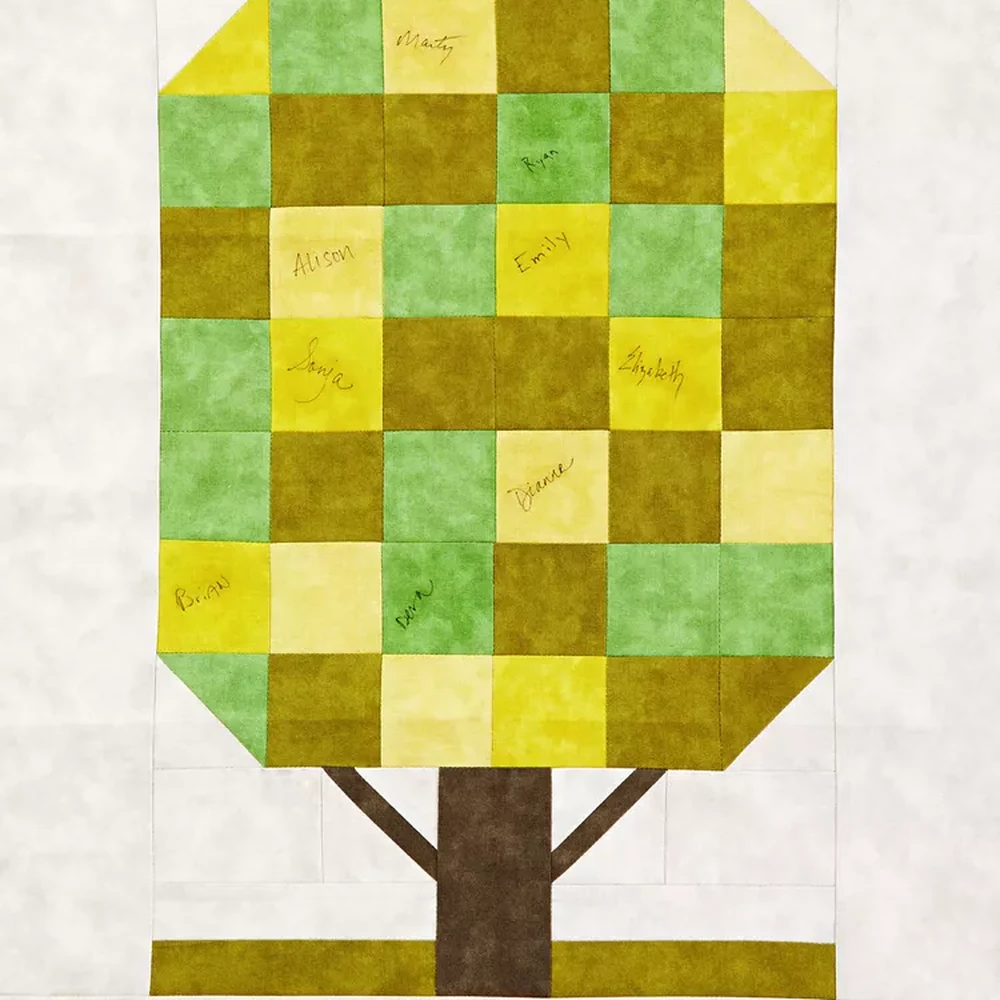
This is the quilt people tend to remember for decades, because it gathers names and stories into one piece of fabric. Before you sew anything, sketch your layout on paper and count how many branches or blocks you need, since families have a way of growing mid-project.
Keeping every block the same finished size makes the assembly so much smoother, and a set of twelve inch quilt blocks is a handy place to look for a size that is easy to plan around. Embroidering or writing names with a fabric pen is a sweet finishing touch.
4. Forest of Free Form Tree Quilts
Skill Level: Confident beginner
Time to Make: A weekend
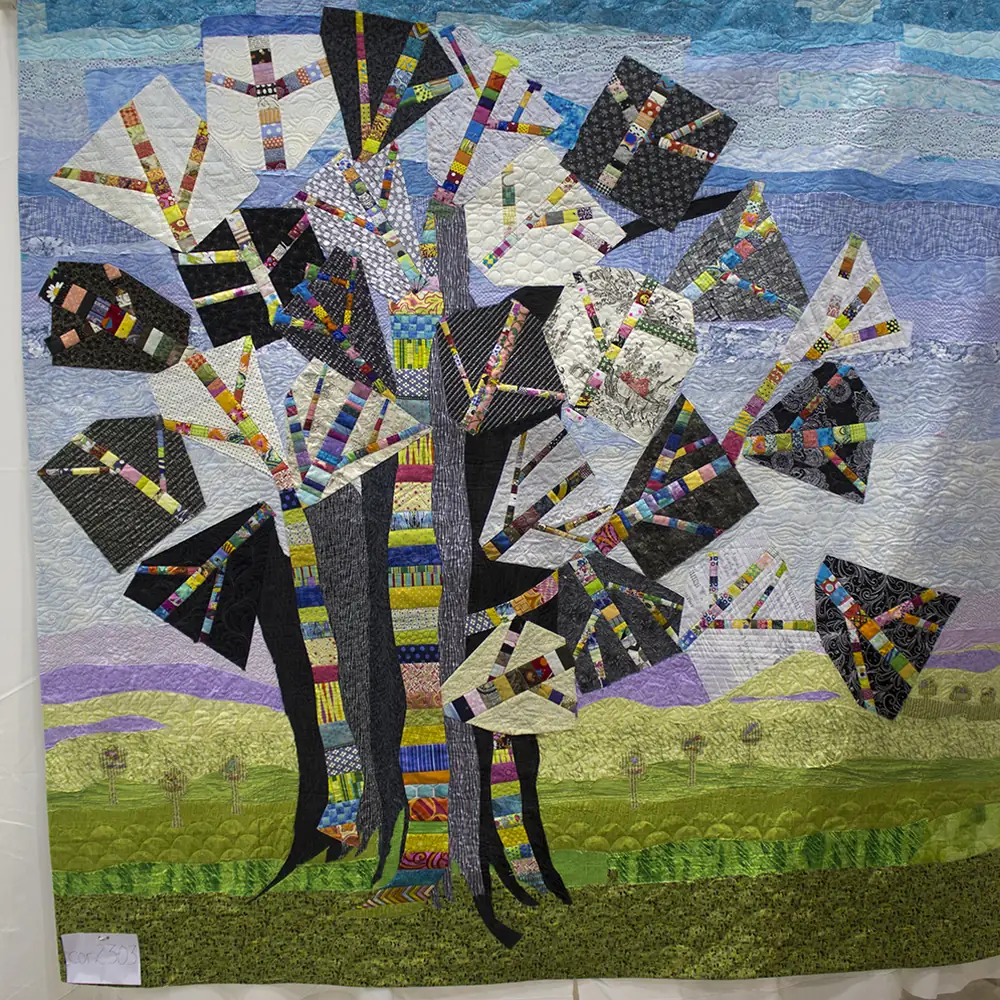
Free form piecing means you cut and sew without a strict ruler, letting each tree come out a little different, which is exactly the charm. It is also a wonderful way to use up odds and ends from your scrap basket.
Build your trees from narrow pieces sewn together, the same trick behind strip quilt patterns that turn leftovers into something lovely. Leave yourself some extra background fabric around each tree, since you can always trim it down at the end.
5. Tree of Life Quilt Pattern
Skill Level: Intermediate
Time to Make: A few weekends
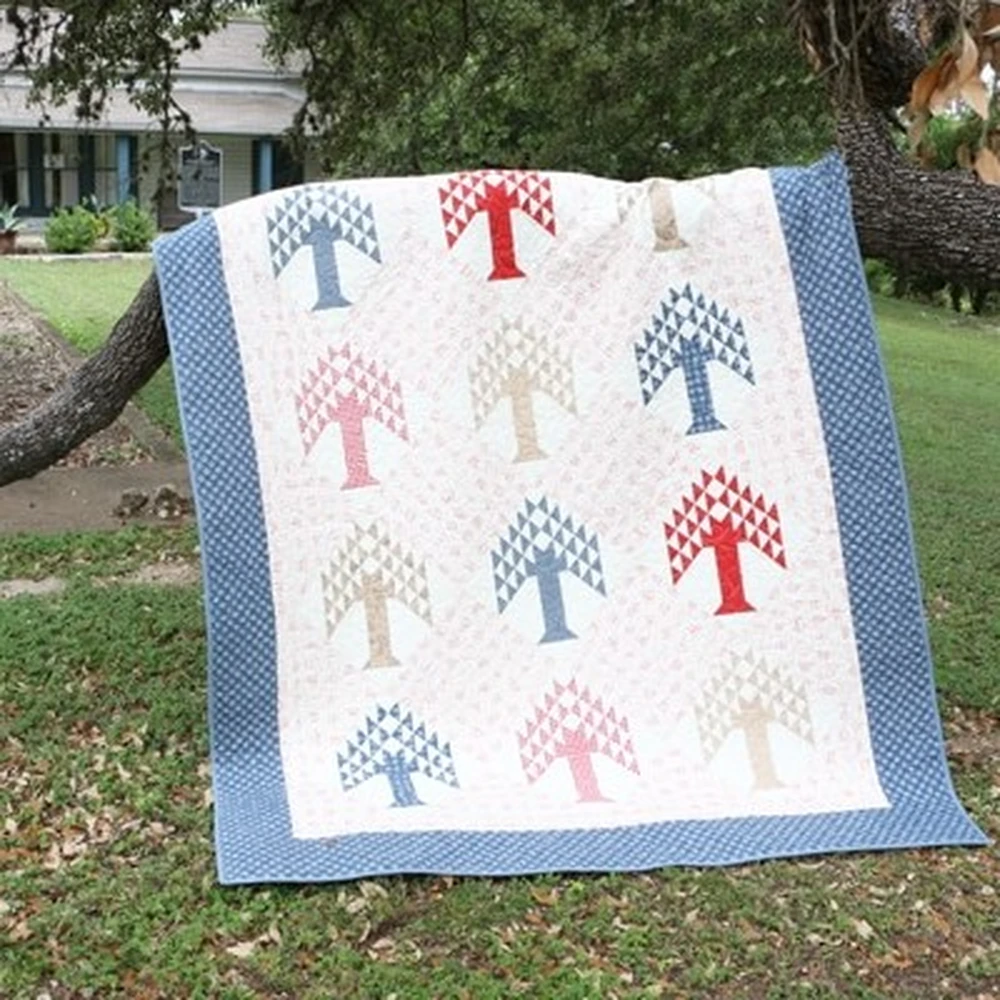
The tree of life is one of quilting’s oldest and most loved motifs, with versions stretching back generations. Many are built from small triangles arranged into branches, so accurate cutting matters.
If triangles feel unfamiliar, triangle quilt patterns are a good warm-up before you begin. Take your time laying the pieces out on a flat surface before you sew, because it is much easier to fix a branch while it is still loose than after it is stitched.
6. Jacaranda Tree Art Quilt
Skill Level: Intermediate
Time to Make: A few weekends
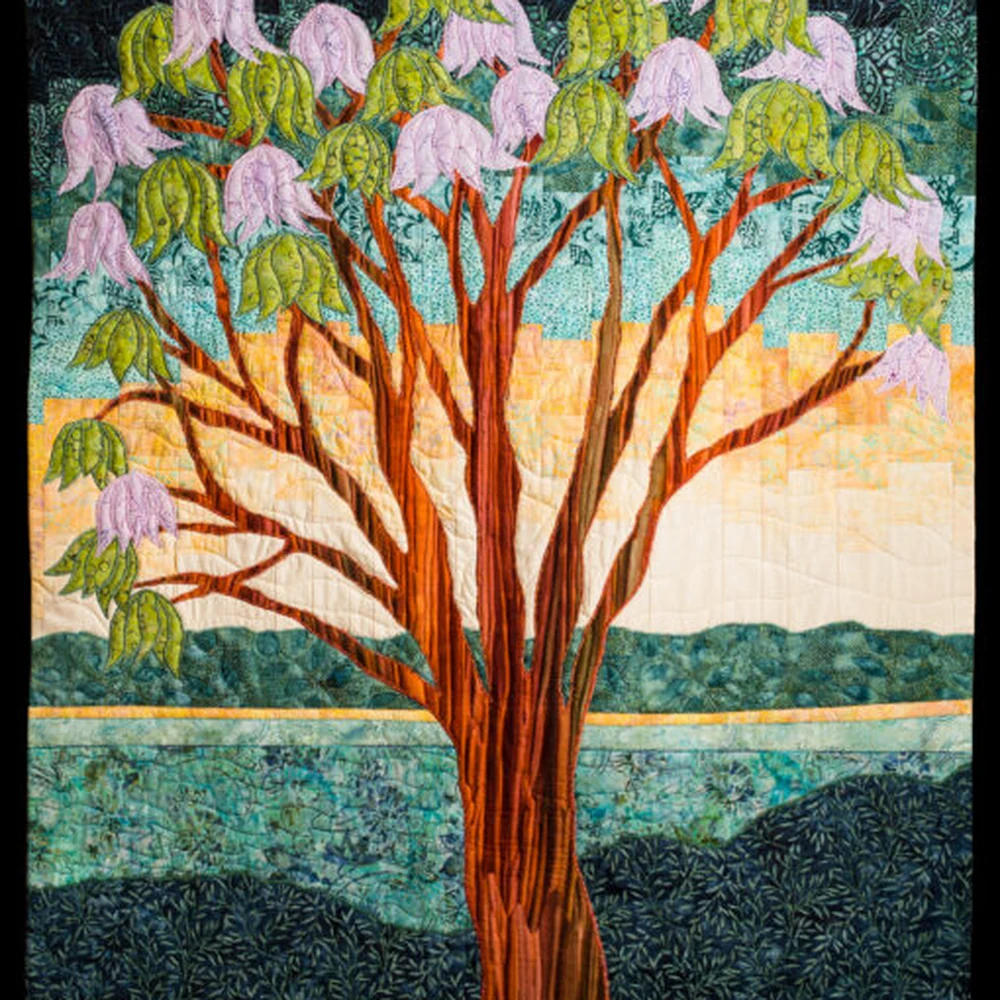
Art quilts ask you to think a little more like a painter, treating fabric as your medium and building the design in layers. Many tree art quilts use small pieces of fabric to form the canopy, and this pattern teaches you to arrange them with intention rather than precision.
You’ll also see that cluster of small shapes in hexagon quilt patterns, where many little pieces join into something bigger. Step back often, because your design looks different from a few feet away.
7. Windy Poplar Tree Quilt Pattern
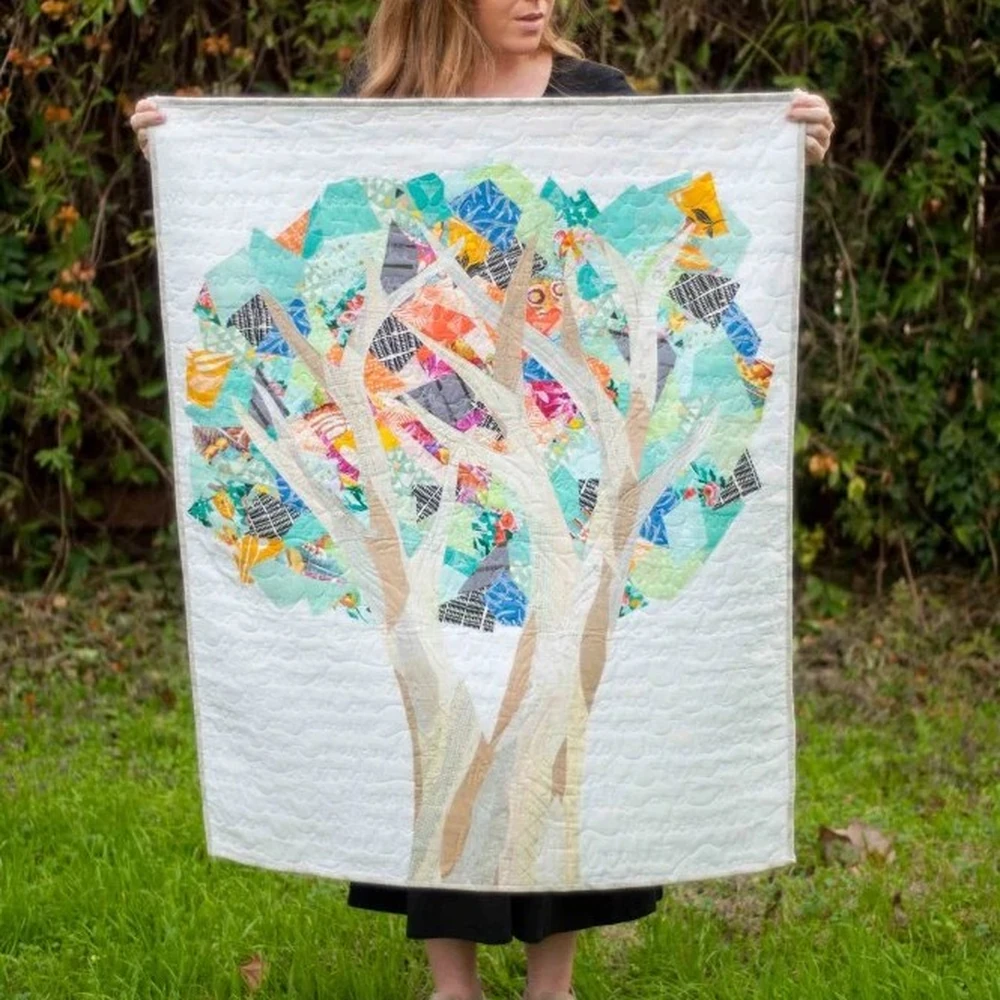
Skill Level: Confident beginner
Time to Make: A weekend
Poplars are tall and slim, and a quilt that captures them needs a layout that feels light and a little breezy. Narrow tree shapes are often made from triangle units, so half square triangle quilt patterns are a smart way to practice before you start.
Trim each unit to its exact size before assembling to keep your rows from drifting. A simple pattern like this can feel surprisingly dramatic once the trees are lined up.
8. Make a Circle Tree Quilt
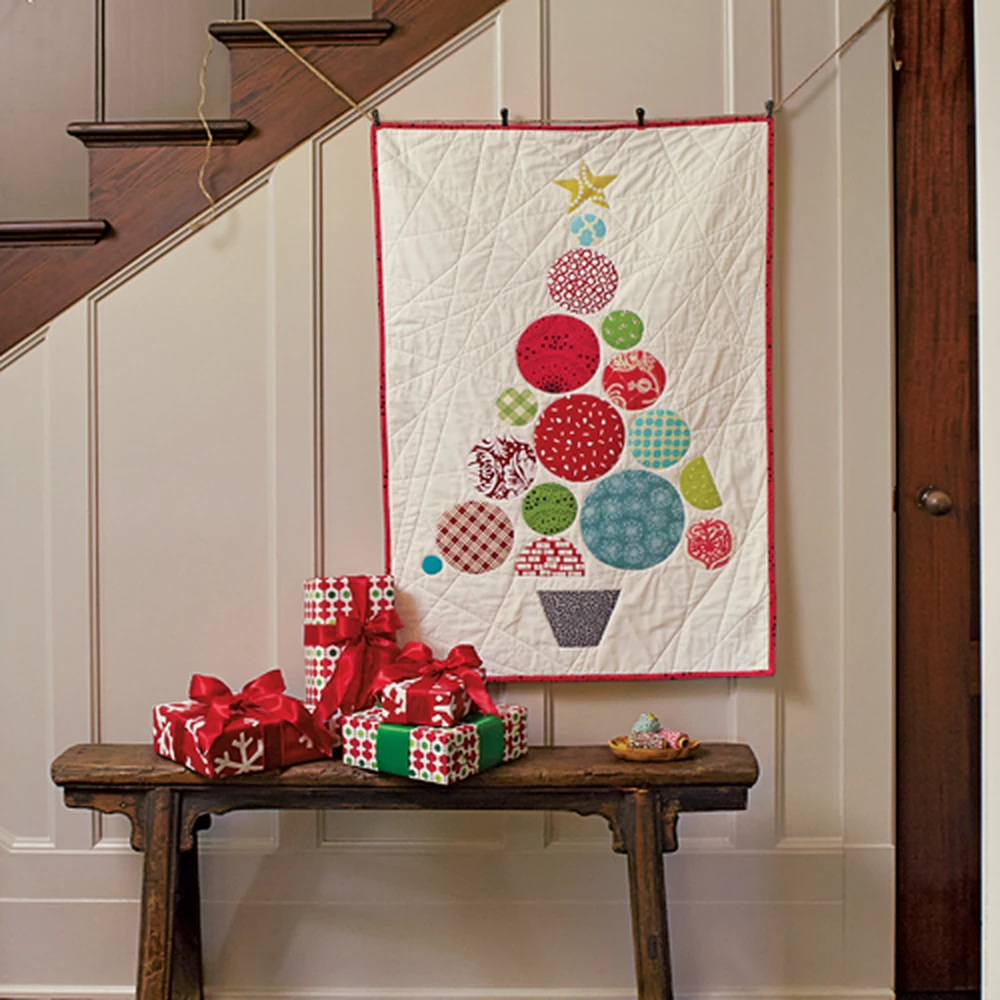
Skill Level: Beginner
Time to Make: A weekend
Using circles for the tree canopy is a playful idea, and it gives you a chance to practice sewing curves in a relaxed way. Appliqué, stitching a shape onto a background, is usually how you attach circles, and you can do it by machine or by hand.
Pin the shapes generously so nothing shifts while you stitch. If you want a pieced background behind them, a simple grid like those in nine patch quilt patterns works beautifully.
Habits That Make Tree Quilts Easier
Trees look best when they have a little variety, so try cutting trunks and canopies from different fabrics rather than repeating one over and over. Even small changes in height or width make a forest feel natural instead of stamped out.
Cold weather is a perfect time to sew something soft, and warm fabrics suit a winter forest well. If cozy is what you are after, browse flannel quilt patterns for ideas on handling that fuzzy, stretchy fabric.
Jelly roll and strip projects need consistent widths, so measure your strips before you begin and discard any that have stretched or frayed. For a gentle introduction to cutting and sewing them, beginner strip quilt patterns walk you through each step.
Where Tree Quilts Tend to Go Wrong
Rushing the cutting is the most common slip. Tree shapes are made of lots of small pieces, and a quarter inch of error repeated across dozens of units adds up quickly, so slow down and double-check your measurements.
Fabrics that fray easily can also cause trouble, especially in raw edge appliqué where the edges are left exposed. A technique like the one used in rag quilt patterns turns fraying into a feature, but you should choose that look on purpose rather than by accident.
Sewing a whole quilt before testing a single tree is another easy trap. Make one block first, press it, and measure it, and you will know right away whether your method is working.
Uneven block sizes can make assembly frustrating too. Practicing with a simple repeated block, like those in four patch quilt patterns, helps you build the habit of consistent seams before you move to more detailed designs.
If you enjoy building something bigger from many small shapes, you will love browsing these hexagon quilt patterns next.