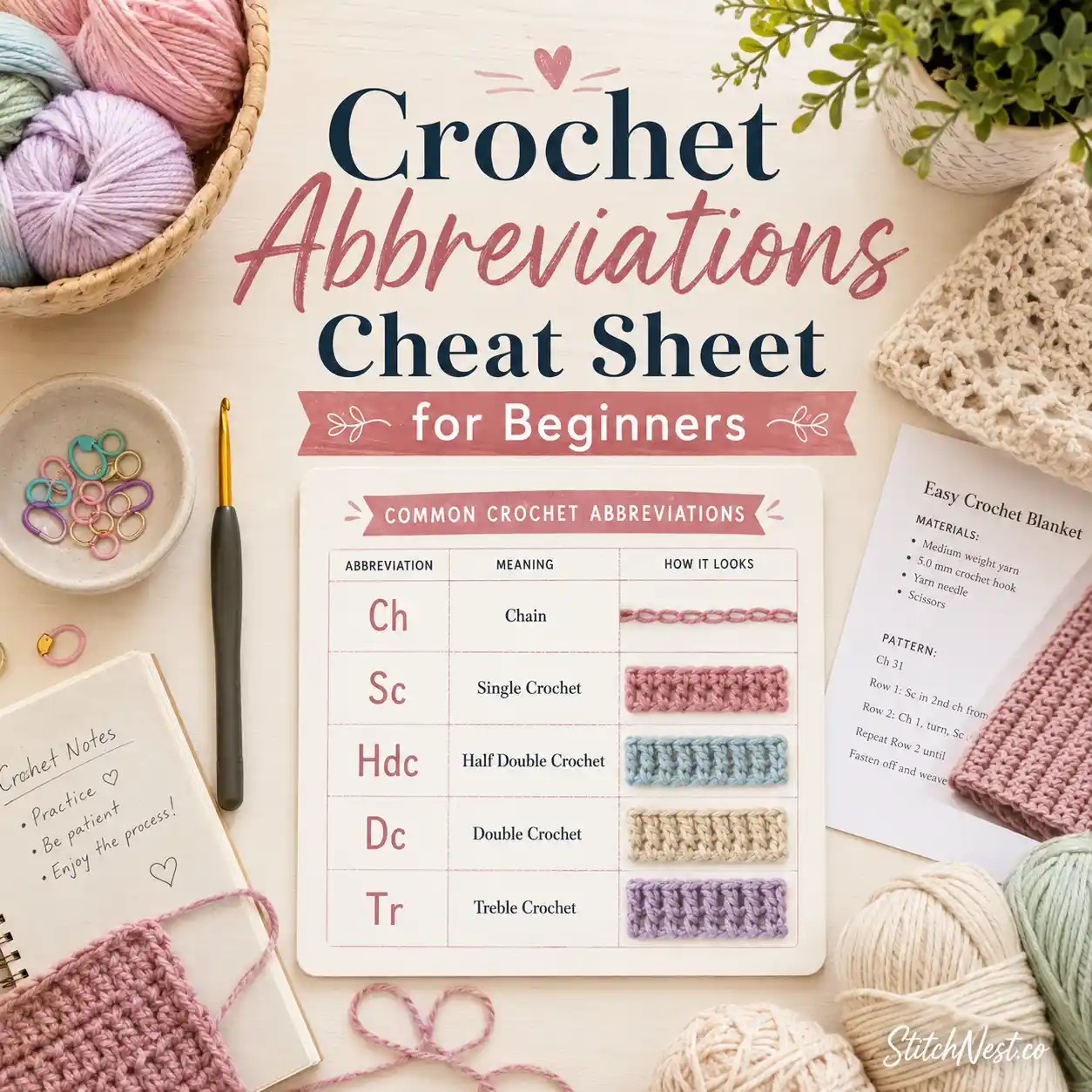
Learning your first crochet stitches feels like a huge step forward. Then you open a pattern, and suddenly it seems like someone forgot to include half the words. Instead of full instructions, you see things like “sc,” “dc,” “ch,” and “sl st” scattered across every line. Most beginners hit this moment and wonder if they’re missing something important. The good news is that crochet abbreviations aren’t nearly as complicated as they look. Once you understand what those abbreviations mean and how designers use them, crochet patterns become much easier to follow. Just follow this crochet abbreviations cheat sheet for beginners!
Helpful Tools for Learning Crochet Patterns
- Medium weight yarn in light colors for better stitch visibility
- A comfortable crochet hook that feels easy to hold
- Stitch markers to keep track of your progress
- Yarn needle for finishing clean edges
- Small scissors for quick trims
If you’re completely new to crochet patterns, our guide on How to Read Crochet Patterns for Beginners walks through rows, rounds, repeats, stitch counts, and pattern structure in much more detail.
Why Crochet Patterns Use Abbreviations
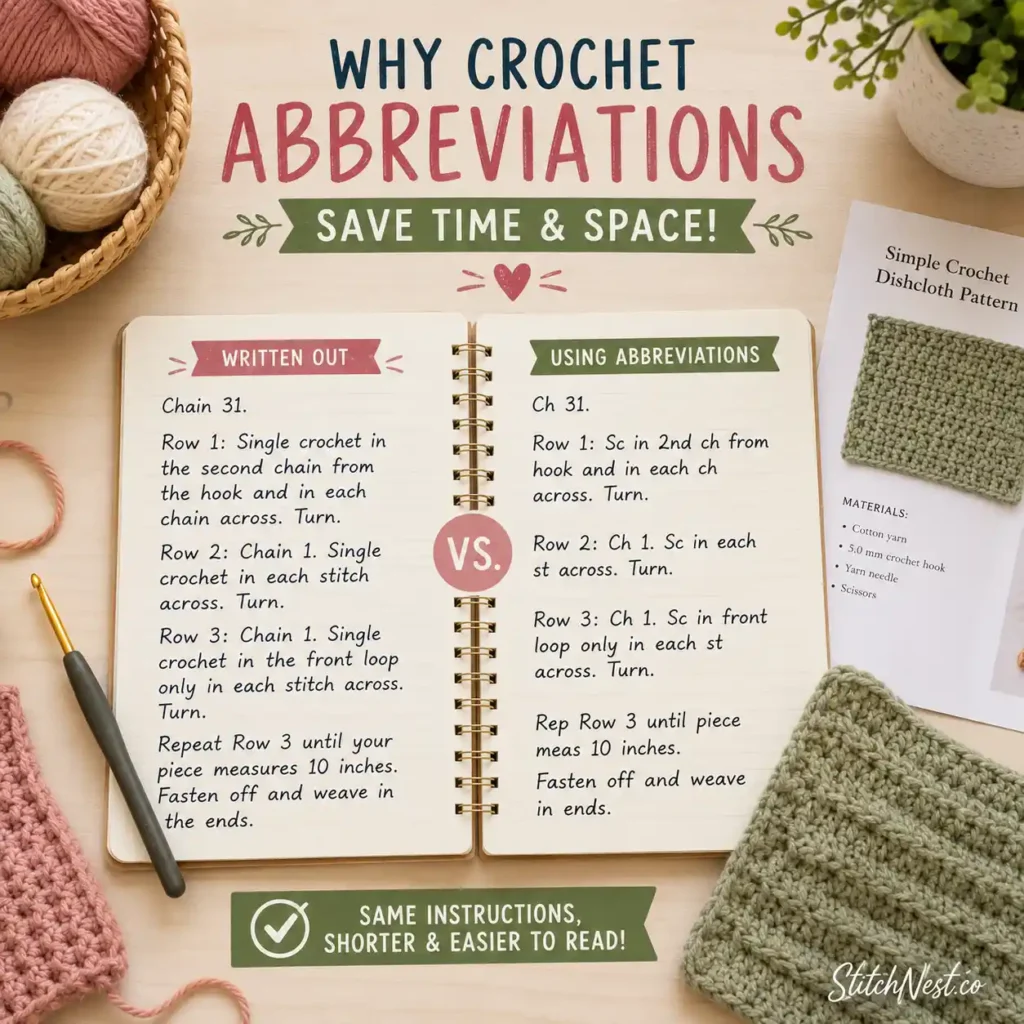
Imagine writing a blanket pattern without abbreviations. Instead of writing “dc” for double crochet, a designer would need to spell out “double crochet” dozens or even hundreds of times. Large projects could easily become several pages longer than necessary.
Abbreviations keep patterns shorter, easier to read, and much easier to follow once you’re familiar with them. They also create consistency. A crochet pattern written in Texas, California, New York, or Australia will often use many of the same abbreviations.
At first, those little letters can feel intimidating. After a few projects, you’ll start appreciating them because they allow you to scan a row quickly and focus on the stitches rather than long instructions.
The Crochet Abbreviations You’ll Use Most Often
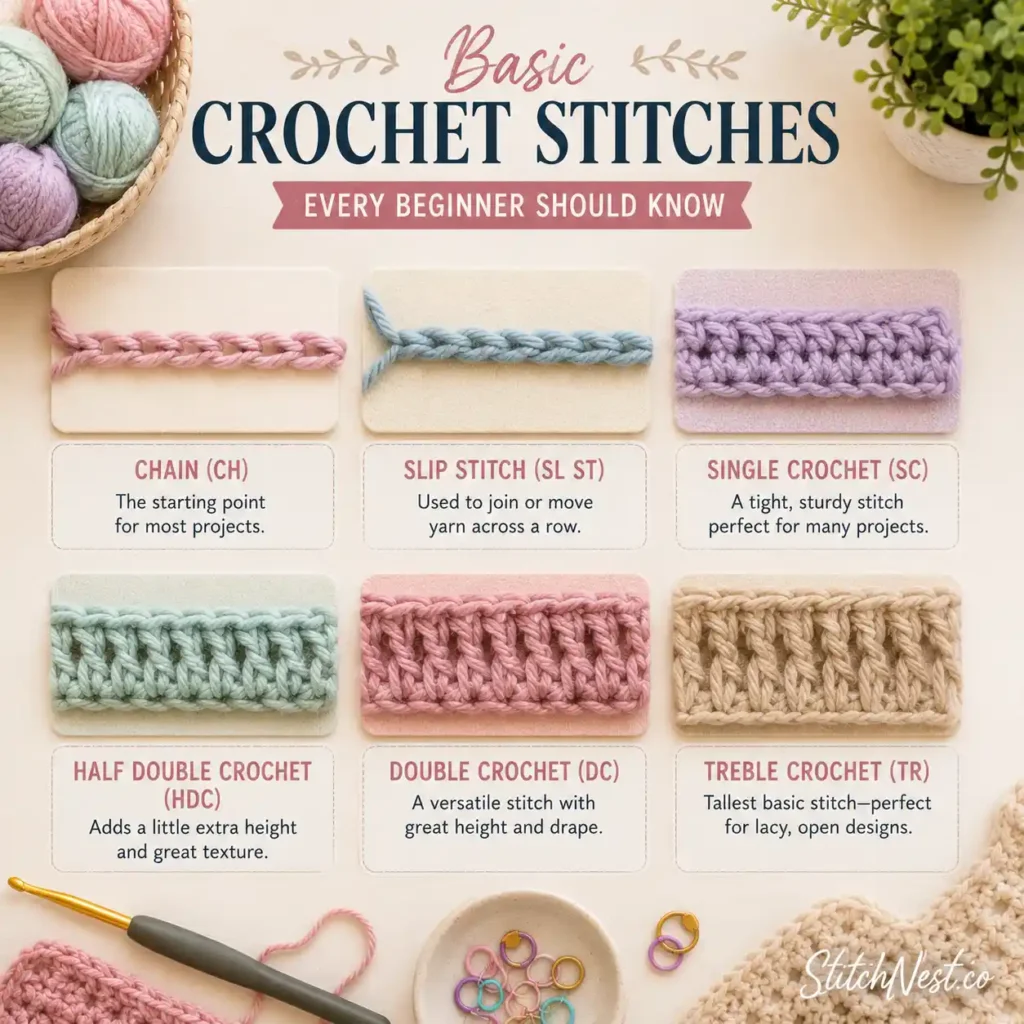
One of the biggest misconceptions among beginners is that they need to memorize dozens of abbreviations before starting a project. You really don’t. Most beginner-friendly patterns use a surprisingly small group of stitches.
The six abbreviations you’ll see most often are:
Ch = Chain
Sc = Single Crochet
Hdc = Half Double Crochet
Dc = Double Crochet
Tr = Treble Crochet
Sl St = Slip Stitch
Ch = Chain
The chain stitch is usually the first stitch every crocheter learns. Chains create the foundation for many projects and are also used throughout patterns to create spacing, turning chains, decorative openings, and stitch placement.
If a pattern says:
Ch 20
it simply means create twenty chain stitches.
Sl St = Slip Stitch
A slip stitch is one of the shortest stitches in crochet. You’ll often use it to join rounds, move yarn into position, finish motifs, or connect sections of a project. Many beginners expect slip stitches to build height, but their main purpose is usually connecting rather than creating fabric.
Sc = Single Crochet
Single crochet is one of the most commonly used stitches in crochet. It creates a dense, sturdy fabric that works beautifully for projects like dishcloths, baskets, amigurumi, coasters, bags, and home décor. If you’re just starting out, there’s a good chance you’ll see “sc” more than any other abbreviation.
Hdc = Half Double Crochet
Half double crochet sits right between single crochet and double crochet. It creates slightly taller stitches than single crochet without becoming overly open or loose. That’s one reason it appears so frequently in blankets, scarves, hats, and wearables.
Many crocheters consider half double crochet one of the most versatile stitches in the craft.
Dc = Double Crochet
Double crochet creates taller stitches and allows projects to grow much faster. Granny squares, blankets, shawls, and many beginner patterns rely heavily on double crochet because it’s easy to learn and creates beautiful stitch definition.
Once you become comfortable with double crochet, you’ll notice it showing up almost everywhere.
Tr = Treble Crochet
Treble crochet creates even taller stitches. Designers often use it when they want extra height, dramatic shaping, decorative details, flowers, butterflies, lacework, or airy fabric. It may look intimidating at first, but it’s simply an extension of stitches you already know.
If your stitches never seem to look the same from one row to the next, this guide on how to hold crochet yarn and maintain even tension can help.
A Helpful Reality Check
Do I Need to Memorize Crochet Abbreviations?
Not at all. Most crocheters keep a cheat sheet nearby when they’re learning, and many experienced crocheters still double-check abbreviations occasionally. The goal isn’t memorizing everything. It’s becoming familiar enough that the most common terms start looking natural.
After a few projects, you’ll start recognizing abbreviations without thinking about them. You’ll see “dc” and instantly think “double crochet” without stopping to decode it.
Understanding Stitch Counts
One thing beginners often overlook is the number at the end of a row.
For example:
Row 3: Sc in each st across. (24 sc)
That number isn’t decoration. It’s telling you exactly how many stitches you should have when the row is complete.
Stitch counts are one of the best tools for catching mistakes early. If the pattern says you should have twenty-four stitches and you count twenty-one, you know something happened before moving on to the next row. Experienced crocheters rely on stitch counts constantly, especially when working on garments and larger projects.
What Do Parentheses Mean?
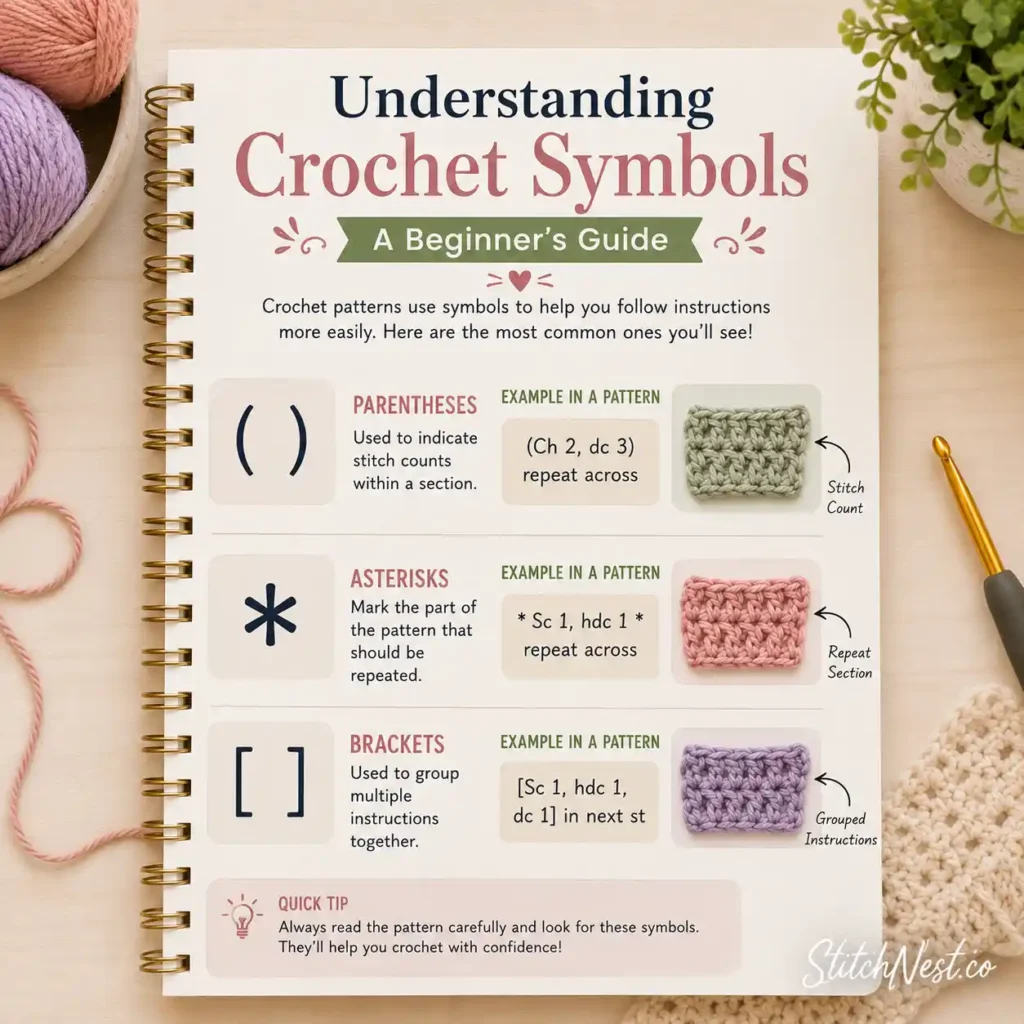
Parentheses are one of the first things that confuse beginners. In many patterns, parentheses indicate a stitch count.
Example:
Sc in each st across. (18 sc)
That simply means you should end the row with eighteen single crochet stitches. Other times, parentheses group instructions together.
Example:
(Sc, ch 1, sc) in next st
In this case, all of those stitches are worked into the same stitch. The pattern itself usually makes the intended meaning clear once you start reading the instructions as a whole rather than focusing on individual symbols.
What Do Asterisks Mean?
Asterisks tell you which instructions should be repeated. Instead of writing the same sequence over and over, designers use asterisks to save space.
Example:
Sc 1, dc 1, repeat from * across
This means you’ll continue repeating that stitch sequence until you reach the end of the row. Many beginners find crochet patterns much easier to understand once they realize how often repeats are used.
What Do Brackets Mean?
Brackets work similarly to asterisks, but they’re often used for larger groups of instructions.
Example:
[Sc 1, ch 1] 6 times
This tells you to repeat everything inside the brackets six times. You’ll frequently see brackets in granny squares, lace projects, decorative motifs, and larger repeat sections. Think of brackets as a way to keep longer instructions organized.
Common Crochet Pattern Terms
By now you’ve probably noticed that patterns use more than stitch abbreviations alone. Designers also rely on a handful of shorthand terms that appear regularly throughout rows, rounds, and stitch instructions.
- St means stitch.
- Sp means space.
- Rnd means round.
- Rep means repeat.
- Beg means beginning.
- Sk means skip.
- Yo means yarn over.
- Inc means increase.
- Dec means decrease.
Most of these terms become familiar surprisingly quickly because they appear in project after project.
US vs UK Crochet Terms
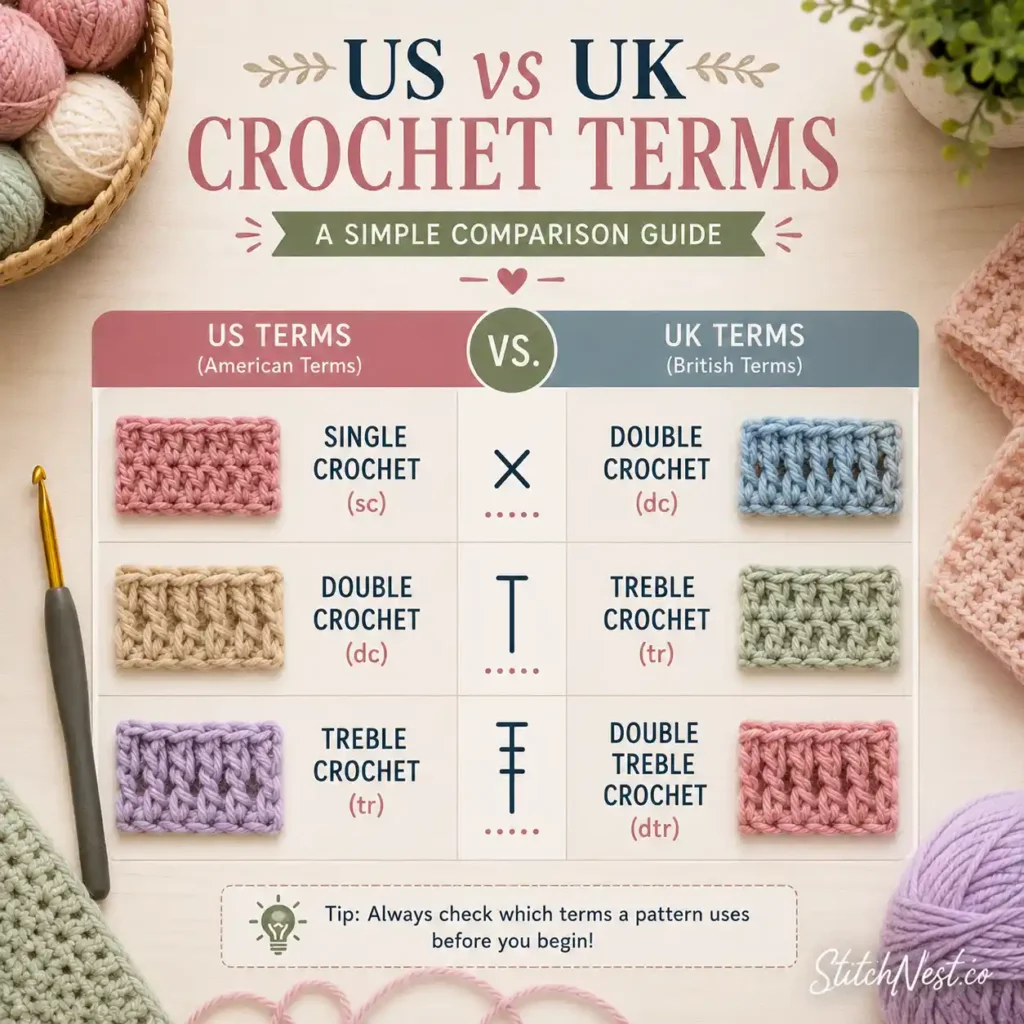
Almost every crocheter encounters this confusion at some point. A double crochet in a US pattern is not the same thing as a double crochet in a UK pattern.
For example:
US Single Crochet = UK Double Crochet
US Half Double Crochet = UK Half Treble Crochet
US Double Crochet = UK Treble Crochet
US Treble Crochet = UK Double Treble Crochet
That’s why it’s important to check which terminology a pattern uses before you begin. Most designers mention this near the top of the pattern, often in the materials or notes section. A quick glance can prevent a lot of frustration later.
Understanding crochet terminology is only part of the equation. Using the right hook size matters too, so be sure to check out our Beginner’s Guide to Crochet Hooks before starting your next project.
Abbreviations You Don’t Need to Learn Yet
One mistake beginners often make is trying to learn every abbreviation they can find online. There’s really no need.
Terms like FPDC, BPDC, FPtr, BPtr, Puff, Cluster, Bobble, and Popcorn stitches usually appear in more advanced patterns.
Focus on chains, slip stitches, single crochet, half double crochet, double crochet, and treble crochet first. Those few stitches alone can produce an incredible number of projects. Many experienced crocheters still spend most of their time using those same core stitches.
Practical Tips From Experienced Crocheters
- One habit that helps tremendously is keeping a screenshot of common abbreviations on your phone. Even after years of crocheting, it’s convenient to have a quick reference nearby.
- Reading an entire row before picking up your hook is another habit worth developing. Many mistakes happen because people start stitching before fully understanding the instructions.
- You should also get comfortable counting stitches regularly. Counting may not be the most exciting part of crochet, but it prevents far more problems than it creates.
- Finally, remember that every crocheter pauses to reread a pattern occasionally. Needing to double-check instructions isn’t a sign that you’re doing something wrong. It’s simply part of the process.
Once you’re comfortable reading abbreviations, these Beginner Crochet Projects You Can Actually Finish and Feel Good About are a great next step.
Common Beginner Mistakes
One of the most common mistakes is assuming every abbreviation means the same thing in every pattern. That’s why checking the abbreviation guide and terminology notes is always worth a few seconds. Another issue comes from skipping the pattern notes at the beginning. Many designers include important information there about stitch counts, sizing, special techniques, and terminology.
A lot of beginners also focus so much on learning abbreviations that they forget to watch their stitch counts. In reality, stitch counts are often the quickest way to spot a mistake before it grows into a much larger problem.
Printable Crochet Abbreviations Cheat Sheet
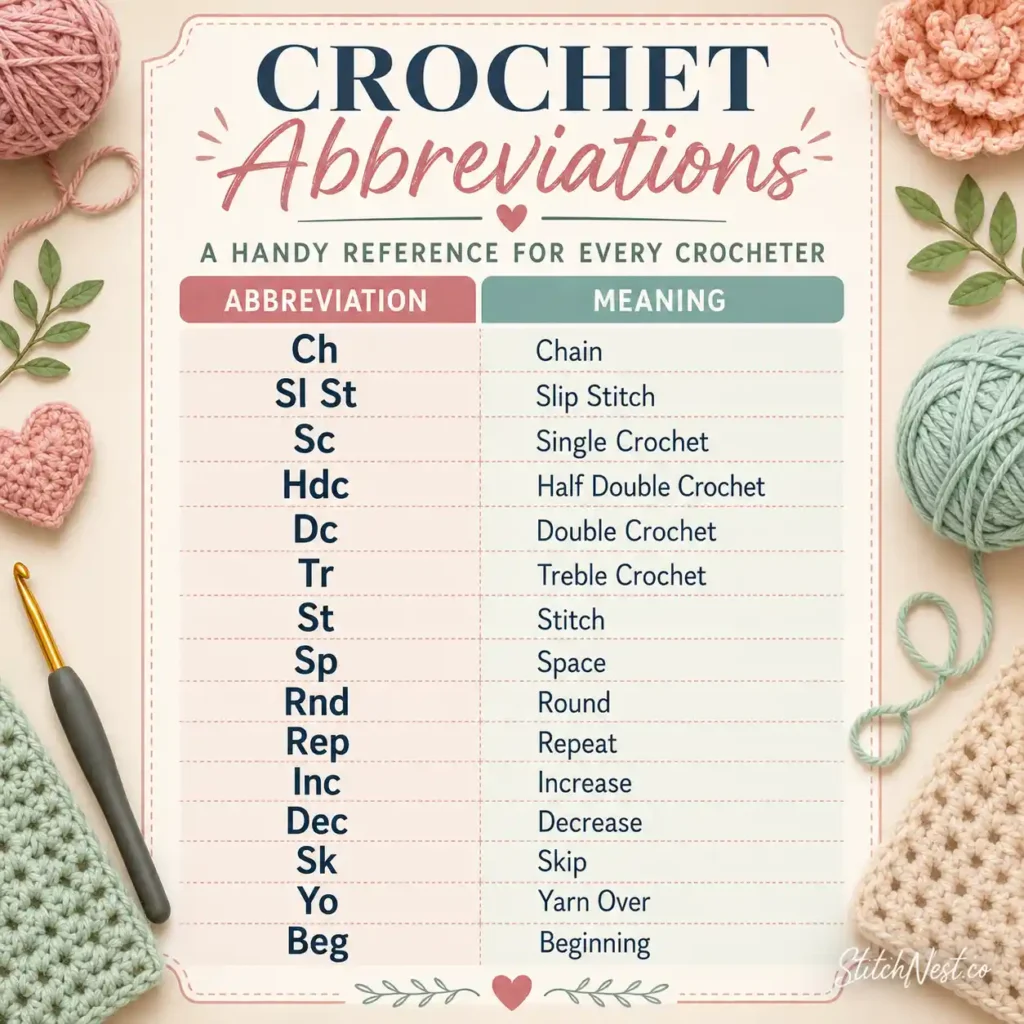
Save this list, print it out, or bookmark this page for future projects. These fifteen abbreviations appear in a huge percentage of beginner crochet patterns. Once you become comfortable with them, reading patterns starts feeling much less like decoding instructions and much more like following a familiar roadmap.
The first crochet pattern always feels harder than it really is because you’re learning a new language at the same time you’re learning a new skill. Stick with it, keep this cheat sheet nearby, and before long you’ll find yourself reading crochet patterns with far more confidence than you ever thought possible.
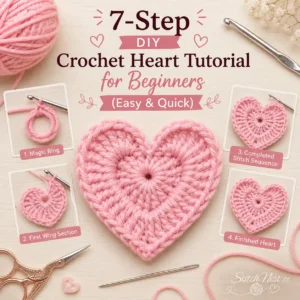
Ready to put these abbreviations into practice? Try our DIY Crochet Heart Tutorial for Beginners, which uses many of the stitches covered in this guide.
Crochet abbreviations can feel confusing when you first encounter them, but most patterns rely on the same small group of terms again and again. Keep this cheat sheet nearby, practice with a few beginner projects, and you’ll be surprised how quickly those letters start making sense.
You can also practice these stitches with our popular DIY Crochet Butterfly Tutorial, a quick project that’s perfect for beginners.



Hi there, its good article on the topic of media print, we all understand media is a wonderful source of data. Easy to read info! Thanks.
After looking at a few of the articles on your web page, I really like your way of blogging.
I book marked it to my bookmark webpage list and will be
checking back in the near future. Thank you for all the useful info!
Hi there! This post could not be written any better! Going through this article reminds me of my
previous roommate! He constantly kept talking about this.
I will forward this post to him. Fairly certain he will
have a good read. Thanks for sharing!
Everyone loves what you guys are up too. Such clever work and coverage!
Keep up the fantastic works guys I’ve incorporated you guys to my blogroll.
Hi there, I discovered your blog via Google while looking for a comparable topic, your web site got here
up, it seems great. I have bookmarked it in my google bookmarks.
Many folks can be benefited out of your writing. Cheers!