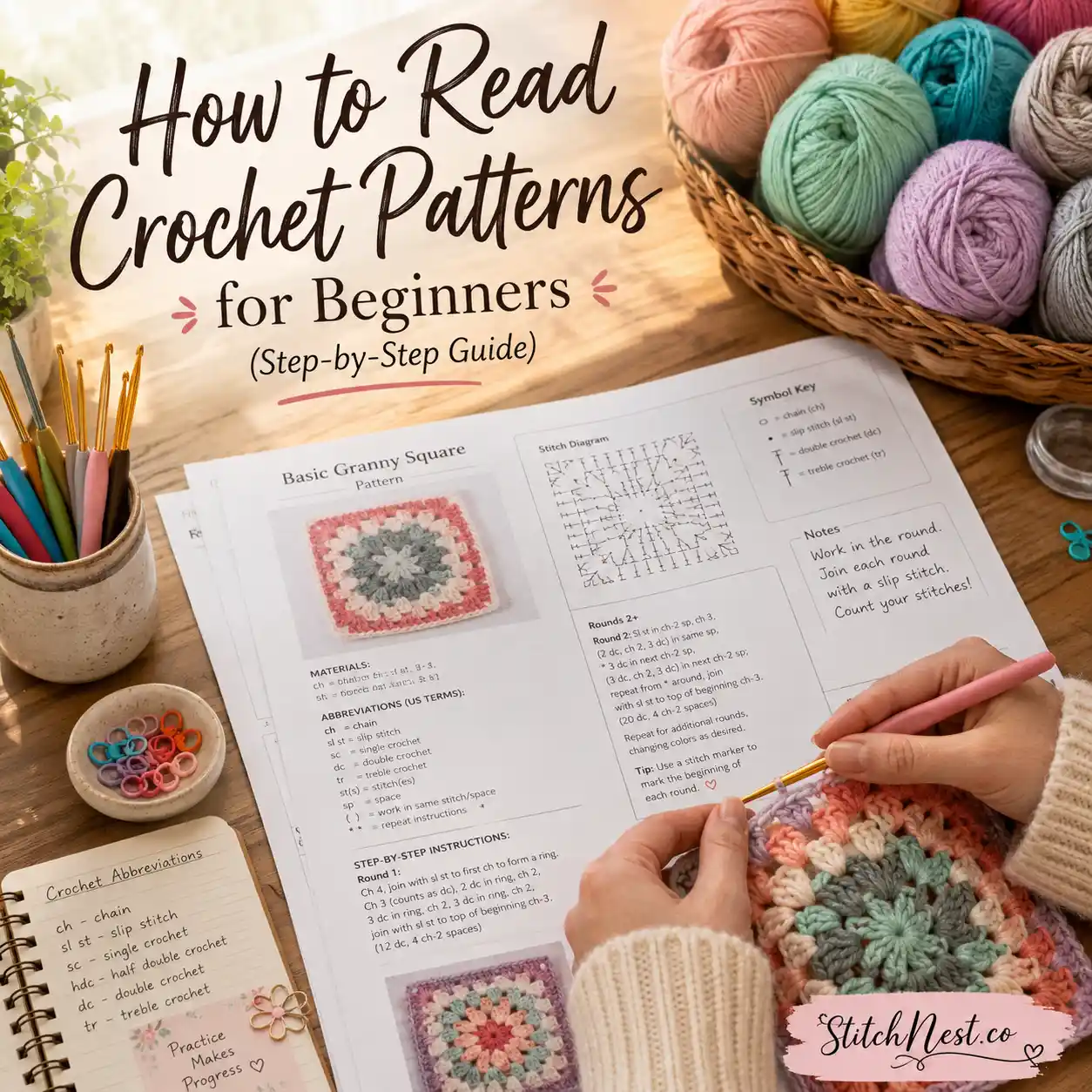
Don’t know how to read crochet patterns? Not to worry! Learning your first crochet stitches feels like a big accomplishment. We know abbreviations, numbers, parentheses, brackets, and instructions packed into a single line can make even simple projects feel intimidating. The good news is that crochet patterns are far more predictable than they appear. Let’s break everything down step by step so you can approach your next crochet pattern with confidence.
Why Crochet Patterns Look So Confusing
Crochet patterns are designed to save space and communicate information quickly. Imagine writing out every instruction in full for a large blanket or sweater. A pattern could easily become dozens of pages longer than necessary.
That’s why designers rely on abbreviations. Instead of writing “single crochet” fifty times, they simply write “sc.” Instead of repeating the same sequence over and over, they use symbols and shortcuts that tell you exactly what to repeat. At first, those shortcuts can feel overwhelming. After a few projects, they become second nature.
Don’t Panic If a Pattern Looks Complicated
Many crochet patterns look difficult simply because they’re written in shorthand. Once you break the instructions into smaller pieces, you’ll often discover the project is using stitches you already know.
Start With the Materials List
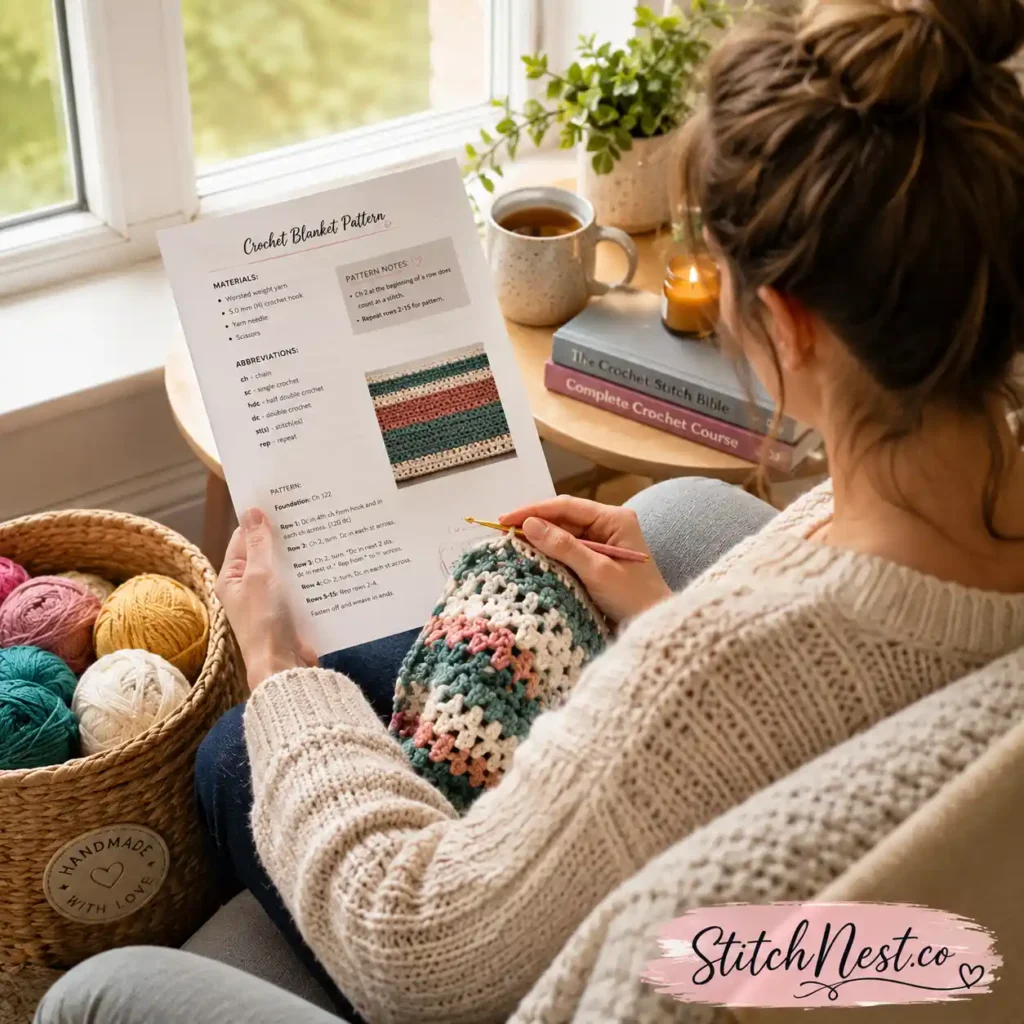
Before looking at the actual instructions, take a moment to read the materials section. Most of us have skipped the materials list at least once because we’re eager to get started. Unfortunately, that’s also one of the easiest ways to miss important information about yarn, hook sizes, or project sizing. The materials list tells you which yarn was used, the recommended hook size, any additional tools you’ll need, and sometimes the finished size of the project.
A pattern may also include gauge information, which we’ll discuss later. Paying attention to these details before you begin can save a lot of frustration down the road.
You know, a quality ergonomic hook set is one of the best investments you can make if you’re planning to crochet regularly. Comfortable hooks become especially important during larger projects like blankets, garments, and home décor pieces. Don’t forget to check out our beginner’s guide to crochet hooks, too!
Common Crochet Abbreviations You’ll See Everywhere
When you’re learning to read patterns, abbreviations often feel like the biggest obstacle. The reality is that you’ll encounter the same small group of abbreviations in most beginner patterns. Once you recognize them, reading patterns becomes much less intimidating.
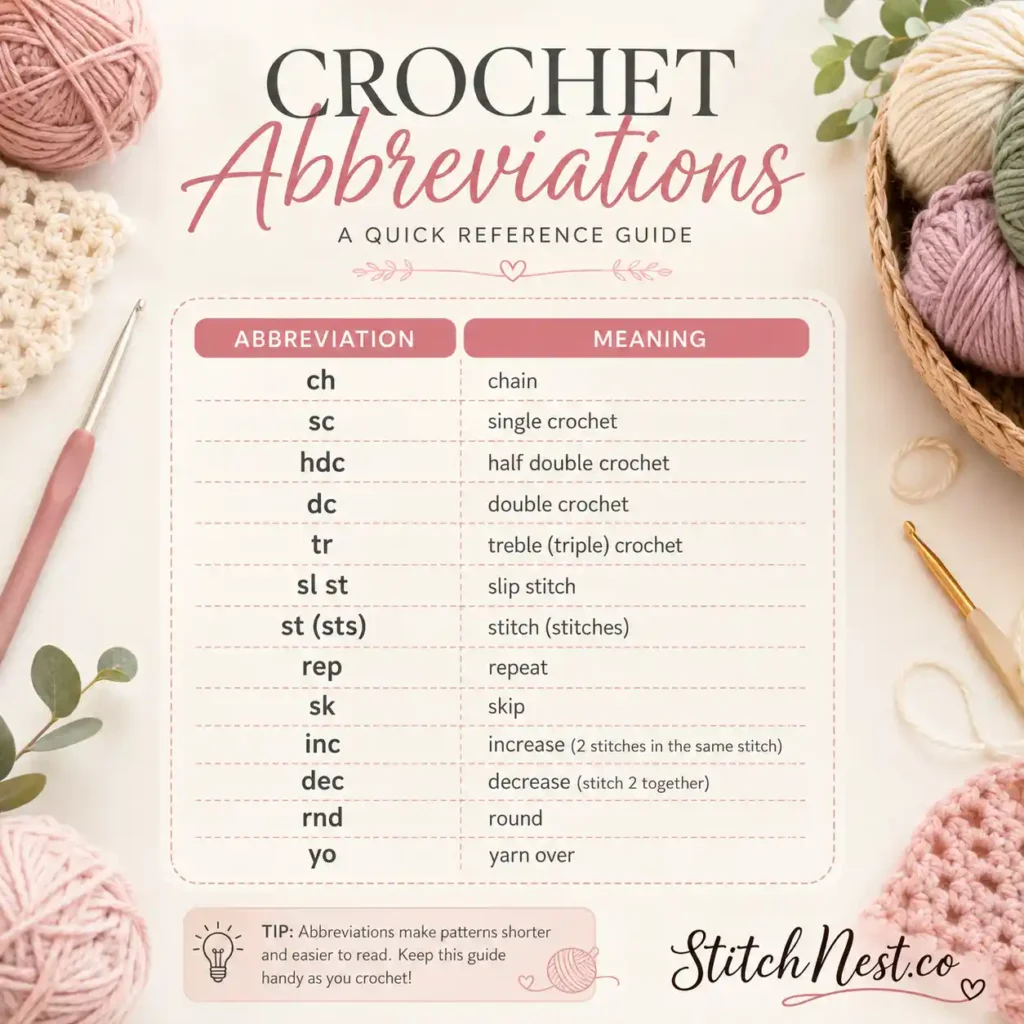
Most crochet patterns use abbreviations. Fortunately, the same abbreviations appear again and again.
Another thing worth knowing is that most patterns include an abbreviation key near the beginning. You don’t need to memorize every abbreviation before you start crocheting.
Before you tackle your next pattern, make sure you’re comfortable with the most common crochet abbreviations. This Crochet Abbreviations Cheat Sheet for Beginners can save you a lot of confusion later.
Understanding Rows
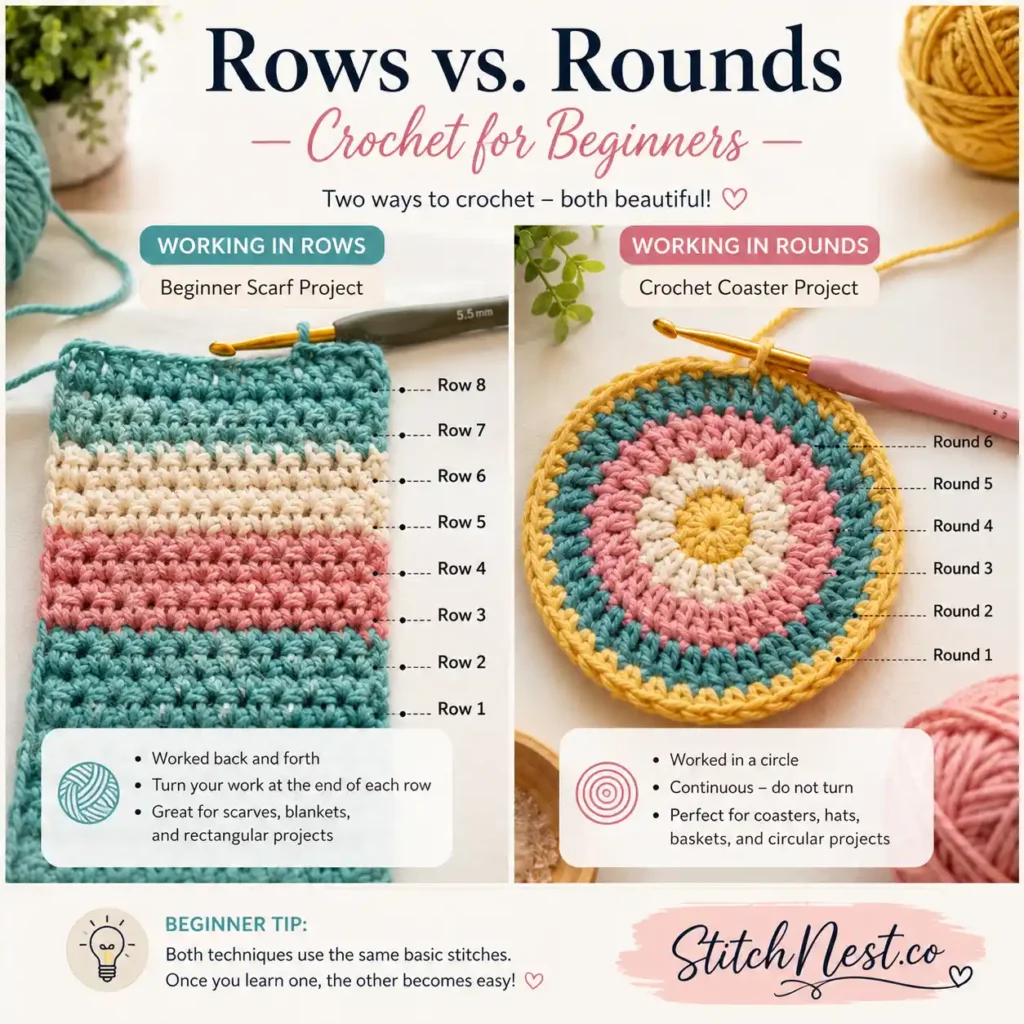
Rows are common in projects such as scarves, blankets, washcloths, and table runners. A row pattern usually starts with a foundation chain. Each row is worked back and forth, turning your work at the end of every row.
A pattern might say:
Row 1: Sc in 2nd ch from hook and in each ch across. (15 sc)
At first glance, that may seem complicated. In reality, it’s simply telling you to work one single crochet stitch into each chain across the row. The number in parentheses tells you how many stitches you should have when the row is finished.
Think of the stitch count as a quick accuracy check. If your count matches the pattern, you’re probably on the right track.
Understanding Rounds
Rounds are used for projects such as hats, baskets, coasters, amigurumi, and many decorative motifs. Instead of turning your work at the end of each row, you continue working in a circle. A round instruction might look like this:
Rnd 1: 6 sc in magic ring. (6 sc)
The number in parentheses works the same way as it does in row patterns. It’s simply confirming how many stitches you should have completed.
Many beginners find rounds easier once they start using stitch markers. Stitch markers help you keep track of the beginning of each round and can prevent a lot of counting mistakes, especially in amigurumi projects.
Love crocheting flowers? Our DIY crochet hibiscus flower tutorial walks you through every step and shows you how to create a realistic bloom you can add to bags, hats, hair clips, and more.
What Do Parentheses Mean?
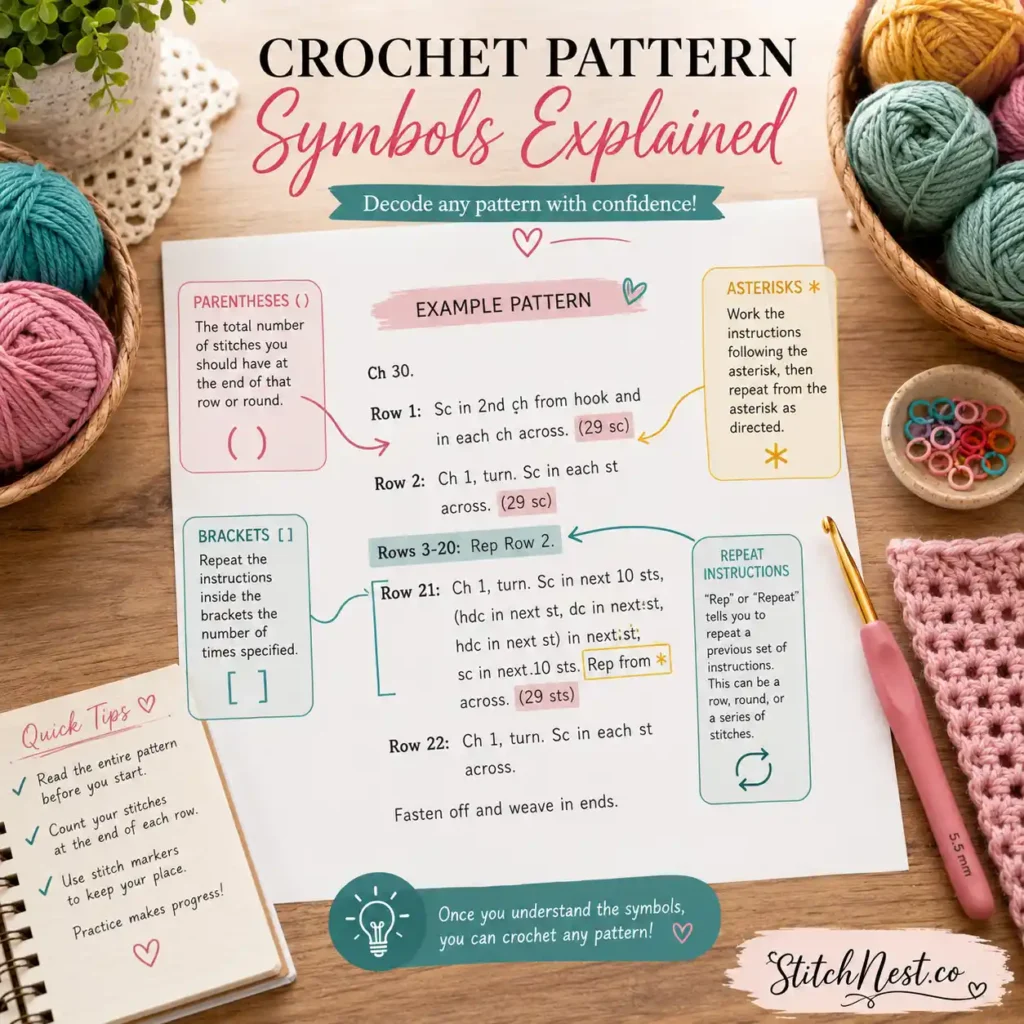
Parentheses are one of the most common things beginners ask about. In many patterns, parentheses indicate the stitch count at the end of a row or round. For example:
Sc in each st across. (24 sc)
This means you should have 24 single crochet stitches when the row is complete. Sometimes parentheses contain instructions that need to be worked into a single stitch.
Example:
(Sc, ch 1, sc) in next st
In that case, everything inside the parentheses is worked into the same stitch. The pattern itself will usually make the intended meaning clear.
What Do Asterisks Mean?
Asterisks tell you which instructions need to be repeated. For example:
Sc 1, dc 1 repeat across
This means you’ll continue repeating the sequence of one single crochet followed by one double crochet until you reach the end of the row. Once you understand asterisks, many crochet patterns suddenly become much easier to follow.
What Do Brackets Mean?
Brackets work similarly to asterisks but are often used for larger repeat sections. Example:
[Sc 1, ch 1] 6 times
This means you’ll repeat the instructions inside the brackets six times. Many lace patterns, granny squares, and decorative motifs use brackets regularly.
If your stitches never seem to look the same from one row to the next, this guide on how to hold crochet yarn and maintain even tension can help.
The Section Most Beginners Skip: Gauge
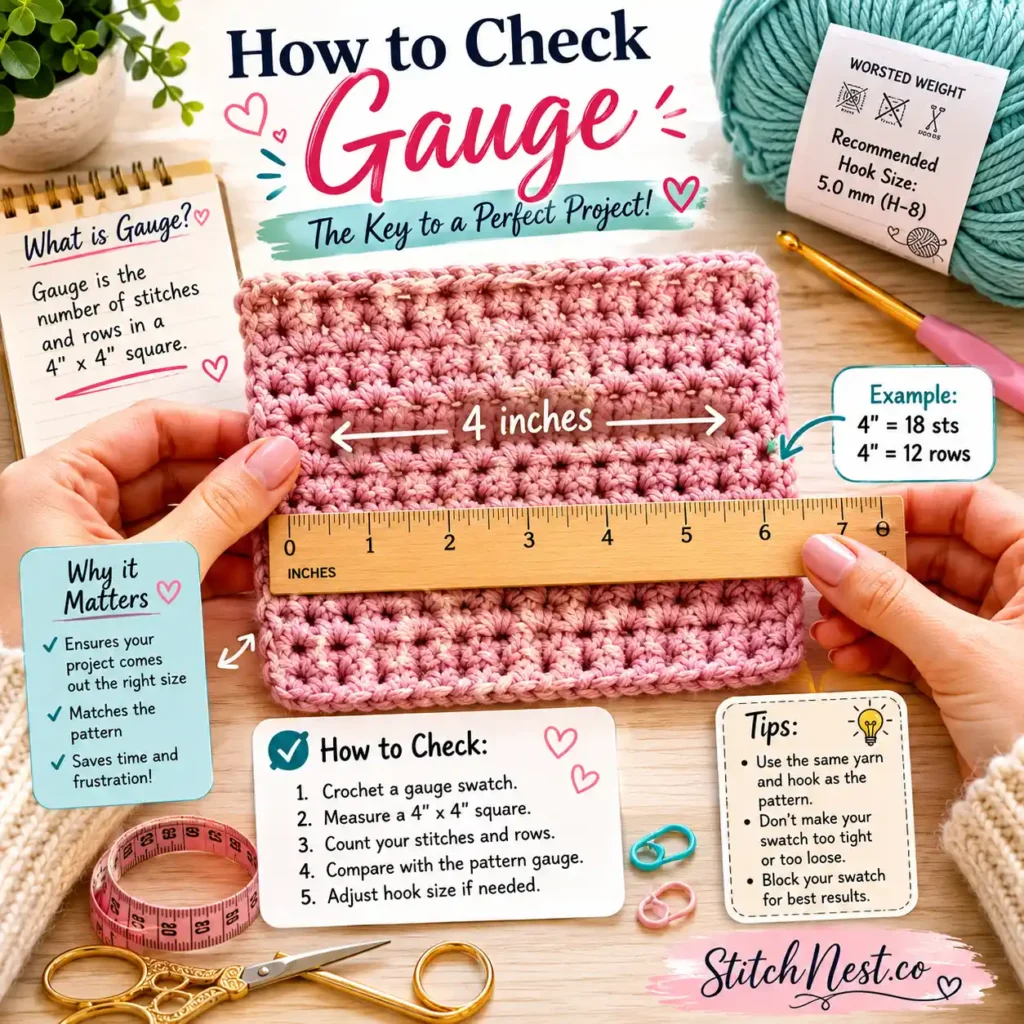
Gauge sounds intimidating, but it doesn’t need to be. It simply measures how many stitches and rows fit within a specific area, usually four inches. Beginners usually skip gauge because they’re eager to start crocheting. Almost everyone does it at least once. Then they finish a sweater that’s two sizes too large or too small and suddenly understand why gauge exists.
Here’s the practical version:
- If you’re making a coaster, gauge usually isn’t a big deal.
- If you’re making a sweater, cardigan, or fitted garment, gauge matters a lot.
A project that’s too large or too small often comes down to gauge rather than crochet skill. And checking gauge before starting larger projects can save hours of disappointment later.
Love cozy hobbies? Pair your next reading session with one of these crochet book cover patterns and make your favorite book even more enjoyable to carry around.
Let’s Read a Crochet Pattern Together
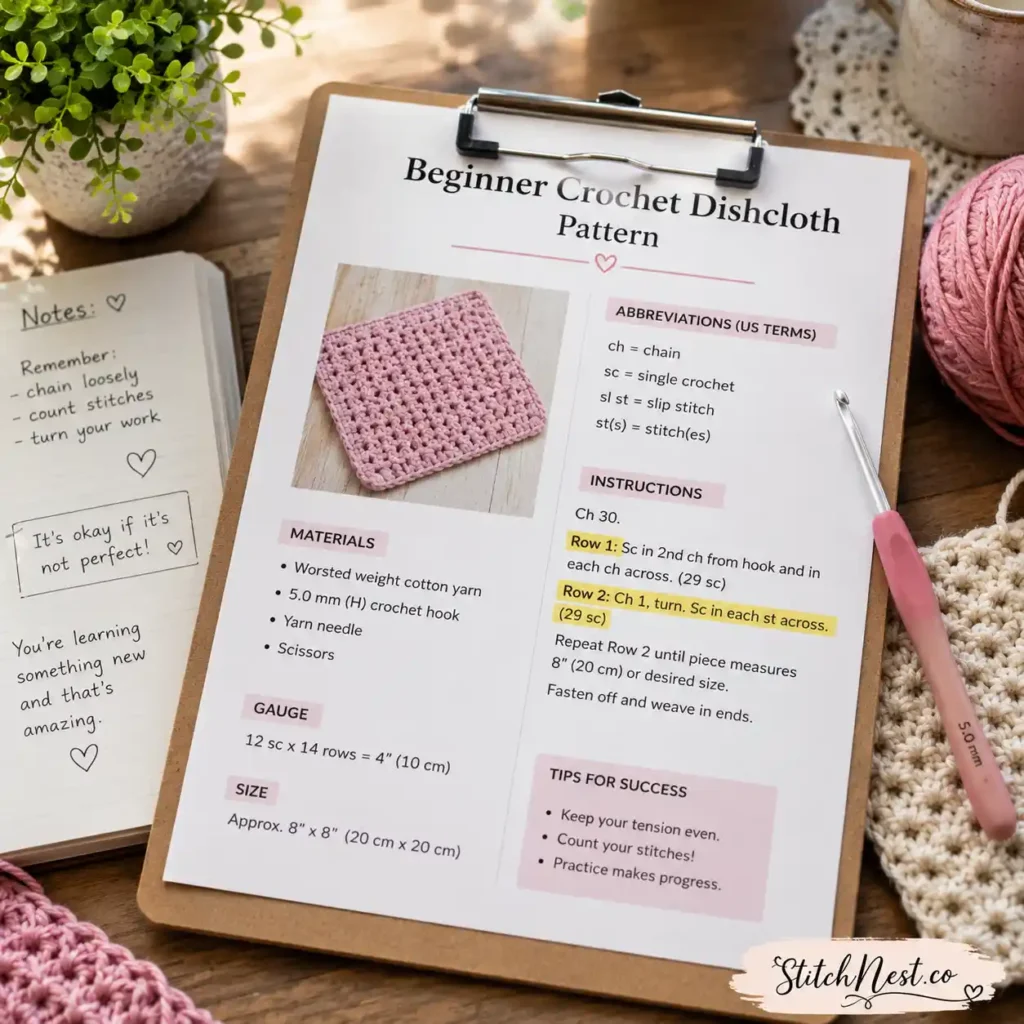
Let’s take a simple example and break it down line by line.
Pattern:
Ch 16
Row 1: Sc in 2nd ch from hook and in each ch across. (15 sc)
Row 2: Ch 1, turn. Sc in each st across. (15 sc)
What It Means
Ch 16
Create a foundation chain containing 16 chains.
Row 1: Sc in 2nd ch from hook and in each ch across. (15 sc)
Skip the chain closest to your hook. Work a single crochet into the second chain. Continue placing one single crochet into every remaining chain. When you’re finished, you should count 15 single crochet stitches.
Row 2: Ch 1, turn. Sc in each st across. (15 sc)
Chain one stitch, turn your work, and place one single crochet into each stitch across the row.
Your stitch count should remain 15. Once you break the instructions apart, the pattern becomes much easier to understand.
That’s exactly how experienced crocheters read patterns. They don’t absorb the entire line at once. They simply work through each instruction in order.
If you’re looking for a beginner-friendly amigurumi project, our DIY Crochet Ladybug Tutorial teaches you how to crochet an adorable 3D ladybug with step-by-step instructions, helpful tips, and plenty of finishing advice.
How to Read Crochet Patterns | Common Beginner Mistakes
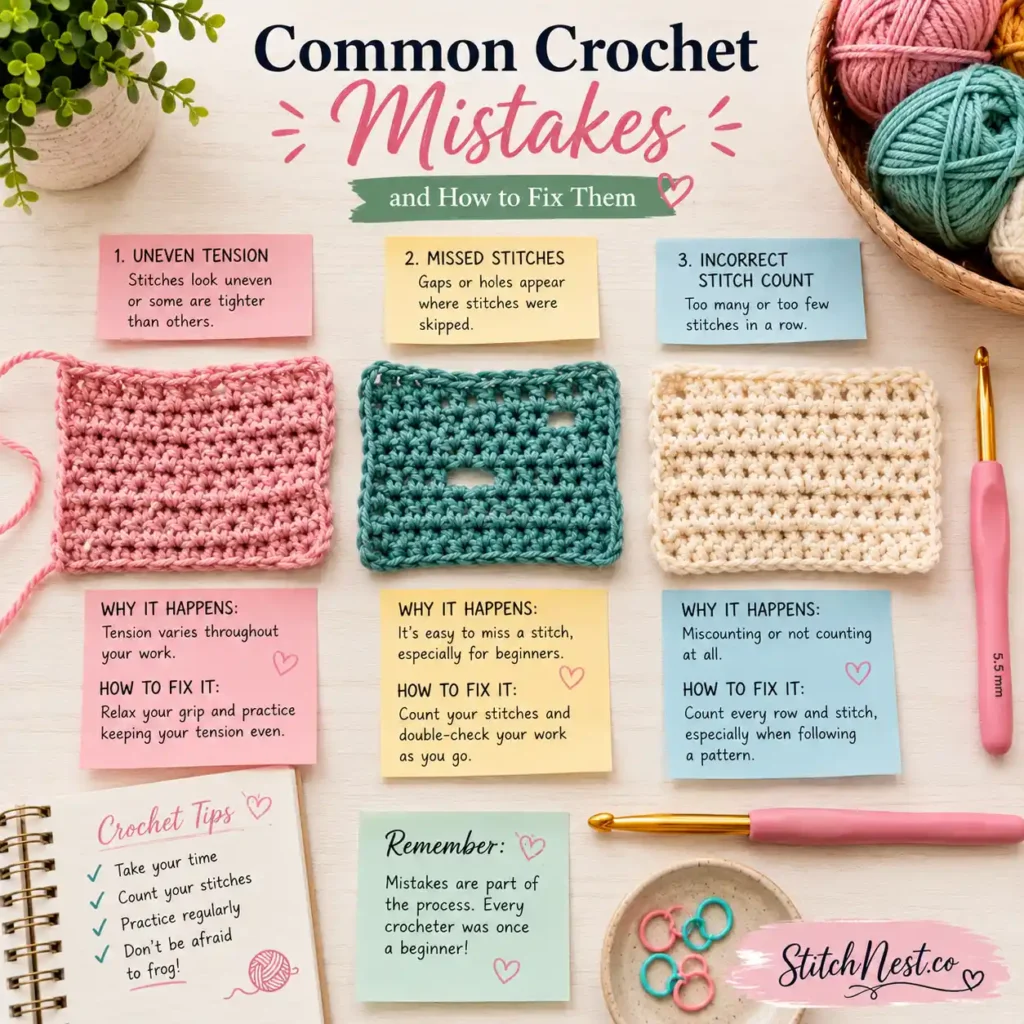
One of the most common mistakes is skipping the abbreviation key and assuming you know what everything means. Taking a minute to review the abbreviations often prevents confusion later. Another issue comes from ignoring stitch counts. Those numbers in parentheses aren’t there for decoration. They’re there to help you catch mistakes before they affect the entire project.
Many beginners also forget that crochet patterns can use either US or UK terminology. A double crochet in US terms means something completely different in UK patterns. Always check which terminology the designer is using before you begin.
Practical Tips for Reading Crochet Patterns
- Keep a pencil or highlighter nearby when working from printed patterns. Marking completed rows makes it much easier to keep your place.
- Read the entire pattern before making your first stitch. A quick overview often reveals techniques or special instructions you’ll encounter later.
- If a line feels confusing, break it into smaller sections and read one instruction at a time. Most crochet patterns become much easier when viewed in smaller pieces.
- Don’t be afraid to read the same line several times. Experienced crocheters do it too, especially when working on unfamiliar techniques.
The first crochet pattern always feels harder than it really is because you’re learning a new format at the same time you’re learning new skills. Once you understand abbreviations, stitch counts, repeats, and pattern structure, you’ll start seeing the same concepts appear again and again.
Before long, you’ll spend less time decoding instructions and more time enjoying the project itself. That’s when crochet patterns stop feeling intimidating and start feeling like helpful roadmaps guiding you from the first stitch to the finished piece. Here are beginner-friendly patterns you should start with!