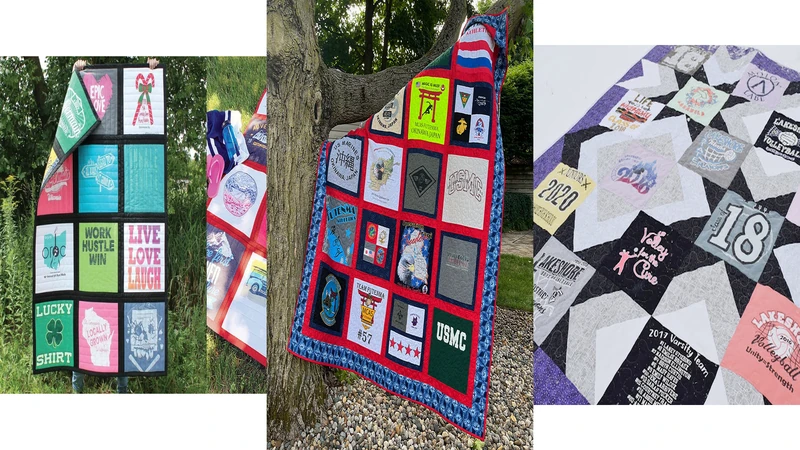
Nobody wants to just toss a drawer full of old concert tees, sports jerseys, or shirts from a school you graduated years ago, and a t-shirt quilt is honestly the coziest way to keep them around. These t-shirt quilt patterns to make from old shirts turn a pile of soft, worn-out fabric into something you can actually snuggle under, and every single block gets to keep a little piece of a memory. The one thing to know before you start is that T-shirt fabric stretches a lot more than regular quilting cotton, so a couple of these patterns walk you through fixing that first. Grab your favorite old shirts and let’s turn them into something new.
Things You’ll Need
- Rotary cutter with a self-healing cutting mat
- High-quality cotton fabric bundles
- Acrylic quilting rulers for precise shapes
- Sewing machine with quilting foot attachment
- Soft batting for a cozy finished feel
Nine Ways to Turn Old Shirts Into a Cozy Quilt
Looking for the pattern or tutorial? You’ll find the source link right below each image. Some featured projects are shared for inspiration, so not every image includes a step-by-step tutorial!
1. Making a T-Shirt Quilt
Skill Level: Beginner
Time to Make: A weekend
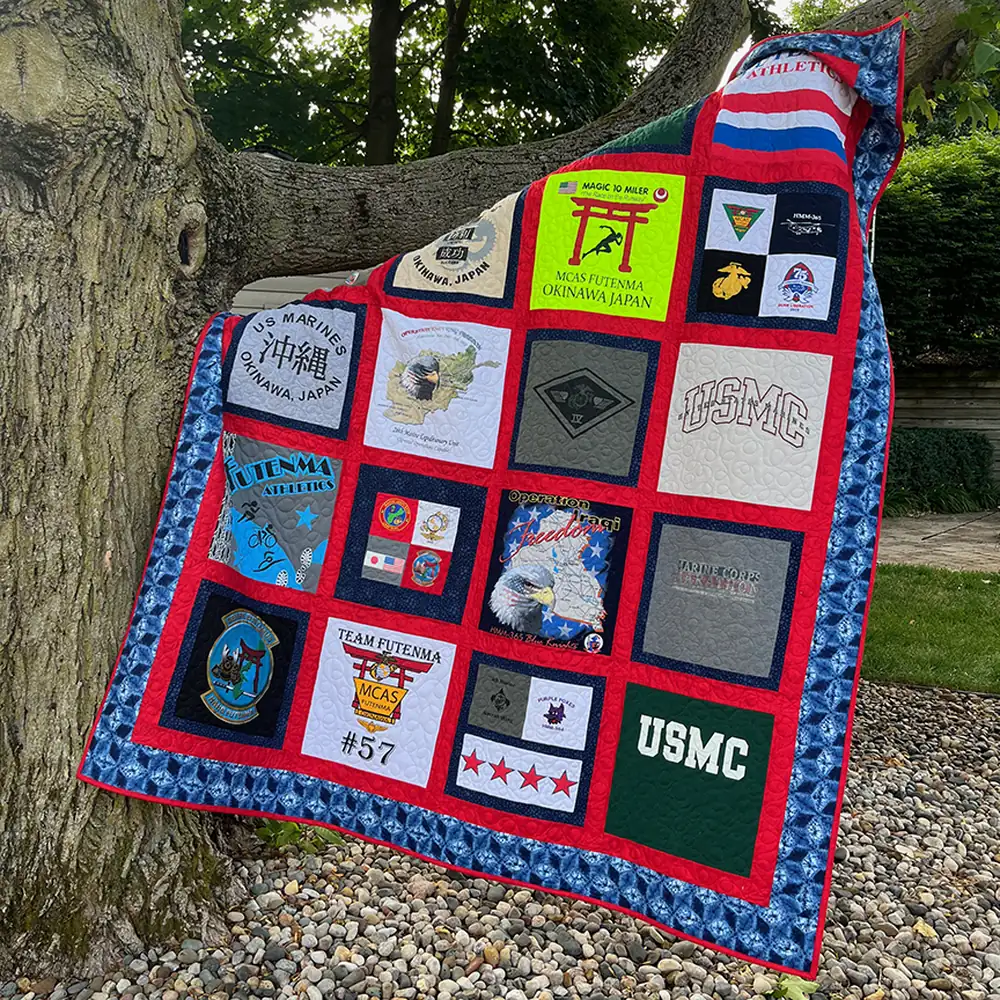
This is really the foundation every other t-shirt quilt on this list builds from, so it is worth understanding even if you plan to try a fancier version later. The big secret here is something called interfacing, which is just a thin fusible fabric you iron onto the back of each shirt before cutting it.
Since t-shirt fabric is knit, meaning it stretches like a sock, interfacing calms that stretch down so your squares stay nice and square instead of turning into wobbly parallelograms.
Ironing it on with the stretchy stripes running sideways instead of the same direction as the shirt’s own stretch helps even more, and pressing your seams open afterward keeps those thicker knit seams from getting lumpy under the needle.
2. T-shirt Rag Quilt Tutorial
Skill Level: Beginner
Time to Make: A weekend
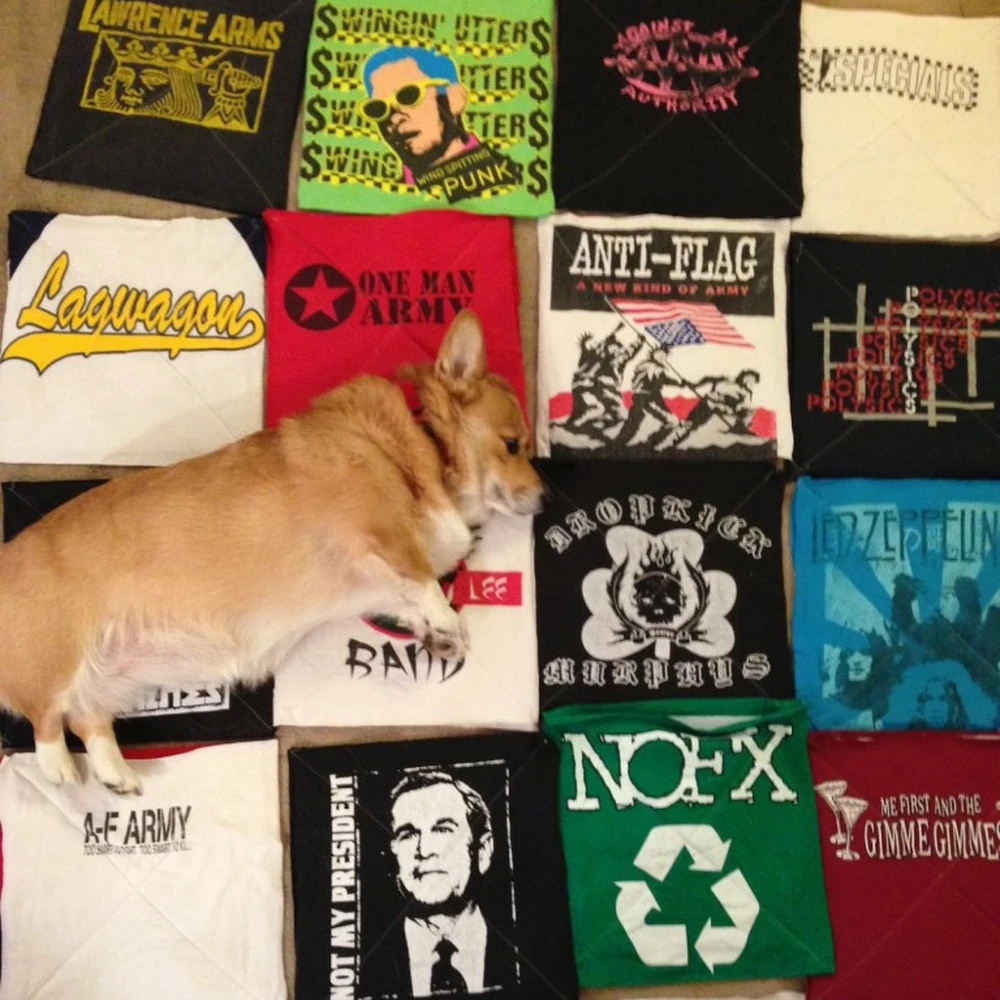
A rag quilt flips the usual quilting rules on their head, since instead of hiding your seams neatly on the inside, you actually want them showing on the front so they can fluff up into a soft, frayed texture.
Sewing your shirt squares together with the seams facing outward and then clipping little snips all along every seam is what sets up that fray, and it only really comes to life after a few trips through the washer and dryer. Kids especially love this style since it feels more like a wearable hoodie than a stiff blanket, all fuzzy and soft right out of the wash.
Just remember that t-shirt fabric frays a little differently than woven cotton does, so give it an extra wash cycle or two if the fringe still looks a bit flat.
3. DIY Basic T-Shirt Quilt Tutorial
Skill Level: Beginner
Time to Make: One afternoon
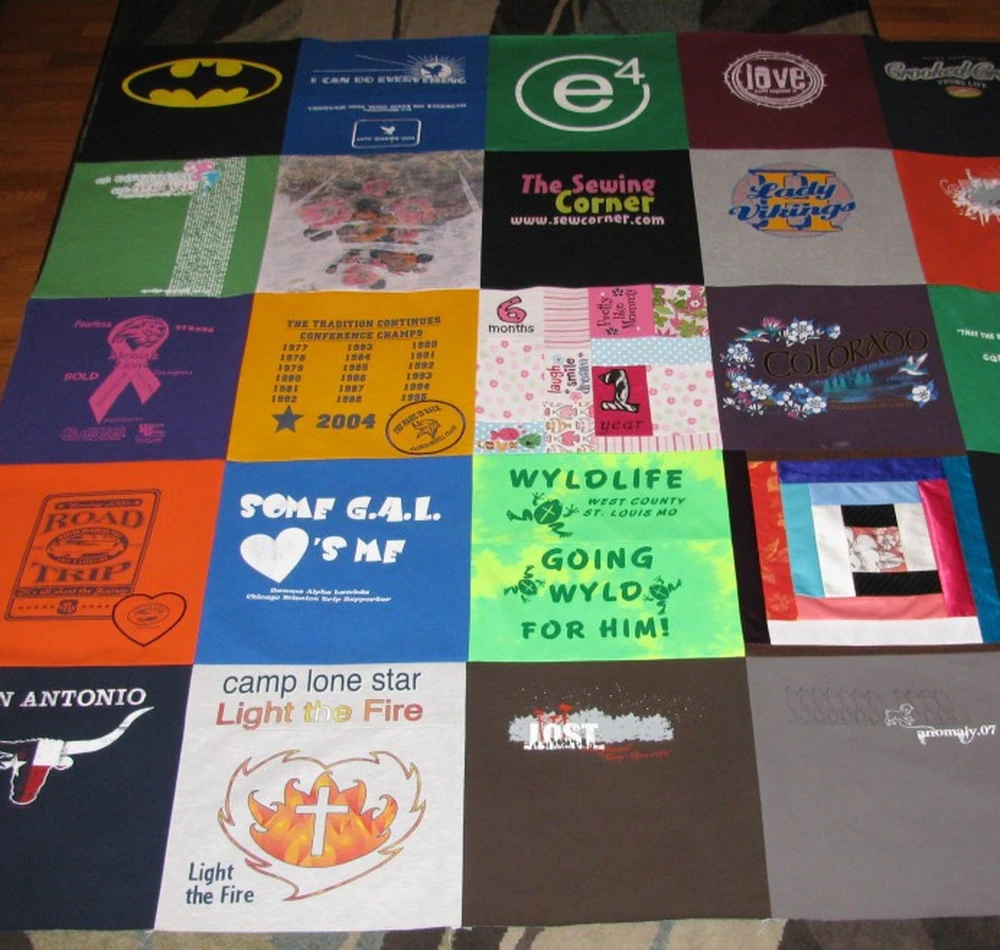
If you just want a finished quilt without a lot of extra steps, sewing your interfaced shirt squares straight into simple rows and columns is genuinely the fastest way to get there.
Mixing shirts from lots of different colors, teams, and eras actually works in your favor here, since a random, scrappy mix tends to look more charming than a perfectly matched one anyway, the same happy chaos you will find in these scrappy quilt patterns.
A good pair of sharp fabric scissors makes a real difference when you are cutting through dozens of shirts, since dull blades tend to drag and stretch knit fabric instead of slicing it cleanly.
4. How to Make a T-Shirt Quilt for Beginners
Skill Level: Beginner
Time to Make: A weekend
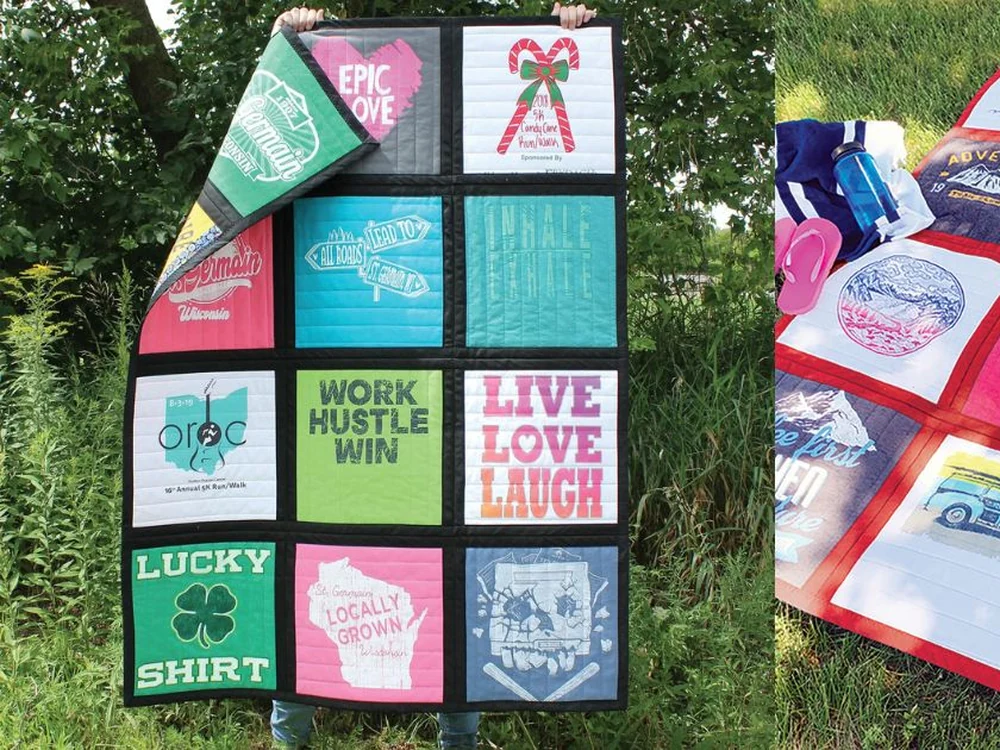
Getting every single block cut to the exact same size sounds simple, but knit fabric wiggles around so much that it trips up a lot of first timers, which is exactly why this version focuses so heavily on measuring twice before you ever pick up scissors.
Using a big clear ruler with a square window cut into the middle lets you center a logo or graphic perfectly before you make a single cut, so nothing ends up sliced in half by accident.
Any little scraps trimmed off the edges are honestly too cute to throw away, and they turn into something like these patchwork quilted bag patterns without much extra effort at all.
5. T-Shirt Quilt Finish Free Tutorial
Skill Level: Confident beginner
Time to Make: A weekend
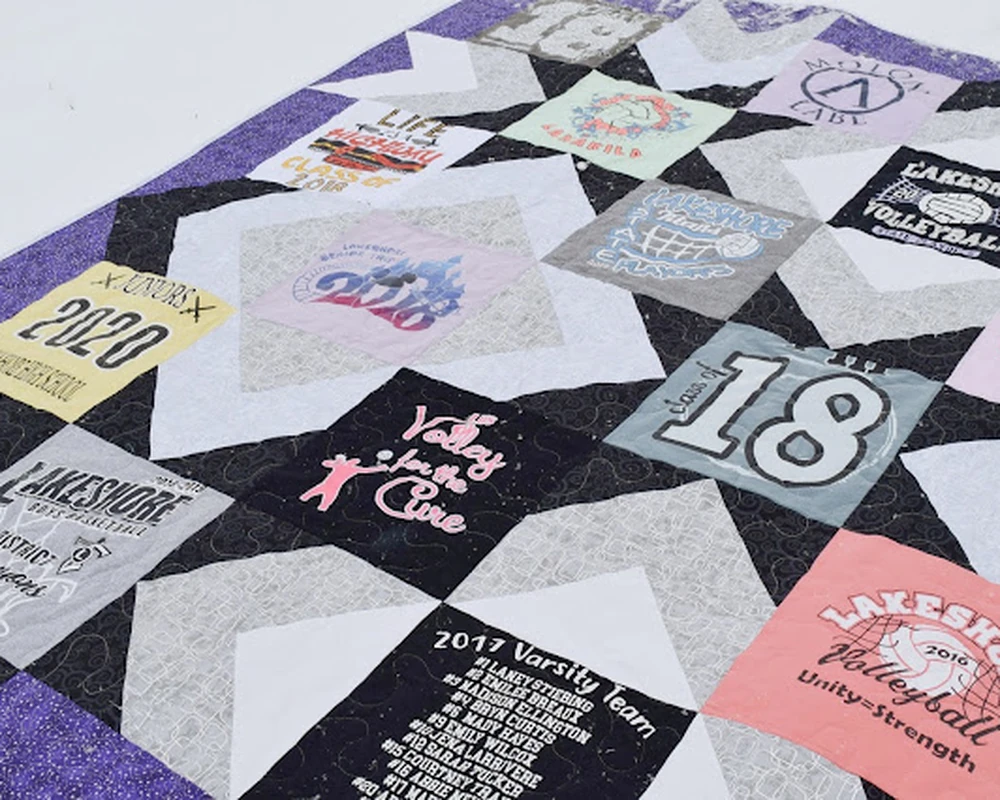
Unlike the rag quilt style, this version wraps every raw edge in a proper folded binding, giving the whole quilt a neater, more polished look that feels a little more like a store bought blanket. Binding takes a bit more patience since you are folding fabric around every single edge and stitching it down evenly, but it is also a skill that carries over into tons of other sewing projects once you have it down.
A clean finish like this looks especially sharp on a smaller, quicker project too, the same kind of tidy build you will see in these quilted bedside caddy storage ideas if you want to practice binding on something bite-sized first.
6. Easy Tshirt Quilt Tutorial for Beginners
Skill Level: Confident beginner
Time to Make: A weekend
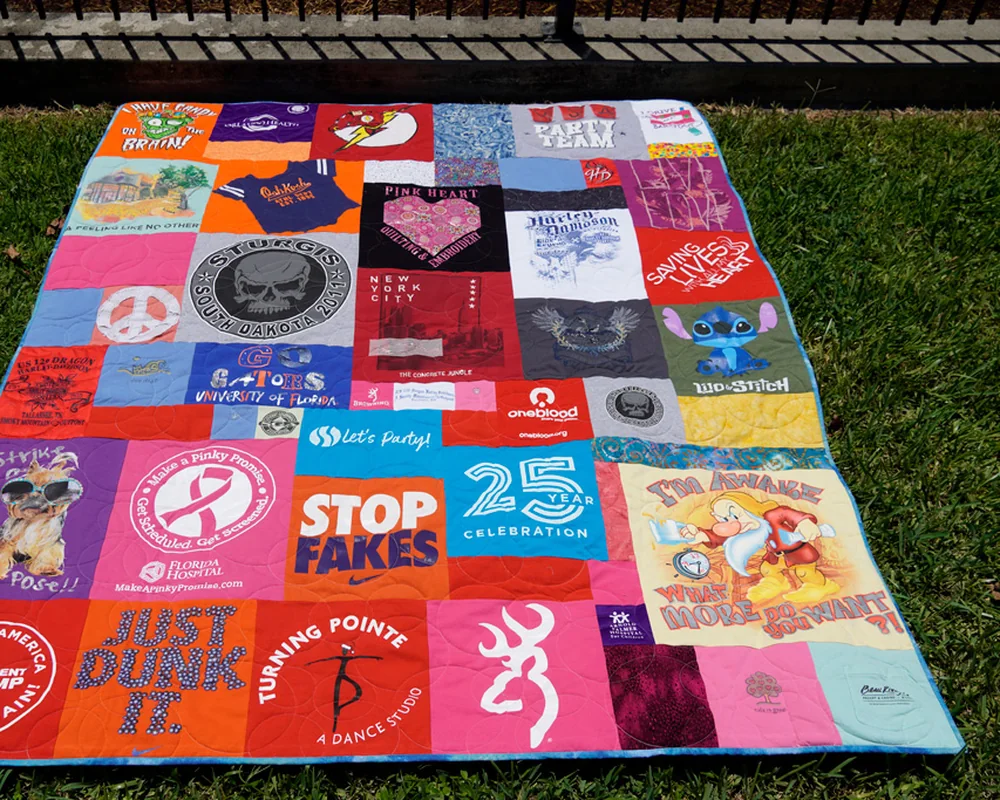
Memory quilts are less about following exact measurements and more about telling a story, since every single shirt usually comes from a specific trip, team, concert, or person that meant something. Adding a little fabric label on the back with names or dates turns this from just a blanket into something a family member will still be treasuring decades from now.
Pulling together a bunch of different, meaningful shirts into one cohesive quilt is a lot like how these jelly roll quilt patterns combine dozens of different prints into a single unified design.
Keep a magnetic pin cushion close by while you lay everything out, since pinning down slippery knit fabric takes more pins than you would expect.
7. Free Quilting Cuddly T-Shirt Quilt Pattern
Skill Level: Beginner
Time to Make: A weekend
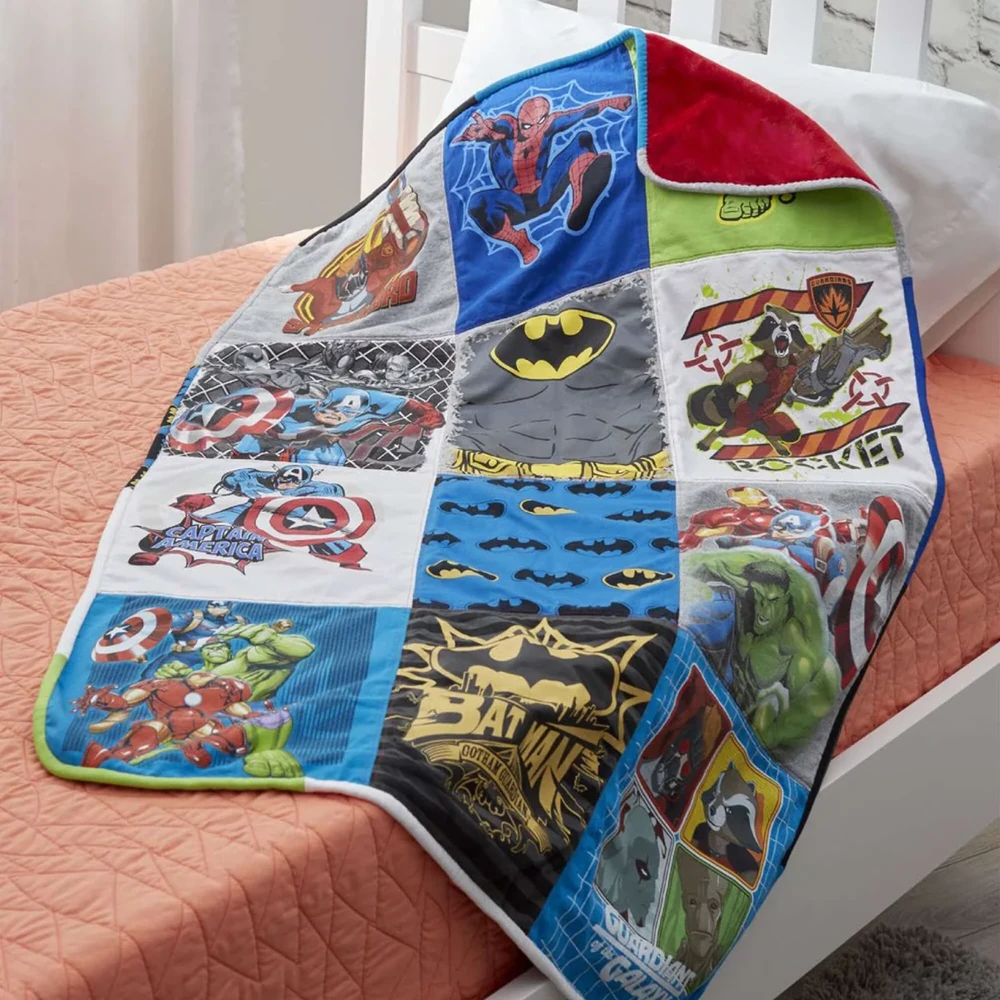
Backing your finished t-shirt top in a soft minky or flannel fabric instead of another layer of cotton is what turns this version from a regular quilt into something you genuinely want to curl up under on the couch.
Because t-shirt fabric already has some natural weight and softness of its own, skipping a thick batting layer keeps the whole thing from turning into an overly heavy, hard-to-wash blanket.
This cozy, huggable style is a natural favorite for kids too, right alongside these cute animal quilted pattern diys if you are sewing something for a little one’s room. A heavy duty machine handles the extra thickness of a minky backing far better than a lightweight one ever could.
8. Making a T-Shirt Quilt Easy Steps
Skill Level: Beginner
Time to Make: A weekend
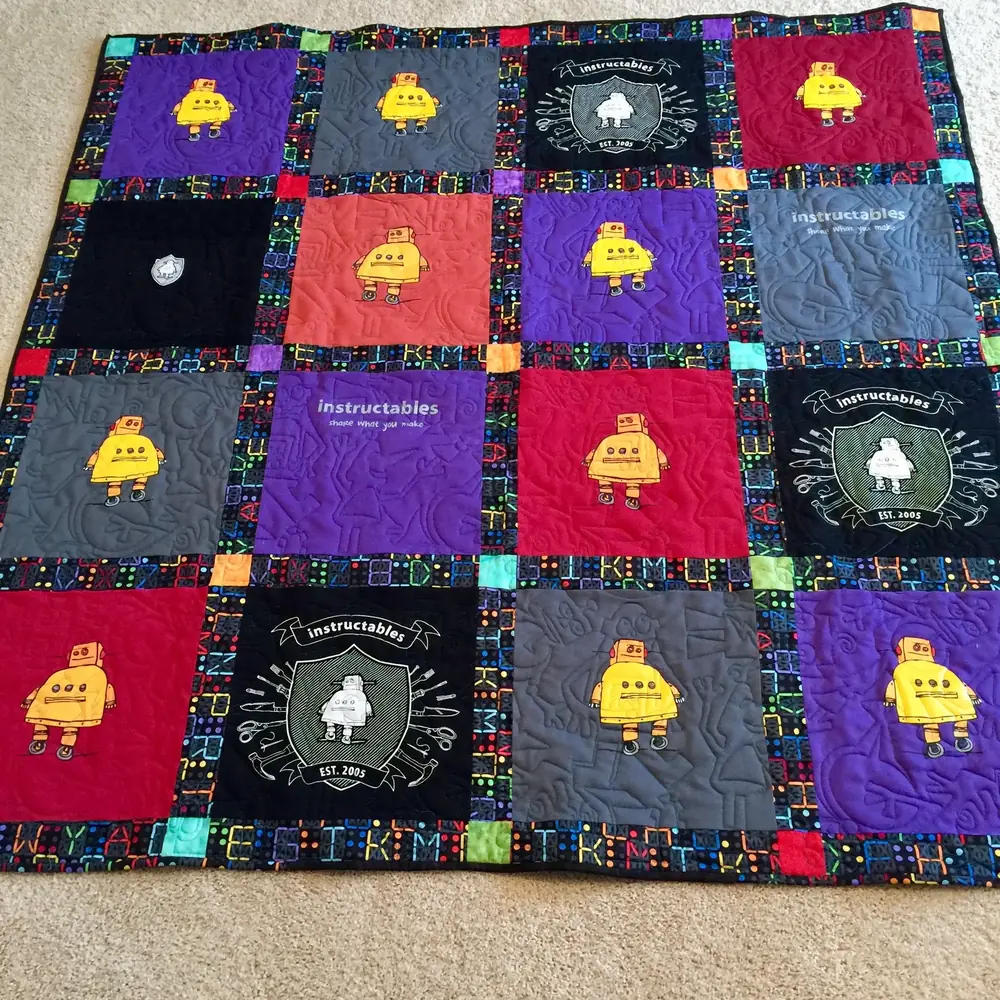
If you like having every single step spelled out in order rather than jumping around, this more thorough style walks through the whole process from cutting to binding without skipping anything. It is a genuinely great pick for your very first t-shirt quilt, since rushing ahead or skipping the interfacing step is the number one reason a first attempt ends up wobbly and stretched out of shape.
Turning old, well loved clothing into something brand new is a rewarding feeling no matter what fabric you start with, and it is the same spirit behind guides like quilted denim jeans if you have old jeans piling up too.
9. Free Quilt Pattern Tshirt Quilt
Skill Level: Beginner
Time to Make: A weekend
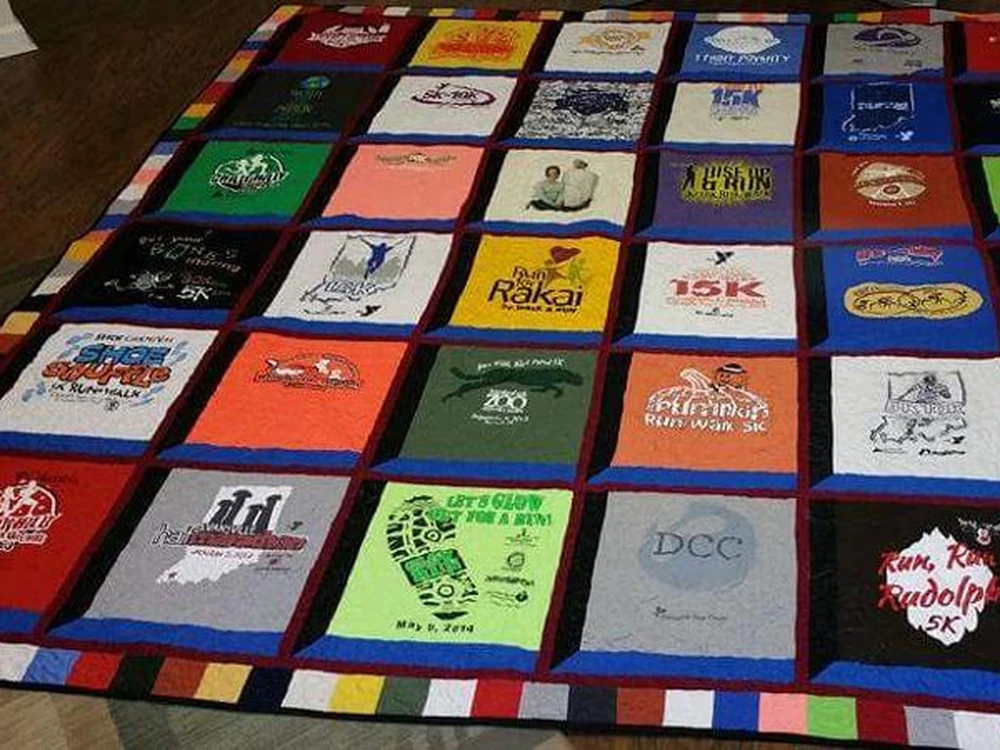
Adding a strip of plain fabric, called sashing, between every shirt block is a small change that makes a huge difference, especially if your shirts come in a lot of wildly different colors and designs.
That thin border gives each shirt its own little frame and keeps a busy, mismatched collection from looking chaotic once it is all sewn together. A dark, neutral sashing color tends to work best for pulling everything together visually, no matter how loud the shirts themselves are.
Any bigger leftover panels are worth setting aside too, since bold graphic fabric like that works beautifully in a patchwork quilted jacket if you want to wear your old shirts instead of just sleeping under them.
Helpful Extras for Your First T-Shirt Quilt
Cutting accurately around a graphic without slicing off part of the design takes a little practice, and it helps to think of it the same careful way you would approach these star flower quilt block patterns, where precise cutting really shows in the finished result.
A walking foot set genuinely earns its spot in your sewing kit for this project, since it feeds thick, interfaced knit fabric through the machine much more evenly than a standard presser foot does on its own.
Leftover shirt scraps too small for a full block still have plenty of life left in them, whether that means a cute little applique shape or something playful like these cat quilt pattern ideas if you happen to have a few pet-themed tees in the mix.
If your shirt pile includes some soft, stretchy pieces that do not quite work for quilting, they can still find a home in a totally different kind of project, the same knit-friendly comfort you will see in these crochet winter skirt patterns. And for anyone with a stack of seasonal shirts, leftover fabric turns nicely into something like halloween pumpkin appliqué decorations too.
Bringing your project to a sewing group or class gets a lot easier with a machine carrying case on hand, since t-shirt quilting often works better with a little extra help and company along the way.
Common T-Shirt Quilt Mistakes to Avoid
Skipping interfacing on even one or two shirts is the single biggest mistake people make, and it usually does not show up until the whole top is together, when suddenly one block looks stretched and wavy next to all the others that were properly stabilized. Rushing through a seasonal batch causes similar trouble, the same kind of last-minute scramble you would run into finishing a stack of ghost quilt patterns the week before Halloween instead of planning ahead.
Choosing a heavy winter-weight batting for a lightweight t-shirt quilt is another easy slip, especially on something meant for warm-weather use like these 4th of july quilt ideas, where a puffy batting makes an already heavy knit quilt feel far too warm for summer.
Mixing shirts of very different thicknesses without a plan can also throw off your whole layout, since a thin, worn-out concert tee sits differently under the needle than a thick cotton blend hoodie panel; the same kind of contrast you would want to think through before starting one of these stunning 4th of july quilt patterns with mixed fabric weights.
If turning old fabric into something new has you excited for your next project, you will love browsing these spooky halloween mat patterns next for a fun, quick seasonal sew.