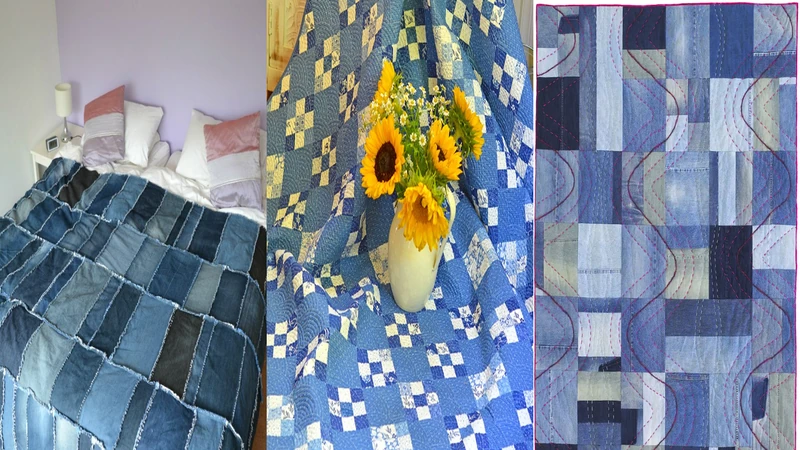
Old jeans pile up in almost every closet, and turning that stack into a denim quilt is one of the most satisfying ways to actually use them instead of donating them somewhere they might just get tossed. These free denim quilt patterns to make with old jeans cover everything from soft frayed rag styles to sleek modern patchwork, so there really is a version here for whatever pile you are working with. You can do this even with a basic home machine once you know a few denim-specific tricks. Let’s get into the projects.
Things You’ll Need
- Rotary cutter with a self-healing cutting mat
- High-quality cotton fabric bundles
- Acrylic quilting rulers for precise shapes
- Sewing machine with quilting foot attachment
- Soft batting for a cozy finished feel
Denim Quilts Worth Saving Your Old Jeans For
Looking for the pattern or tutorial? You’ll find the source link right below each image. Some featured projects are shared for inspiration, so not every image includes a step-by-step tutorial!
1. Upcycled Denim Quilt
Skill Level: Beginner
Time to Make: A weekend
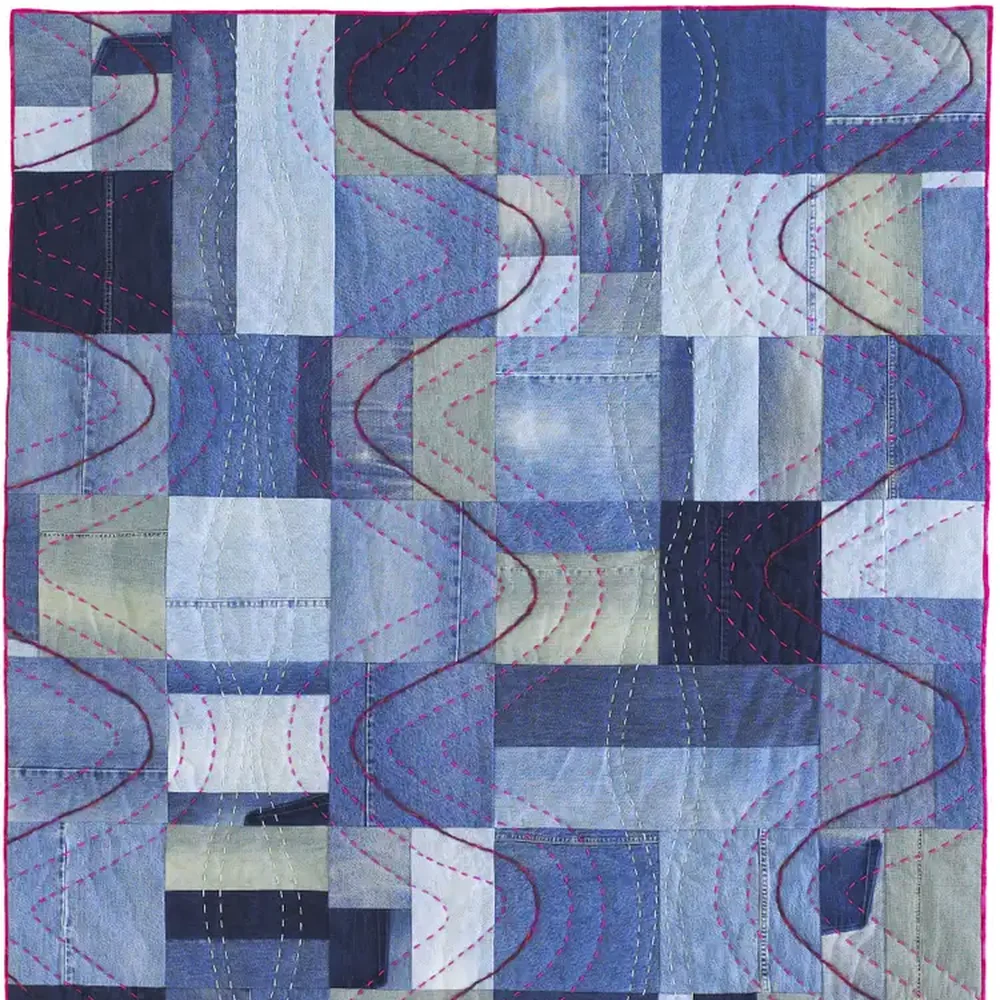
Turning worn out jeans into a quilt starts with what quilters call deboning, which just means cutting away the waistbands, pockets, and thick seams so you are left with clean, flat pieces of fabric to work with.
Here’s what we recommend doing before you cut a single square, lay each pair flat and map out where the largest usable sections actually sit, since denim wears unevenly and the back panels often give you far more workable fabric than the front.
Saving the pocket pieces separately pays off later too, since they make great little accents on a border or a matching bag.
2. Freeform Denim Quilt
Skill Level: Confident beginner
Time to Make: A weekend
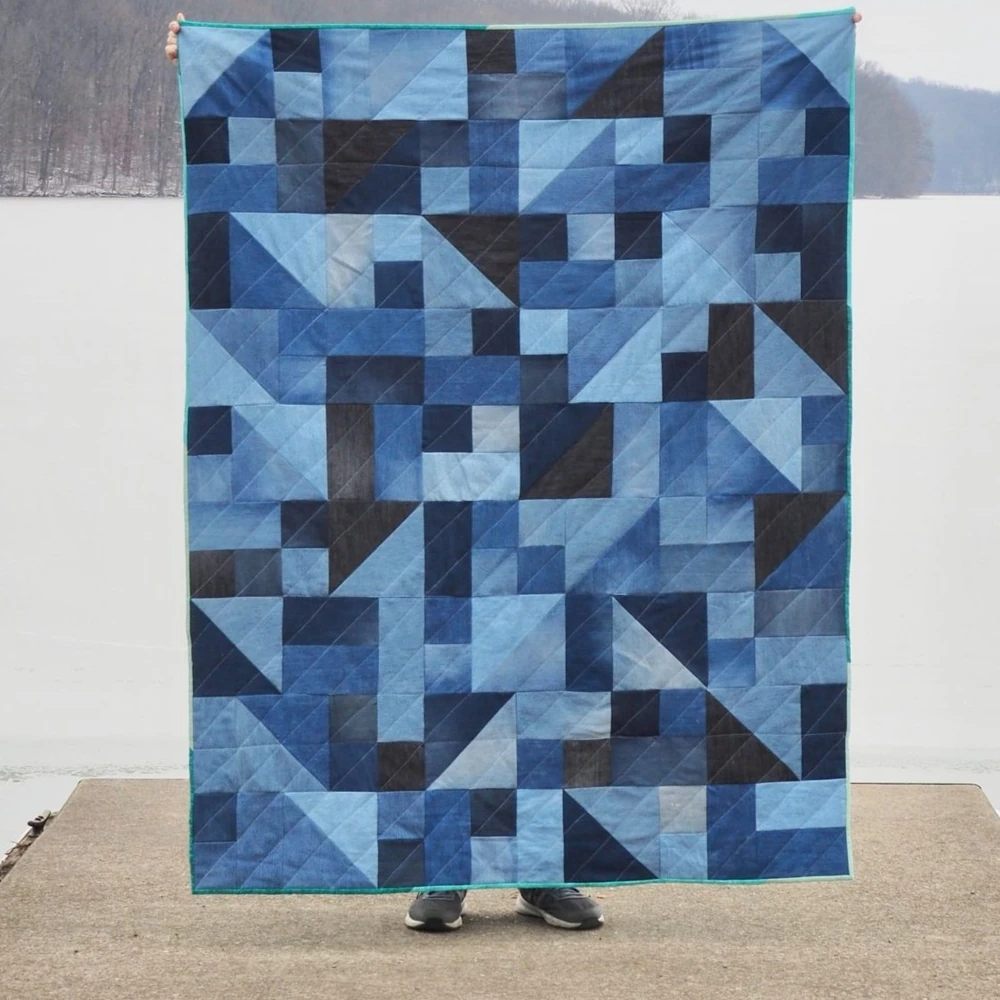
Skipping a strict grid and piecing denim scraps together in whatever shapes and sizes you have on hand gives this style its relaxed, lived in look. Sewing denim of different weights together can pucker if you are not careful, so backing thinner scraps with a lightweight fusible interfacing before piecing keeps everything sewing at the same tension.
Pressing every seam open instead of to one side matters even more here than in a cotton quilt, since denim seams pressed to one side stack up fast and leave the top lumpy under the iron.
3. Denim Rag Quilt
Skill Level: Beginner
Time to Make: A weekend
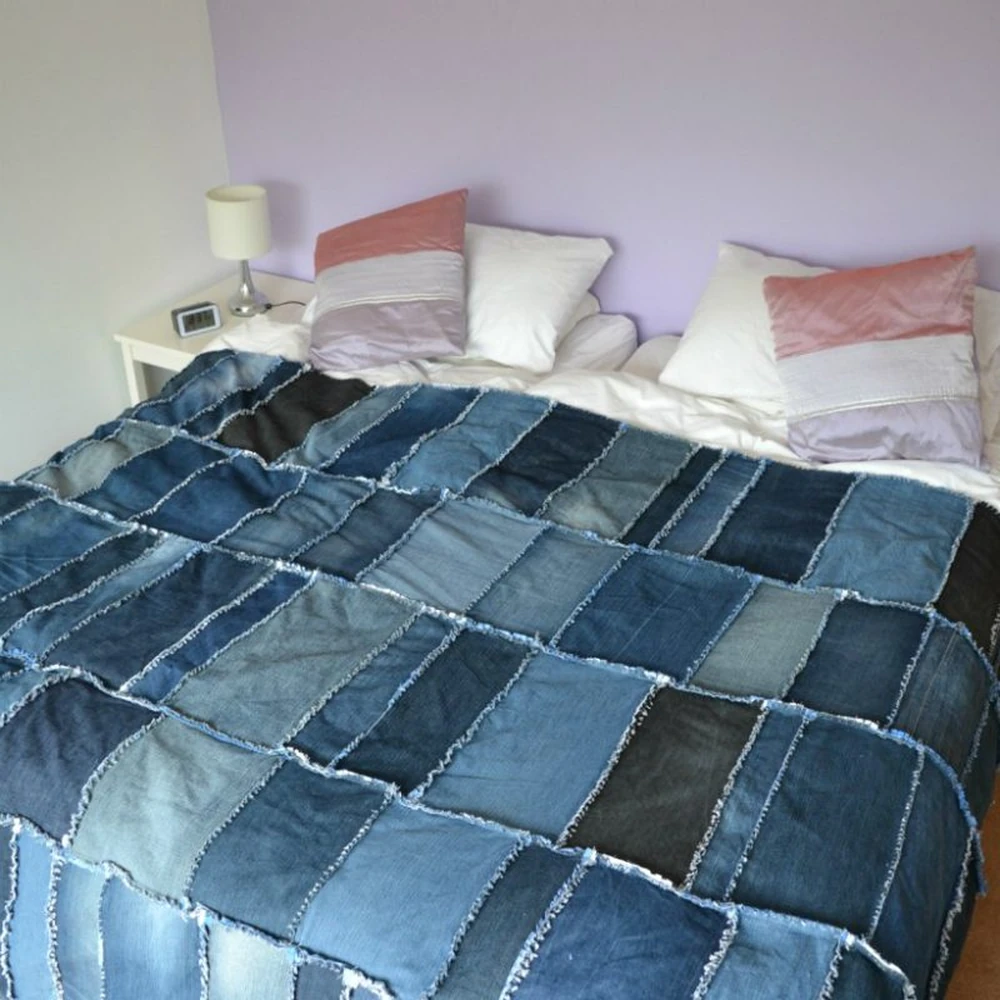
Sandwiching squares of denim and cotton wrong sides together, leaving the seam allowances exposed on the front, is what gives a rag quilt its soft, frayed texture once it comes out of the wash a few times.
Clipping every exposed seam allowance about every half inch before that first wash is the step people skip most often, and skipping it leaves the fray looking patchy instead of full.
This same simple square construction shows up in a lot of easy beginner quilt blocks too, so the skills carry over nicely if you want to branch out afterward.
4. Simple Denim Square Quilt
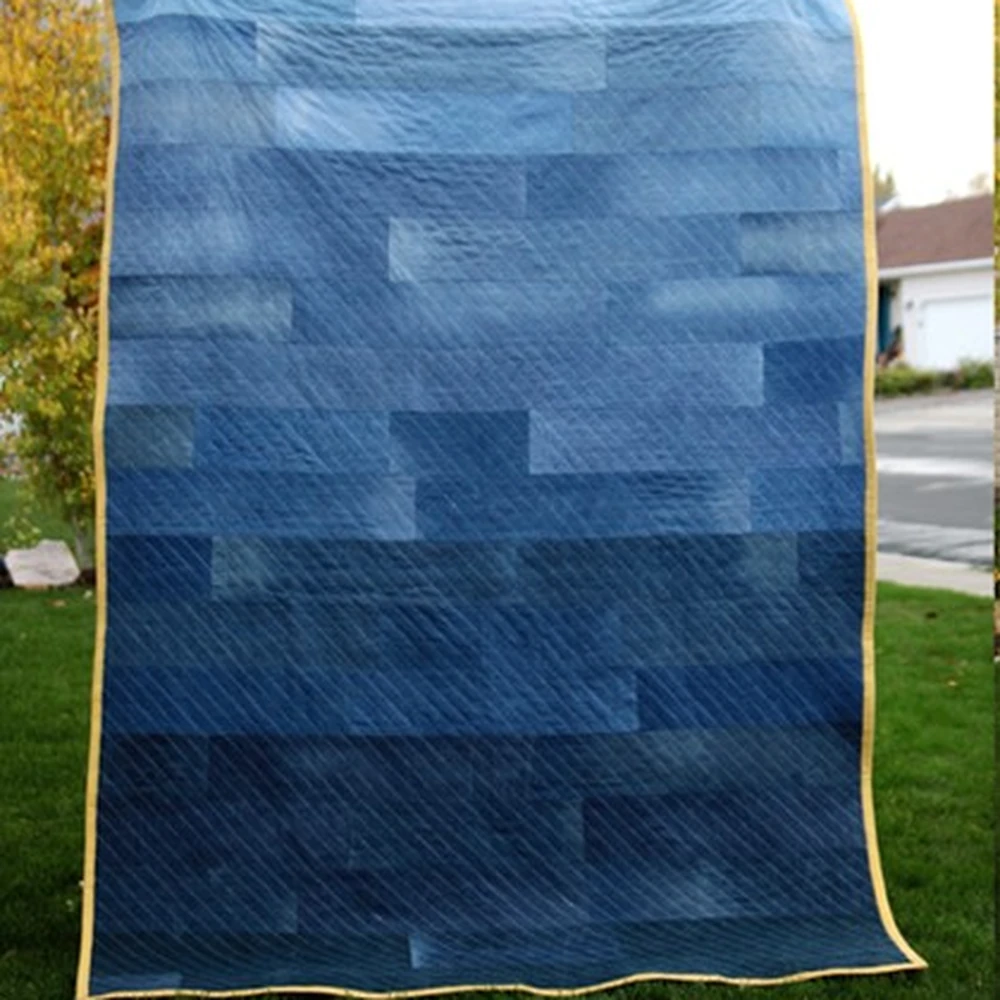
Skill Level: Beginner
Time to Make: One afternoon
Cutting jeans into large, even squares and piecing them in straight rows keeps this version quick, since there is barely any fussy cutting involved once your denim is deboned and flat.
New fabric requirements stay low with a layout like this, the same efficient thinking behind these low yardage quilt patterns that stretch just a little material across a full sized top.
Backing this one in a soft flannel rather than another layer of denim keeps the finished weight manageable, since denim alone already adds plenty of warmth without any batting at all.
5. Denim Cheater Cloth Quilt
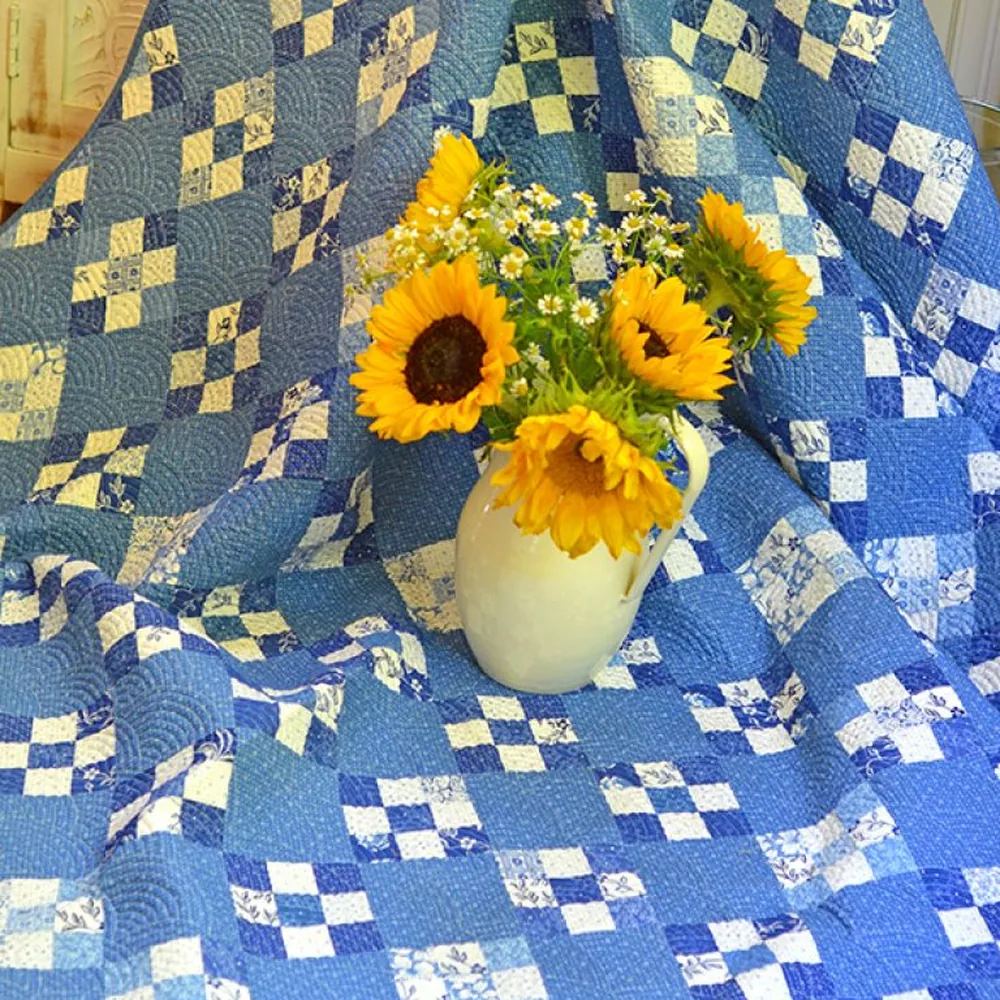
Skill Level: Intermediate
Time to Make: A weekend
Printing or piecing a design that mimics a fully quilted top, then quilting straight through it in one pass, is the whole idea behind cheater cloth, and it saves an enormous amount of piecing time for a denim project this size.
Watching your seam placement carefully still matters, since any printed or pieced pattern on denim needs to line up cleanly or the illusion falls apart at a glance. Bold, graphic layouts like this pair naturally with the kind of modern quilt pattern ideas that lean on strong shapes instead of busy prints, and any leftover panel scraps work just as well cut down into something playful like potato chip quilt patterns.
6. Improvisational Denim Quilt
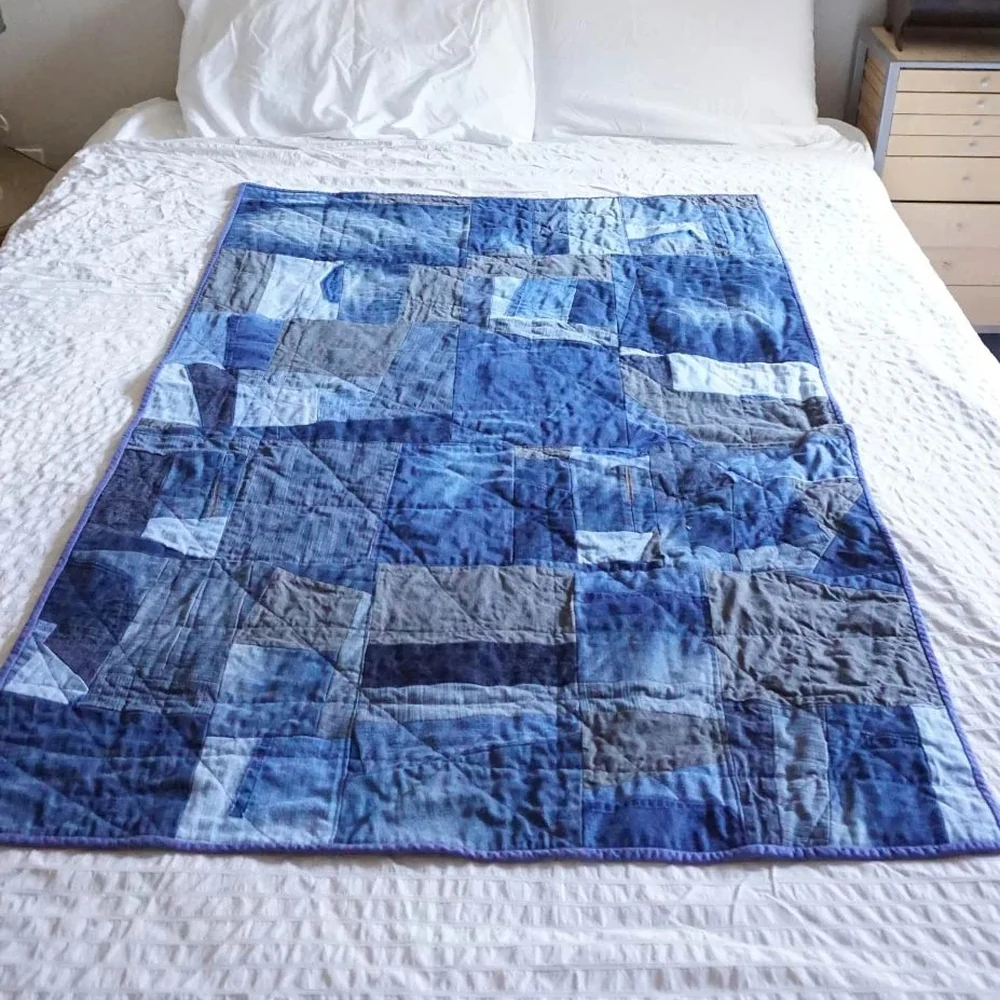
Skill Level: Confident beginner
Time to Make: A weekend
Cutting pieces freehand instead of measuring everything out gives this style a loose, organic movement that a strict grid layout just cannot copy. Mixing denim washes from light to dark across the top creates depth the same way value contrast does in any quilt, so it helps to lay pieces out and squint at them from across the room before committing to a final arrangement.
Anyone who enjoys combining unlike textures this freely will probably also like flipping through lace fusion quilt patterns for another take on mixed texture piecing.
7. Reversible Denim Picnic Quilt
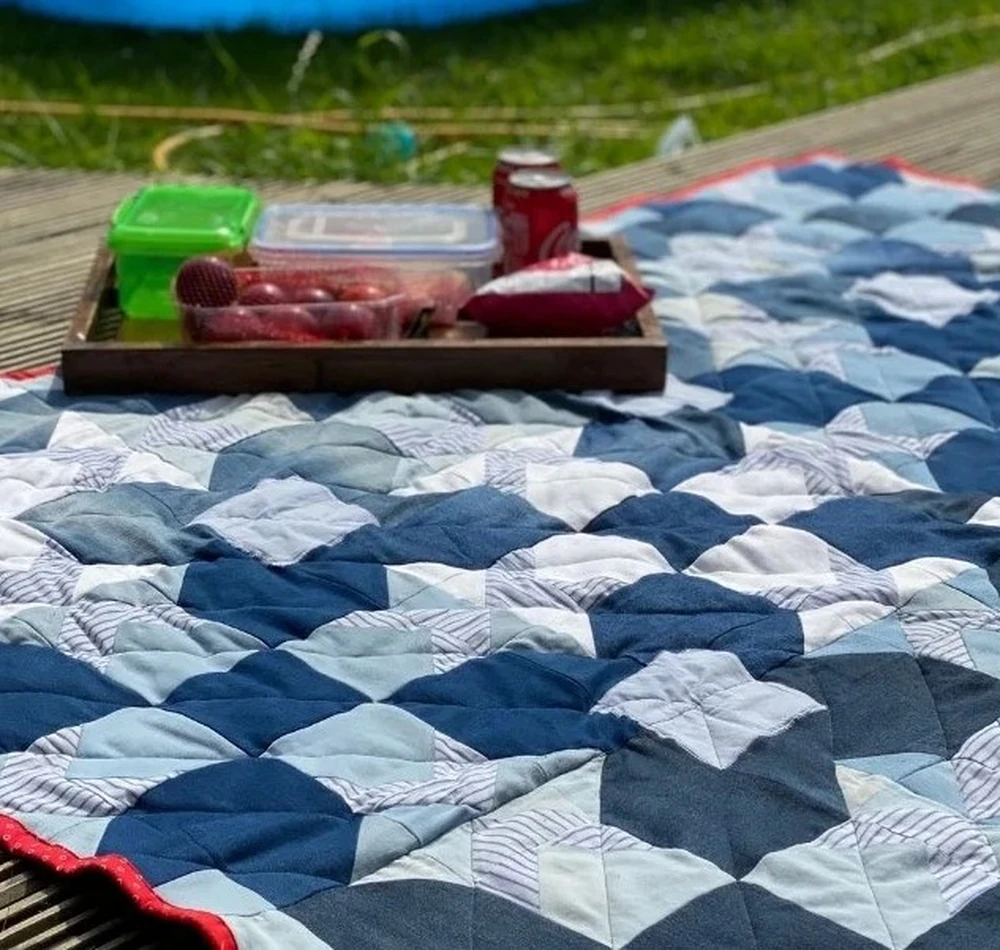
Skill Level: Beginner
Time to Make: A weekend
Backing a denim top in a sturdy canvas or oilcloth instead of quilting cotton turns this into a quilt tough enough to actually sit on outside, which is exactly the point of a picnic-style build like this one.
Denim already blocks moisture better than most quilting cotton, so a project like this holds up to grass and gravel in a way a delicate quilt never would. Cooler weather makes the perfect excuse to actually use it too, right alongside the rest of your fall sewing project ideas for the season.
8. Classic Jean Quilt
Skill Level: Beginner
Time to Make: A weekend
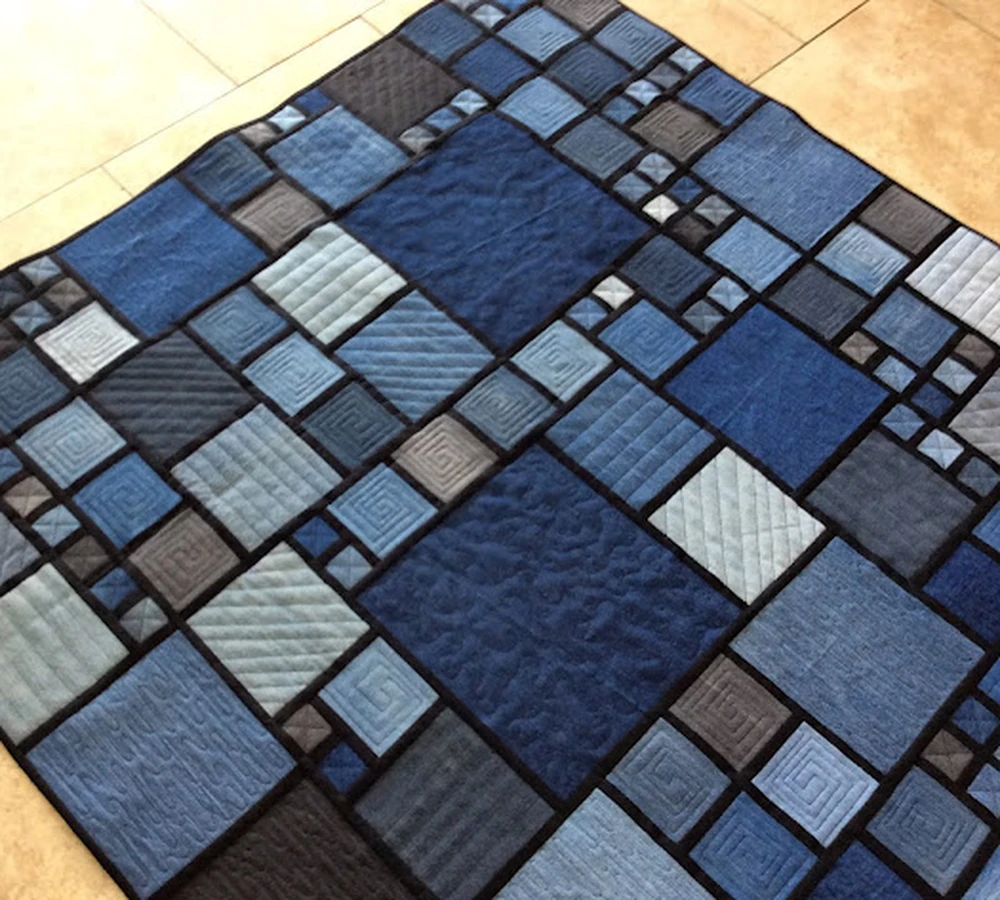
Sticking with straightforward pieced blocks instead of anything freeform makes this the most beginner-friendly denim quilt on this list, and it is a great place to practice sewing through thick layers before attempting anything more complex.
A denim needle sized around 100/16 makes a noticeable difference here, since a regular universal needle dulls fast and starts skipping stitches partway through a project this size. If simple, sturdy pieced blocks appeal to you, star quilt block patterns are worth a look next for a similarly approachable build.
9. Scrap Denim Quilt
Skill Level: Beginner
Time to Make: One afternoon
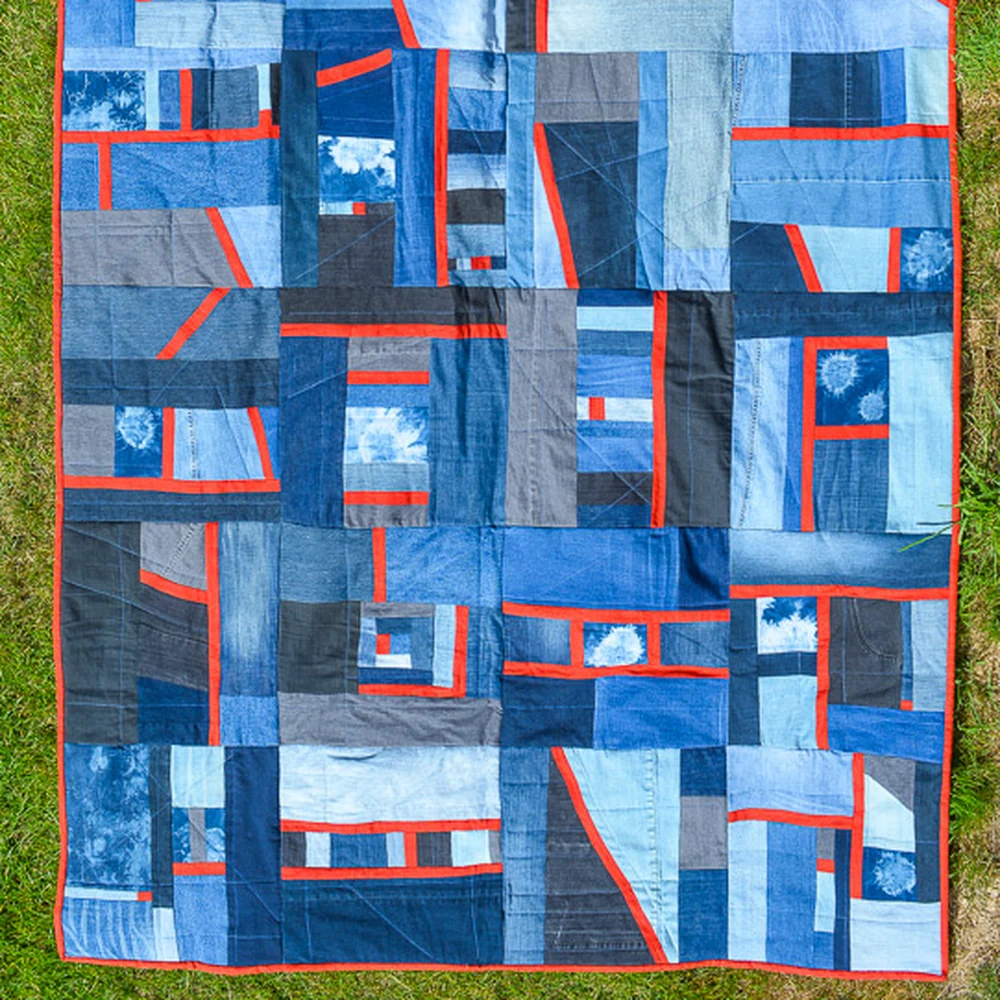
Working entirely from odd-sized denim scraps rather than whole cut jeans makes this the most practical option if you are clearing out a bin of leftover pieces from other projects.
Sorting scraps by size before you start saves a lot of back and forth later, since grouping similar-sized pieces together speeds up piecing considerably.
That same scrappy, use it all up spirit runs through granny square quilt patterns as well, so it is a natural next stop if you enjoy working from a stash instead of yardage.
10. Quilt As You Go Denim Quilt
Skill Level: Intermediate
Time to Make: A weekend
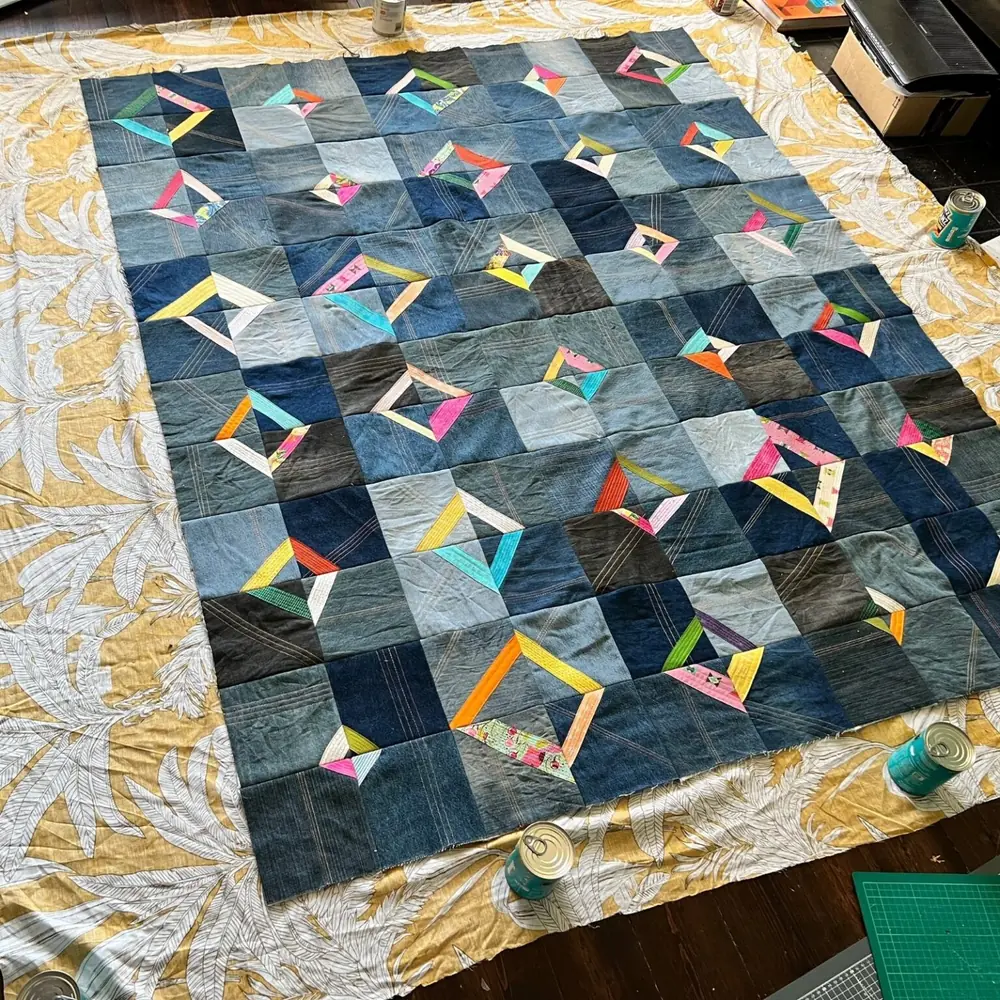
Quilting each block or section separately before joining them into a full top solves one of the biggest headaches of denim quilting, which is trying to force a heavy finished top through a regular home machine all at once.
You can do this on nearly any machine since you are only ever managing one manageable section at a time instead of an entire bulky quilt sandwich.
The same section-by-section logic makes an appearance in quilting with jelly rolls projects too, where smaller units get pieced before the bigger picture comes together
Getting Your Machine Ready for Denim
Swapping in a fresh needle before you even start cutting saves a lot of frustration, since denim dulls a needle far faster than quilting cotton does and a dull needle is the most common reason for skipped stitches partway through a seam.
Rotary blades wear down just as quickly, and keeping sharp replacement blades on hand means you are never stuck pushing a dull blade through four layers of denim at once. A sturdy self-healing mat underneath also protects both your table and your blade edge over a project this size.
If your denim quilt is starting to feel a little plain, borrowing a shape or two from diy flower quilt patterns adds a soft contrast against all that sturdy fabric, and pieced medallions inspired by chandelier quilt patterns work surprisingly well as a denim quilt centerpiece too.
Once your main quilt is finished, the smaller offcuts are perfect for practicing on a project like denim quilted table runner, which uses the same techniques on a much smaller, faster scale.
Where Denim Quilts Fall Apart
Pressing every seam to one side instead of open is one of the most common mistakes on a denim quilt, and it is an easy trap to fall into out of habit from quilting cotton. Denim seams pressed open lie dramatically flatter, especially where several seams meet, and skipping this step is usually the reason a finished top looks lumpy under the iron no matter how carefully it was pieced.
Pairing heavy denim with delicate fabrics without thinking about weight causes trouble too, the same mismatch you would run into trying to combine denim with something meant for quilted housecoat patterns, where the fabrics are chosen specifically to stay lightweight.
Waiting until the week of a deadline to start cutting is another one worth avoiding, since rushing through deboning a whole pile of jeans is exactly the kind of last-minute scramble that trips people up when finishing something like a quilted Halloween table runner on time. An electric fabric cutter genuinely earns its keep here if you are working through more than a few pairs of jeans at once.
If all that sturdy denim has you in a cozy, fall kind of mood, you will love working through these pumpkin quilt patterns next.