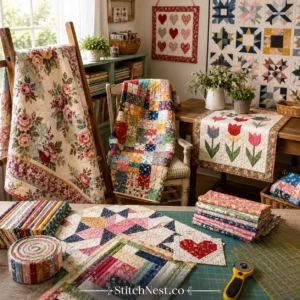
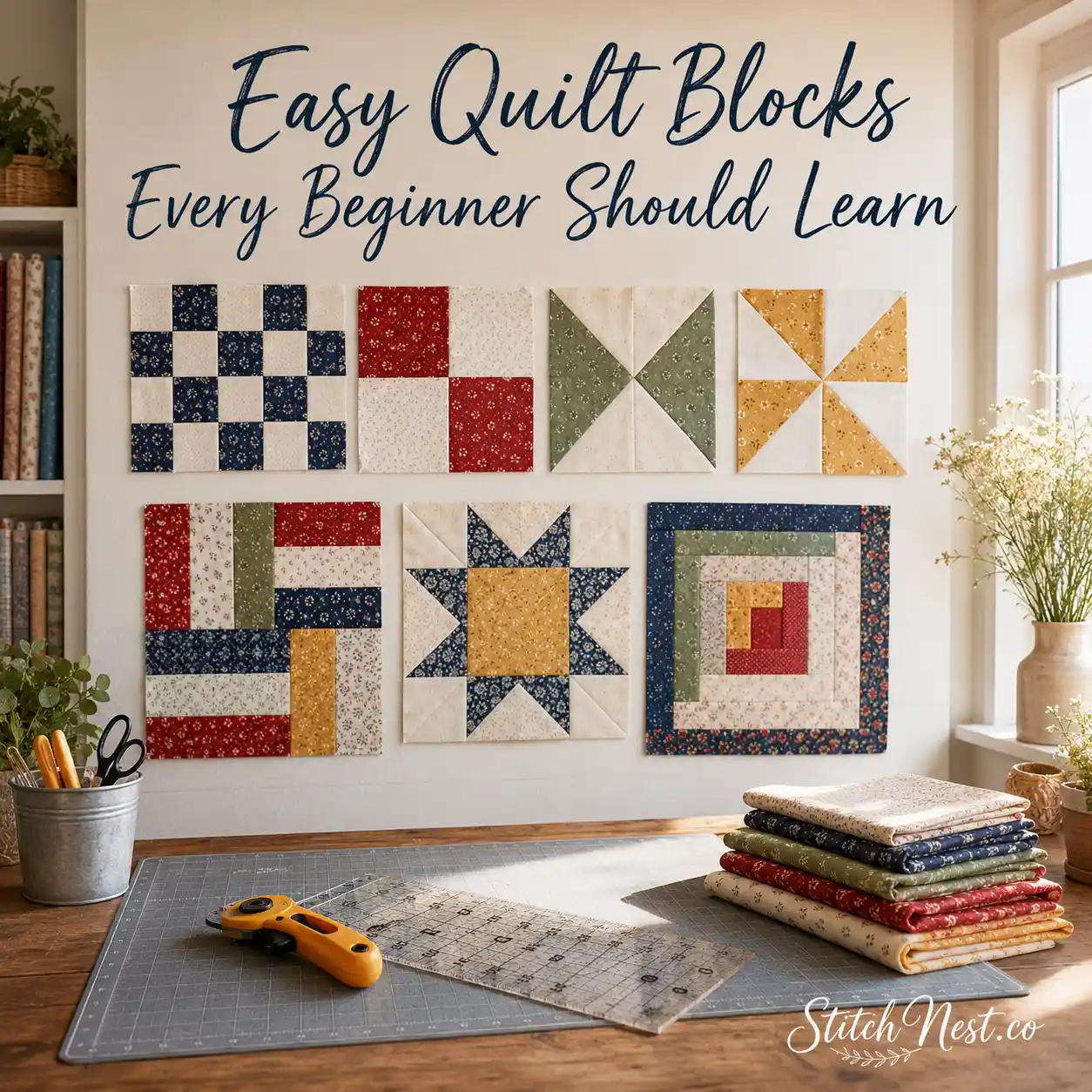
Here are easy quilt blocks every beginner should learn! You don’t need to learn dozens of quilt blocks to become a confident quilter. In fact, many experienced quilters return to the same classic blocks year after year because they’re versatile, reliable, and surprisingly adaptable. If you’re just getting started, the goal isn’t tackling the most complicated pattern you can find. It’s learning how pieces fit together, building confidence at your sewing machine, and developing skills you’ll use every time you sit down to quilt.
Why Quilt Blocks Matter
When you first start quilting, it’s easy to focus on the finished quilt and overlook the blocks that make it possible. Every quilt is built one section at a time, and each block teaches a different skill. Some help you learn accuracy. Others introduce color placement, matching seams, or working with angles.
In fact, many quilt patterns are built from the same few blocks arranged in different ways. A handful of beginner-friendly blocks will teach most of the skills you’ll use again and again throughout your quilting life.
Easy Quilt Blocks Every Beginner Should Learn
1. Nine Patch Block
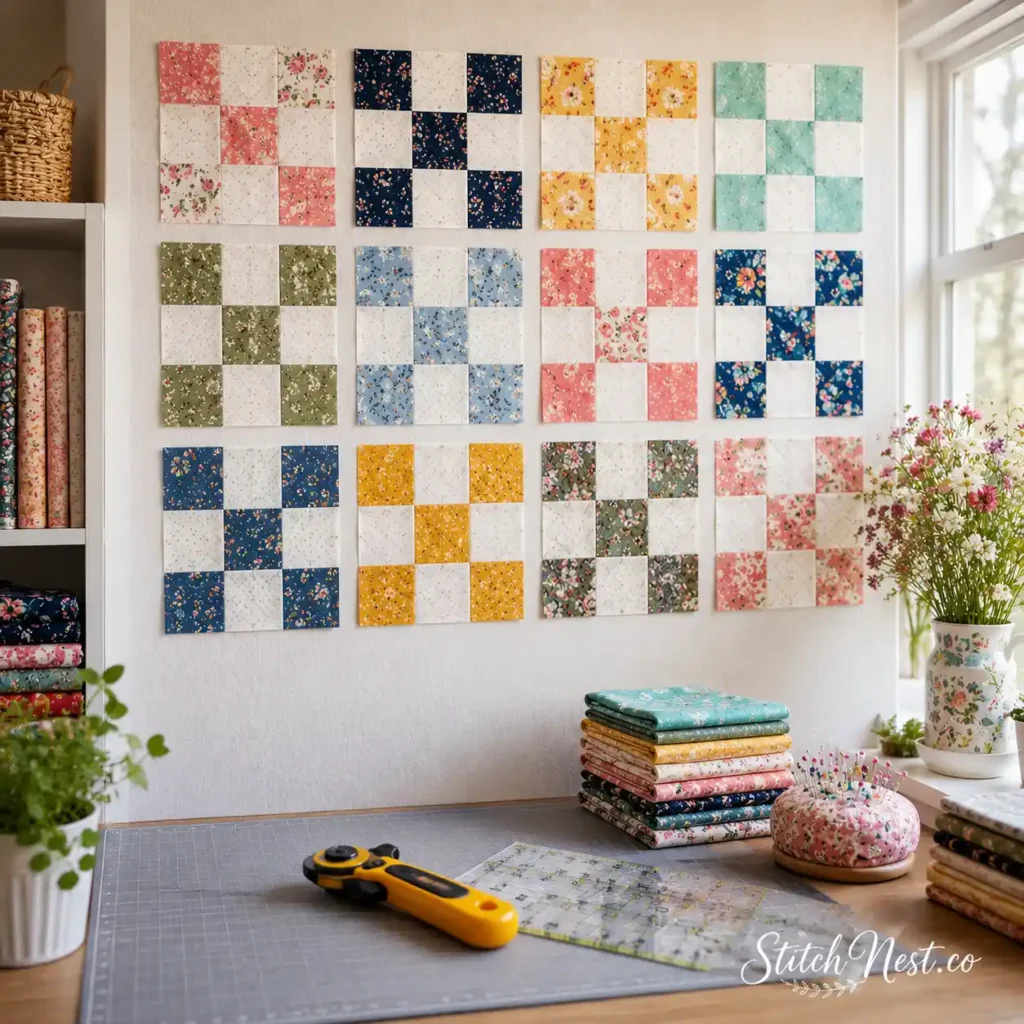
If quilting had an official starter block, the Nine Patch would probably be it. A Nine Patch is made from nine squares arranged into a larger square. The construction is straightforward, which allows you to focus on accurate cutting and sewing instead of complicated piecing. That’s exactly why so many quilting teachers start here.
What surprises many beginners is how often this block appears in finished quilts. Traditional quilts, modern quilts, baby quilts, scrap quilts, and seasonal projects all use variations of the Nine Patch. Once you learn the Nine Patch, you’ll start spotting it in quilts everywhere.
Since the Nine Patch relies on simple squares, it’s also a great place to develop good measuring habits. Many beginners find that a clear acrylic quilting ruler makes accurate cutting much easier right from the start.
What You’ll Learn From This Block
- Accurate cutting
- Consistent seam allowances
- Basic block construction
2. Four Patch Block
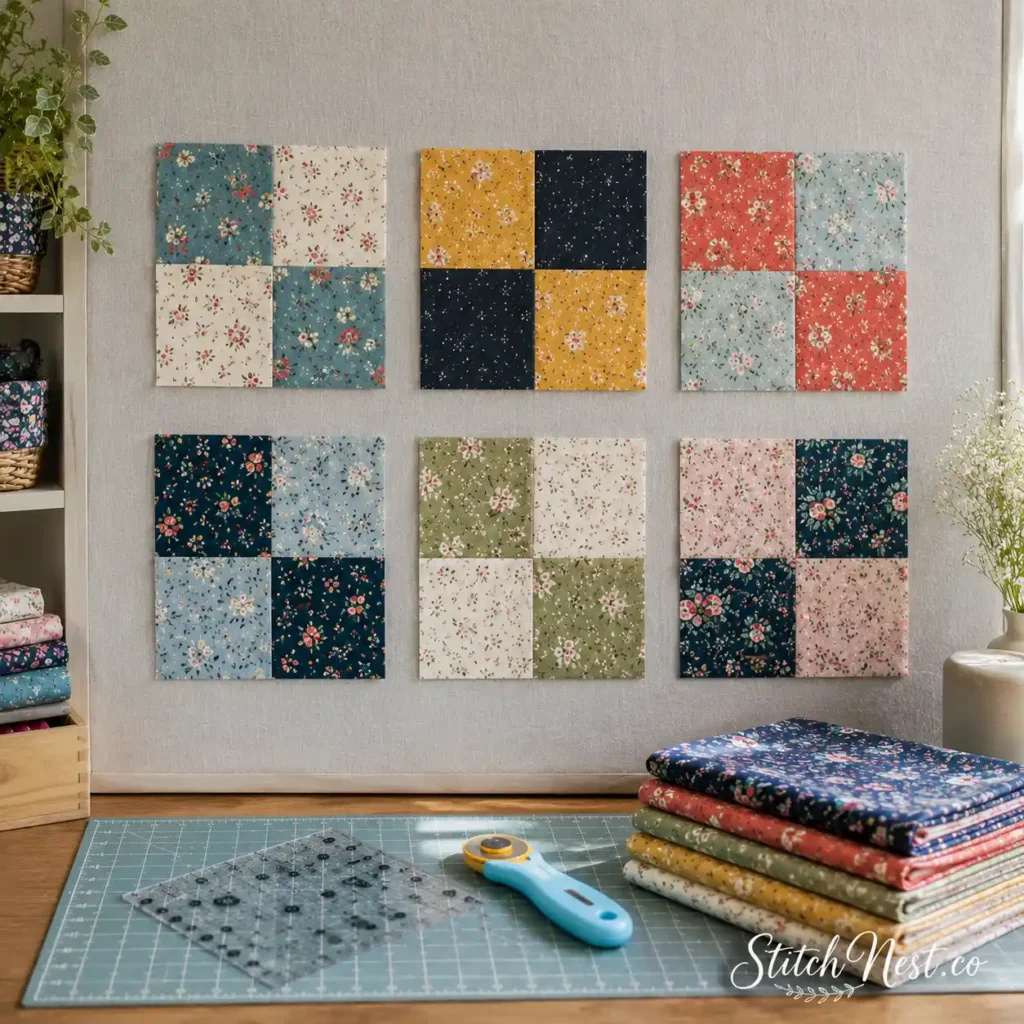
The Four Patch may look simple, but it teaches an important lesson that many beginners don’t fully appreciate at first: fabric contrast matters. Made from four squares sewn together, this block comes together quickly and gives you a chance to experiment with light and dark fabrics. Two Four Patch blocks made with the same fabrics can look surprisingly different depending on where those fabrics are placed.
Many quilters discover their understanding of color improves dramatically after making a few Four Patch variations. That’s one reason it remains a favorite among beginners and experienced quilters alike.
Every quilter should have a few classic blocks in their collection. These star flower quilt block patterns that look hard (but aren’t) are well worth adding to yours.
What You’ll Learn From This Block
- Color contrast
- Fabric value
- Chain piecing
- Pressing techniques
3. Half-Square Triangle Block
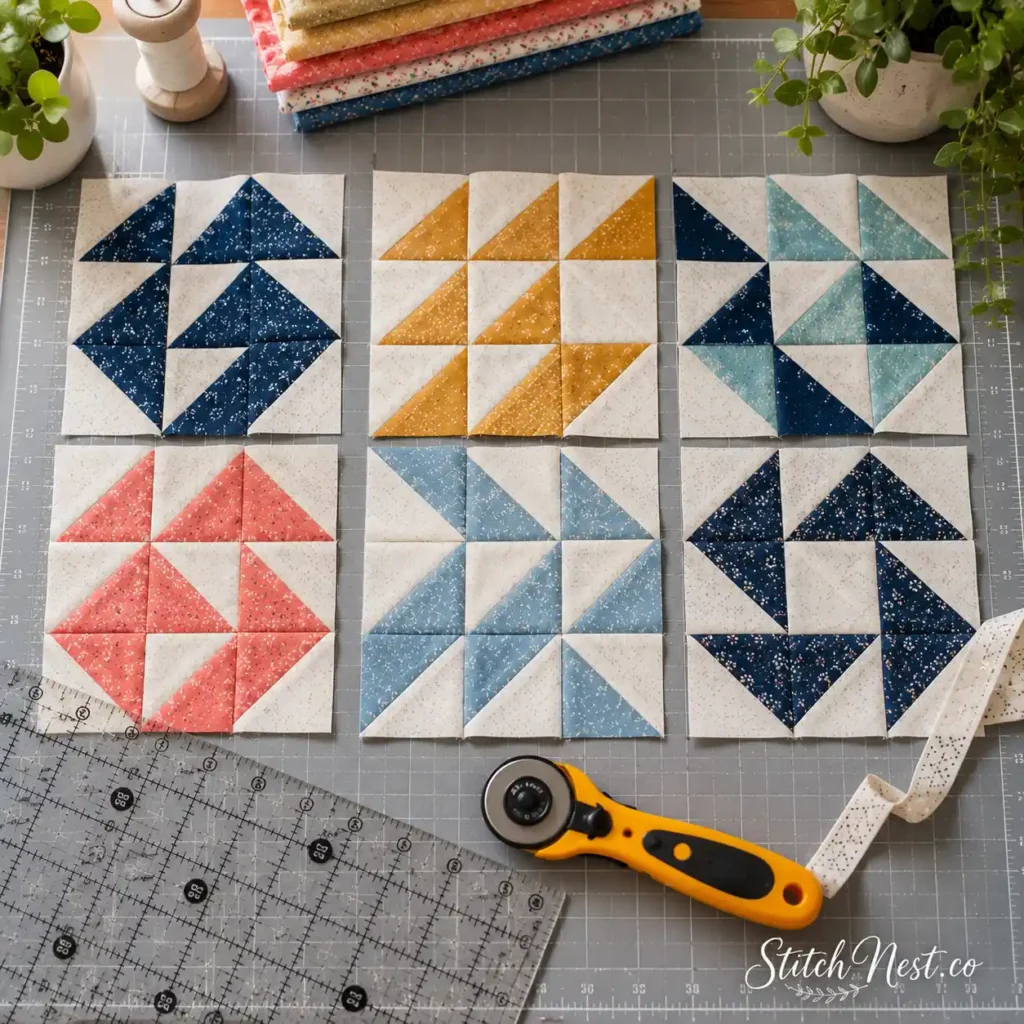
Half-square triangles are often the point where beginners start feeling like real quilters.
At first, diagonal seams can seem intimidating compared to sewing simple squares together. After making a few, you’ll quickly realize they’re much more approachable than they look. That’s good news because half-square triangles appear in hundreds of quilt patterns.
Once you become comfortable making them accurately, an entirely new collection of quilt designs opens up. You’ll start noticing half-square triangles everywhere, from traditional stars to modern geometric layouts.
What You’ll Learn From This Block
- Diagonal piecing
- Precision trimming
- Working with bias edges
- Building more advanced designs
If you have a layer cake sitting in your fabric stash waiting for the right project, these layer cake quilt patterns are packed with ideas that make the most of every square.
4. Pinwheel Block
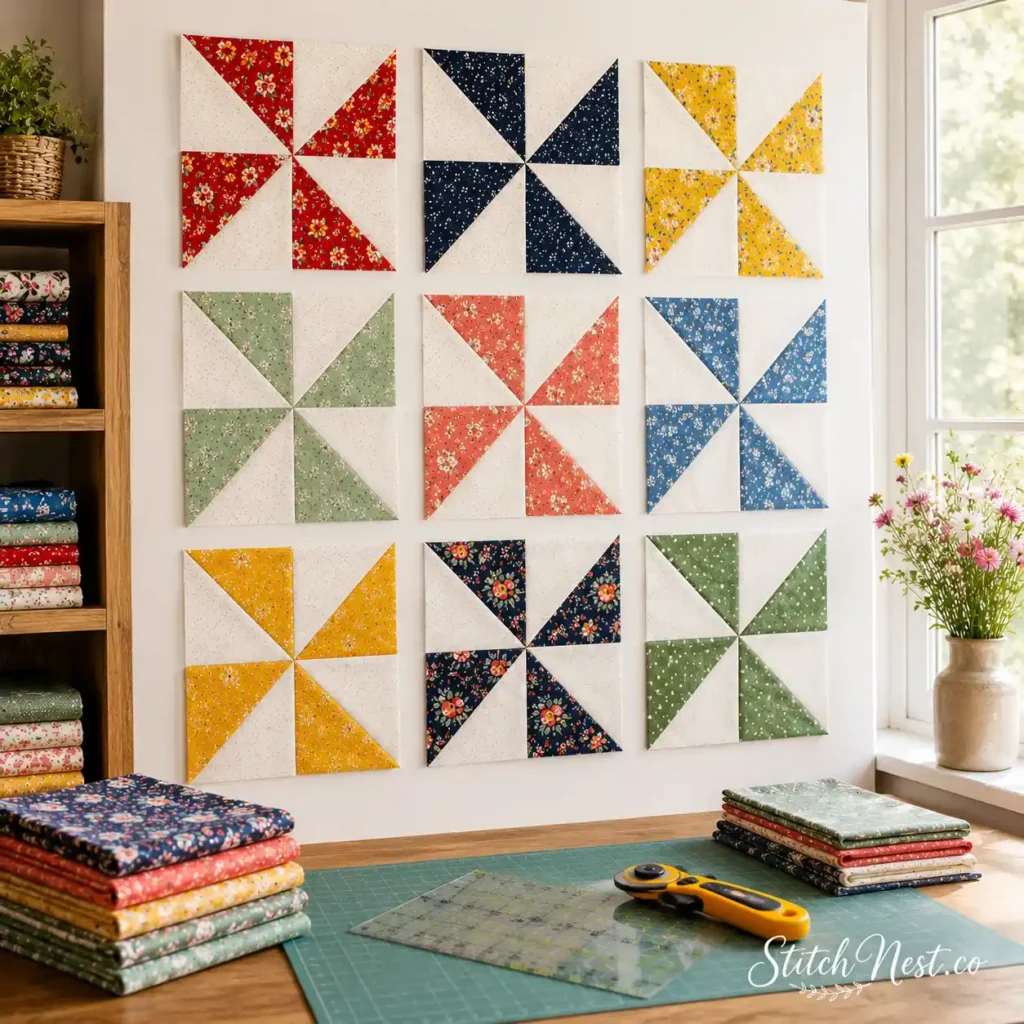
Few beginner blocks feel as satisfying as the Pinwheel. There’s something enjoyable about watching simple units come together to create movement across a block. Four half-square triangles arranged correctly produce a design that looks much more complicated than the actual construction.
Color placement plays a big role here. High-contrast fabrics create bold movement, while softer color combinations produce a gentler look. Experimenting with different fabrics quickly shows how much visual impact color can have.
What You’ll Learn From This Block
- Matching seams
- Block assembly
- Color placement
5. Rail Fence Block
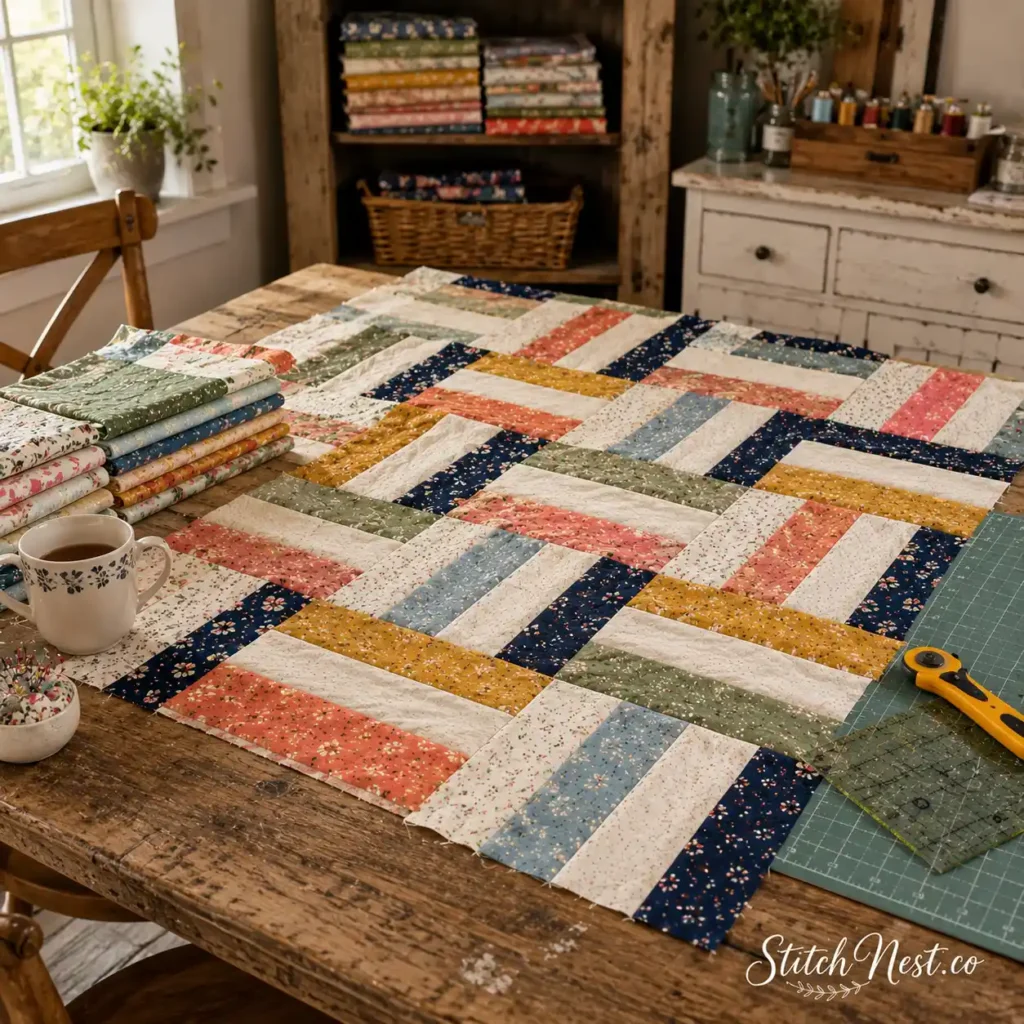
The Rail Fence is one of the fastest confidence-building blocks a beginner can make.
Long strips of fabric are sewn together, cut apart, and rearranged into a finished block. The process is straightforward, but the results often surprise people because the finished quilt looks far more involved than the construction itself.
Many first quilts are made with Rail Fence blocks because beginners get to focus on sewing and fabric choices instead of complicated construction. It’s also a great choice when you want to finish something relatively quickly.
What You’ll Learn From This Block
- Strip piecing
- Fabric coordination
- Quilt layout planning
The batting you choose can completely change how a finished quilt looks, feels, and wears over time. If you’re unsure which type is right for your project, our beginner’s guide to quilt batting explains everything you need to know.
6. Friendship Star Block
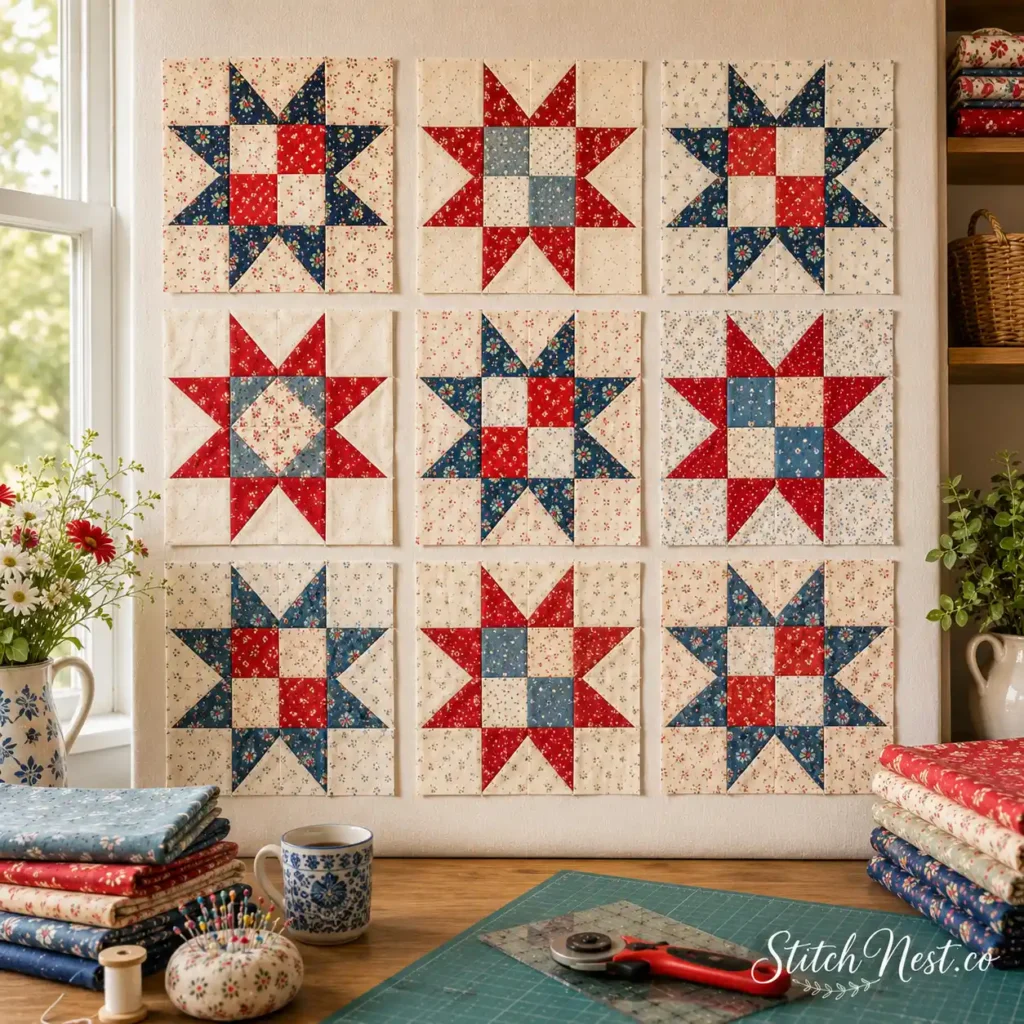
Almost every quilter reaches a point where they want to make stars. The Friendship Star is one of the easiest places to begin. It introduces star construction without requiring the precision of more advanced star patterns. You’ll start learning how points come together and why seam accuracy becomes increasingly important as designs become more detailed.
Many quilters remember their first star block because it feels like a milestone. Up to that point, you’re mostly learning construction. A star block is often the first project that feels truly decorative. It’s often the moment quilting starts looking a little more polished and intentional.
What You’ll Learn From This Block
- Star construction
- Working with points
- Precision piecing
- Traditional quilt design
Before you start your next quilt, make sure you have the right supplies on hand. Our guide to quilting tools for beginners covers the essentials you’ll use again and again.
7. Log Cabin Block
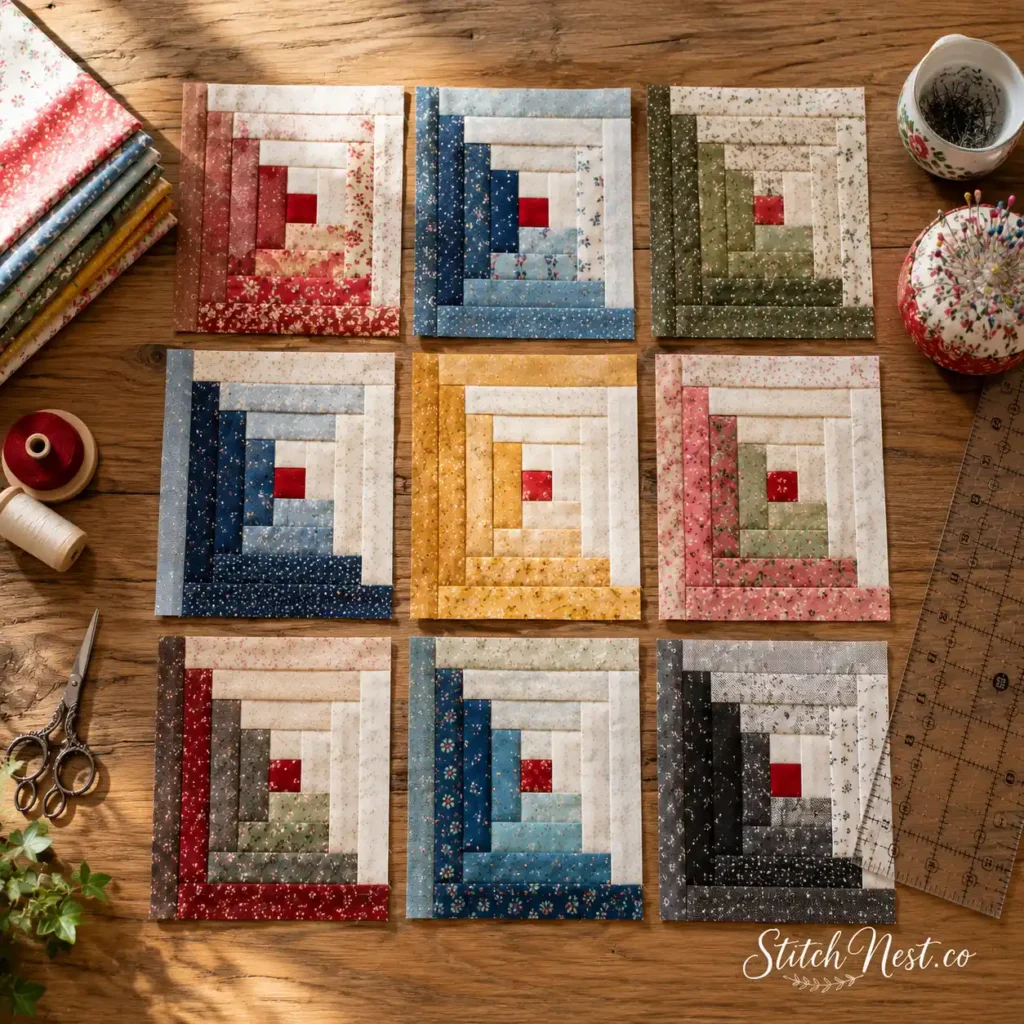
The Log Cabin has been around for generations, and it’s easy to understand why. Fabric strips are built around a center square one piece at a time. The construction is repetitive in the best possible way, making it relaxing to sew and easy to follow. Beginners often enjoy watching the block gradually grow larger with each added strip. One of the reasons the Log Cabin remains so popular is its flexibility.
Traditional fabrics create a classic look. Modern fabrics create something entirely different. That’s one reason quilters often return to it again and again, even after years of experience.
What You’ll Learn From This Block
- Building outward from a center
- Fabric value placement
- Quilt layout possibilities
- Design flexibility
A Quick Note About Mistakes
Your first quilt blocks probably won’t be perfect. The corners may miss by a little. Seams might not line up exactly. A block may finish slightly smaller than expected. That’s completely normal. Every experienced quilter has early projects tucked away somewhere that remind them how much they’ve learned over time.
The important thing is paying attention to what happened and understanding why. Each block teaches something, even when it doesn’t turn out exactly as planned. Don’t forget to check out these quilt ideas and inspirations for beginners!
Practical Tips You Should Know
- Press after every step instead of waiting until the block is finished. Well-pressed pieces fit together more accurately and make assembly much easier.
- Use a consistent quarter-inch seam allowance whenever possible. A seam that’s only slightly off may not matter in one block, but those small differences become much more noticeable once dozens of blocks are sewn together.
- Make one test block before cutting fabric for a large project. A practice block often reveals issues that are much easier to fix early. A quality rotary cutter also helps improve cutting accuracy, especially when you’re working with multiple pieces that need to finish at the same size.
- Don’t compare your first blocks to quilts made by someone with twenty years of experience. Focus on improvement from one project to the next instead.
Every experienced quilter started with simple blocks just like these. The difference between a beginner and a confident quilter usually isn’t talent. It’s practice. Before long, you’ll start looking at quilt patterns and recognizing exactly how they’re put together. That’s when quilting becomes even more enjoyable because you’ll understand not just what you’re making, but how it was designed.