If you’ve ever stood in a fabric store trying to figure out how many yards to buy for a quilt, you’re definitely not alone. It only takes one project where you come up short on backing or binding to realize how quickly fabric estimates can get confusing. That’s exactly why we created this Quilt Fabric Calculator. In just a few clicks, you can get a solid estimate for your quilt top, backing, binding, batting, and fat quarters, so you can spend less time doing math and more time sewing.
🪡 Free Quilt Fabric Calculator
Estimate quilt top fabric, backing, binding, batting size, and fat quarters for your next quilting project.
1. What are you making?
2. Choose a size
3. Border?
How Much Fabric Do You Need for a Quilt?
One of the easiest ways to derail a quilting project is running out of fabric halfway through. We’ve all been there. You carefully pick out fabrics, cut your pieces, start stitching blocks together, and then realize you’re short on backing fabric or don’t have enough binding to finish the edges.
The good news is that a little planning goes a long way.
Before you start cutting fabric, it’s helpful to have a rough idea of how much you’ll need for the quilt top, backing, binding, and batting. The exact amount will vary depending on the pattern you’re making, but having a reliable estimate makes shopping much easier and helps you avoid unnecessary trips back to the fabric store.
Understanding Quilt Fabric Requirements
When we talk about fabric requirements, we’re usually talking about several different parts of the quilt, not just the fabric used on the front.
A finished quilt is made up of multiple layers and components, each with its own fabric needs. Understanding how those pieces work together makes it much easier to estimate yardage and plan a project from start to finish.
Quilt Top, Backing, and Binding Explained
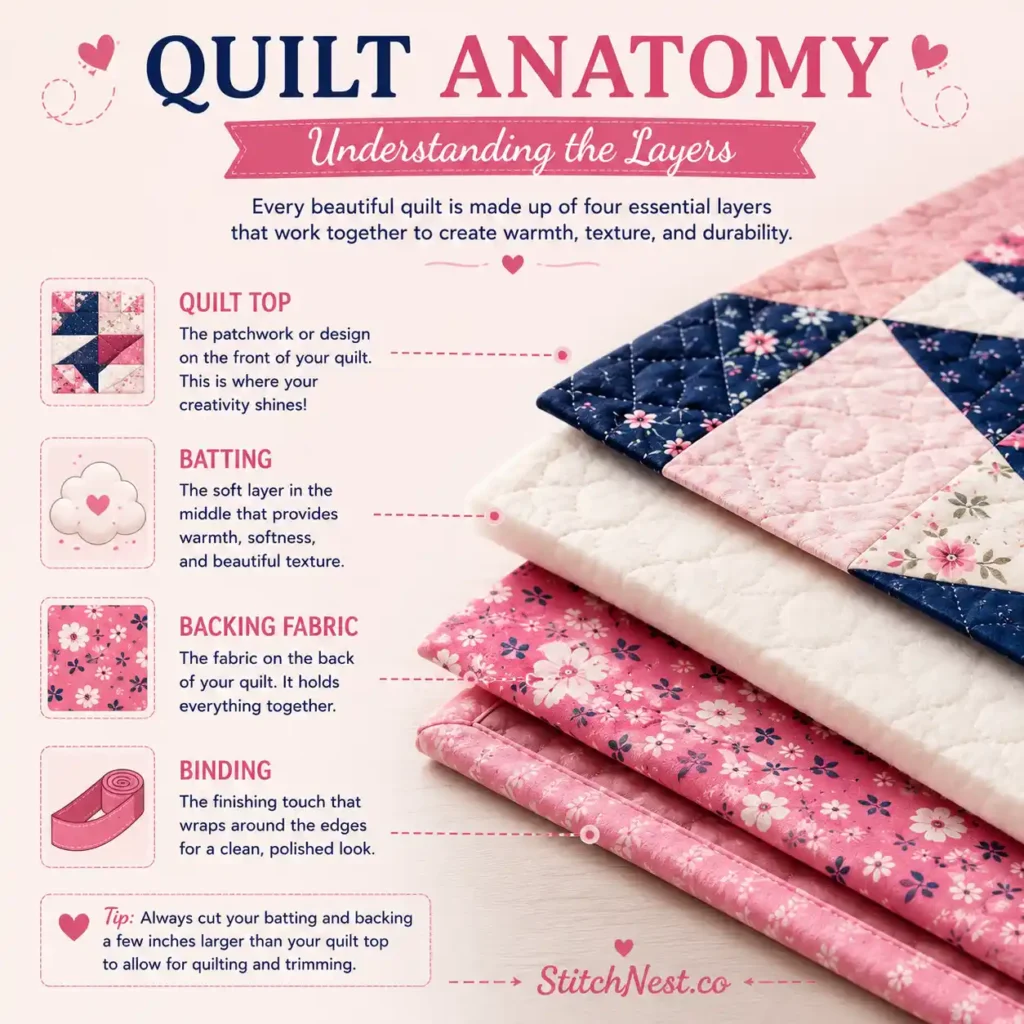
If you’re new to quilting, these terms come up constantly.
1. Quilt Top Fabric
The quilt top is the part everyone notices first. It’s the patchwork, blocks, colors, and design you’ve spent hours planning and sewing together.
How much fabric you’ll need for the quilt top depends on the finished size of the quilt and the pattern you’ve chosen. A simple design may require less fabric than a quilt with lots of small pieces and contrasting fabrics.
2. Backing Fabric
The backing is the fabric used on the back of the quilt. Many quilters choose a single fabric for the backing, but pieced backings are also common, especially when using leftover fabric from the quilt top.
Since backing fabric usually needs to extend beyond the quilt top during quilting, you’ll often need more fabric than you expect.
3. Binding Fabric
Binding is the strip of fabric sewn around the outer edge of the quilt after quilting is complete. It may not require much yardage, but it’s one of the finishing details that pulls the entire quilt together. A well-chosen binding can make a quilt feel polished and complete.
4. Batting
Batting is the layer sandwiched between the quilt top and backing. It provides warmth, softness, and structure. Most quilters buy batting slightly larger than the finished quilt size so there’s enough room for quilting and trimming.
The batting you choose can completely change how a finished quilt looks, feels, and wears over time. If you’re unsure which type is right for your project, our beginner’s guide to quilt batting explains everything you need to know.
Common Quilt Sizes
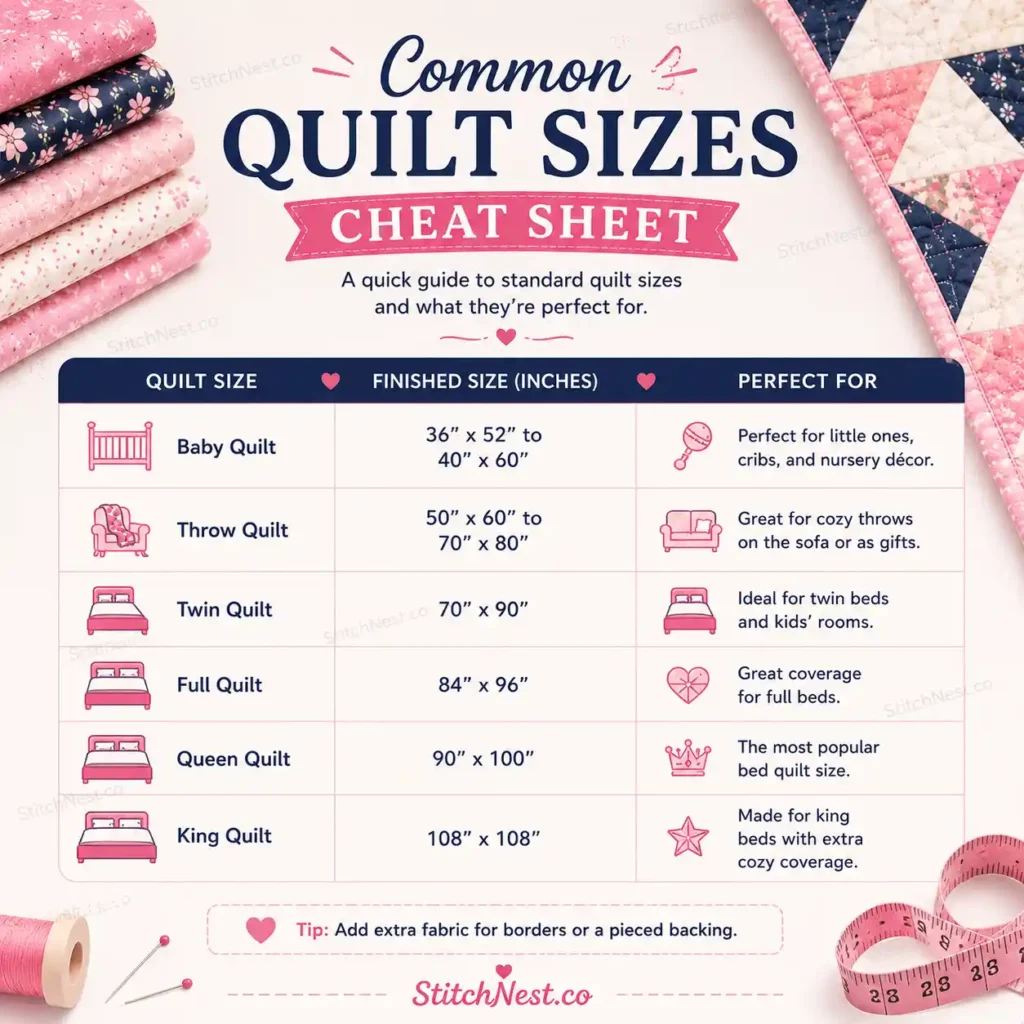
One thing you’ll notice after making a few quilts is that there isn’t a single “correct” size for every project. Quilt dimensions can vary depending on the pattern, the mattress size, or simply personal preference.
That said, most quilt patterns fall within a few common size ranges.
Once you’ve settled on a quilt size, the next step is choosing a design. If you’re just getting started, these Easy Quilt Blocks Every Beginner Should Learn are a great place to practice basic piecing skills and build confidence.
Baby Quilts
Baby quilts are usually the smallest projects and are great for beginners. Most fall somewhere between 36″ × 52″ and 40″ × 60″.
Throw Quilts
Throw quilts are perfect for couches, reading nooks, and gift giving. They’re also one of the most popular quilt sizes because they’re large enough to be useful without becoming overwhelming to sew.
Twin, Full, Queen, and King Quilts
Bed quilts require more planning because fabric requirements increase quickly as the quilt size grows. A queen or king quilt can use significantly more fabric than a throw quilt, especially when borders and large backing pieces are involved.
How Many Fat Quarters Do You Need?
Fat quarters are one of the most useful fabric cuts a quilter can keep on hand. They’re versatile, easy to mix and match, and work beautifully for patchwork projects. Many quilt patterns are designed specifically around fat quarter bundles, making them a convenient starting point when planning a quilt.
As a general rule, smaller quilts may only need a handful of fat quarters, while larger bed quilts can require two dozen or more depending on the design.
Should You Buy Extra Fabric?
If there’s one quilting lesson many of us learn the hard way, it’s that extra fabric is rarely wasted. Maybe a cutting mistake happens. Maybe you decide to add a border. Maybe you fall in love with the quilt and want matching pillow covers later.
Having a little extra fabric on hand can save a lot of frustration. Many experienced quilters purchase around 10% more fabric than their estimated requirements, especially for larger projects.
Still building your quilting toolkit? Take a look at our guide to Quilting Tools for Beginners to see which supplies are worth buying first and which ones can wait until later.
Frequently Asked Questions
How accurate is this Quilt Fabric Calculator?
The calculator provides estimates based on common quilt sizes and typical fabric requirements. Your actual yardage may vary depending on the pattern, block size, borders, and fabric choices.
Do I really need extra backing fabric?
Yes. Most quilters allow extra backing fabric beyond the finished quilt dimensions to make quilting and trimming easier.
Can I substitute fat quarters for yardage?
Sometimes. It depends on the pattern and the size of the fabric pieces required. Patterns that require long continuous cuts may need yardage instead.
How much extra fabric should I buy?
A good rule of thumb is around 10% more than your estimate, particularly for larger quilts.
Not sure what to make next? Browse our collection of Quilt Ideas, Patterns, and Inspiration for Every Skill Level for projects ranging from simple beginner-friendly quilts to more detailed designs you’ll enjoy growing into.
A little planning at the beginning of a quilting project can save a lot of headaches later. When you have a good estimate for your quilt top, backing, binding, batting, and fat quarters, shopping becomes easier, and the entire project tends to go more smoothly. Use the Quilt Fabric Calculator above as your starting point, gather your supplies, and enjoy the fun part; turning a stack of fabric into a quilt you’ll be proud to use, gift, or display.