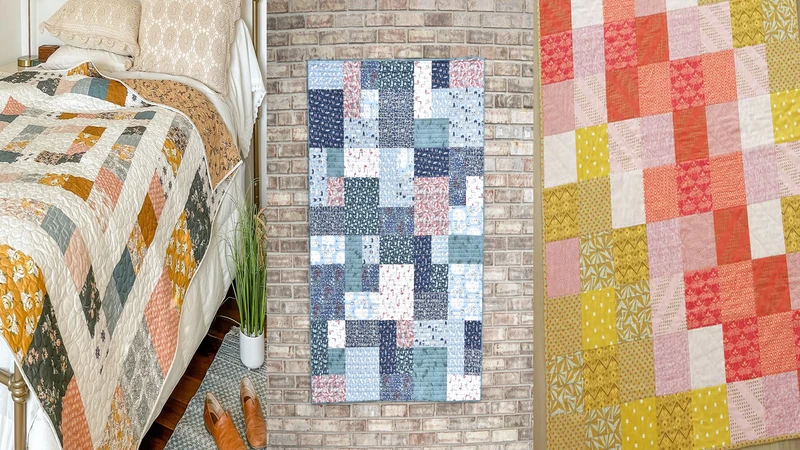
Nobody warns you that the hardest part of starting a quilt is deciding what to make first. There are thousands of patterns out there, and a lot of them look wonderful right up until you read the instructions. We picked seven that keep things gentle, with straight seams, forgiving shapes, and nothing that asks you to be brave on day one. Pour yourself something warm and let’s find the one you will actually finish.
Simple Quilt Patterns to Start With
Looking for the pattern or tutorial? You’ll find the source link right below each image. Some featured projects are shared for inspiration, so not every image includes a step-by-step tutorial!
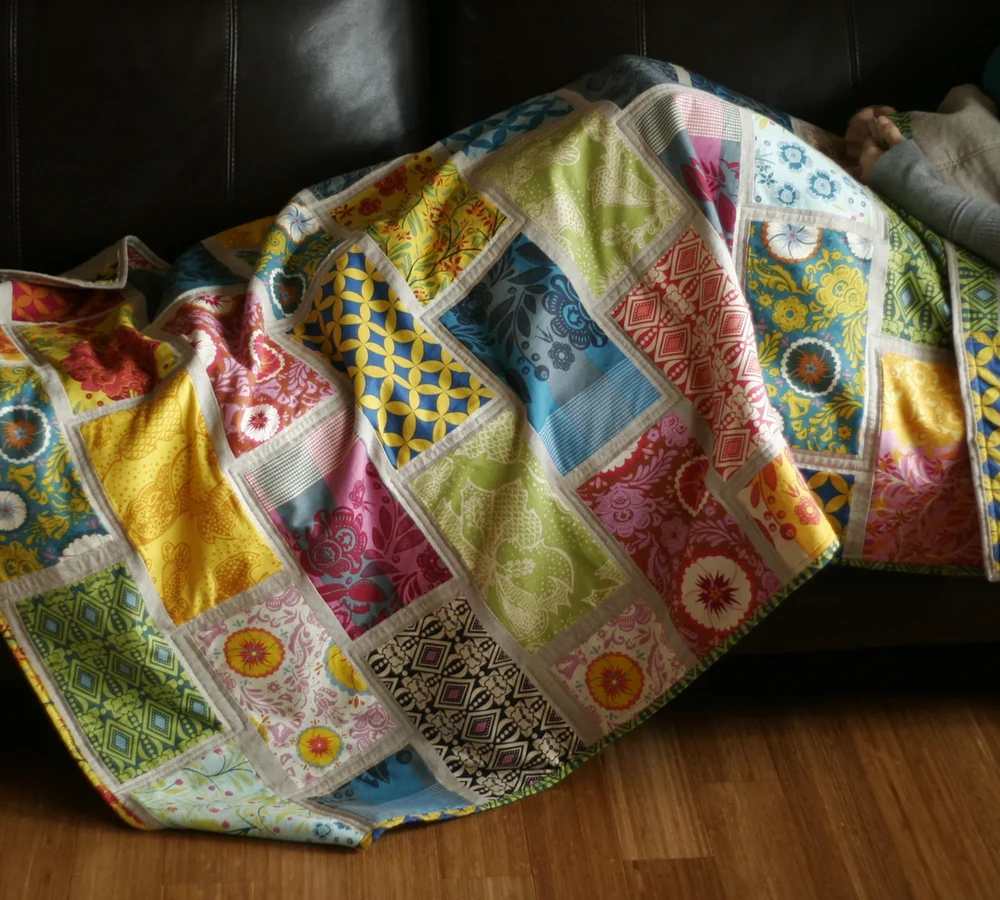
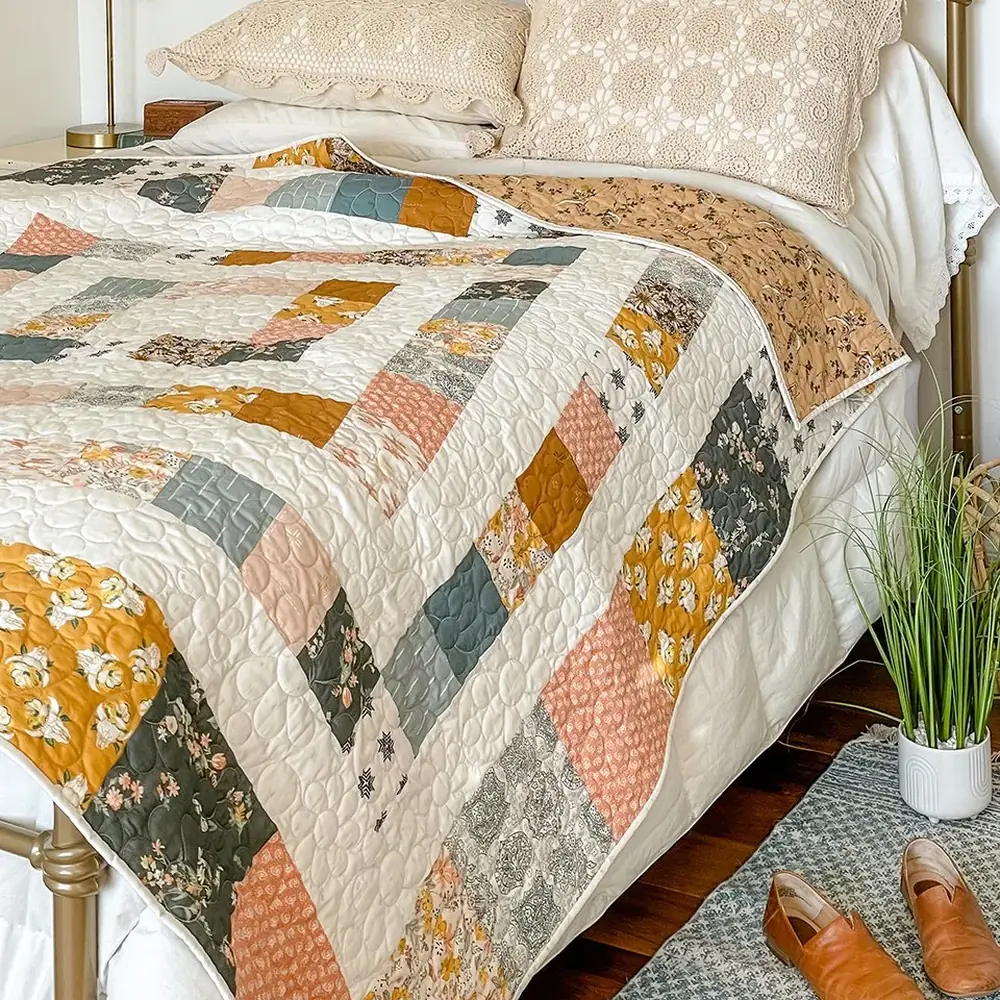
1. Colorbrick Quilt Pattern for Beginners
Skill Level: Beginner
Time to Make: A weekend
A pattern like this teaches you the whole rhythm of quilting without any pressure. You cut, sew rows, join them, and by the end you’ll understand how a quilt top comes together from start to finish.
Rectangles are friendlier than they sound, since you only ever sew straight lines. Here’s what we recommend doing as you go. Press each row before joining it to the next, because flat rows meet up far more neatly than ones you have been meaning to get to later.
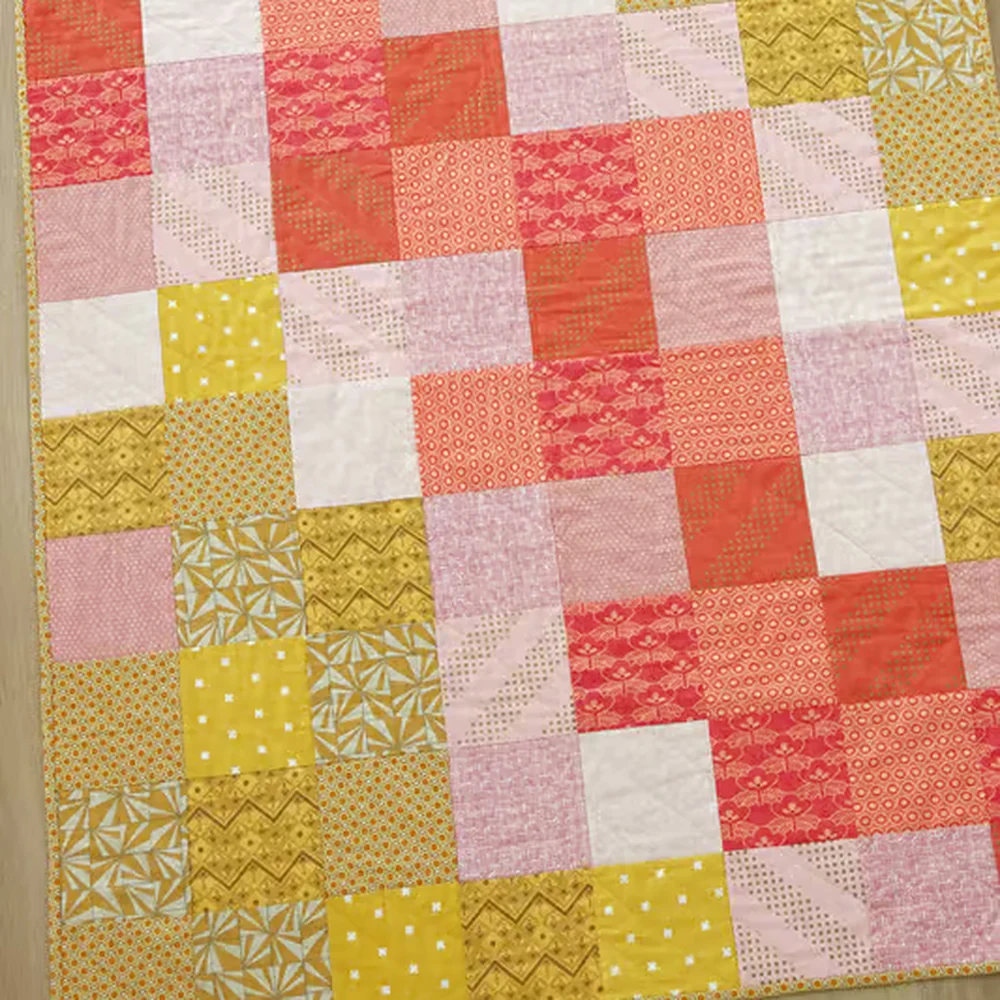
2. Sweet and Simple Quilt Pattern Squares
Skill Level: Beginner
Time to Make: One afternoon
Squares are the quiet hero of quilting, and this pattern proves you do not need anything fancier to end up with a lovely finished top. With so few pieces, your fabric choices get to do the talking, so take a little extra time deciding how your prints sit next to each other.
Lay everything out on the floor first and walk away for a few minutes. When you come back, awkward spots tend to jump out at you, and it’s much easier to swap squares before you sew.
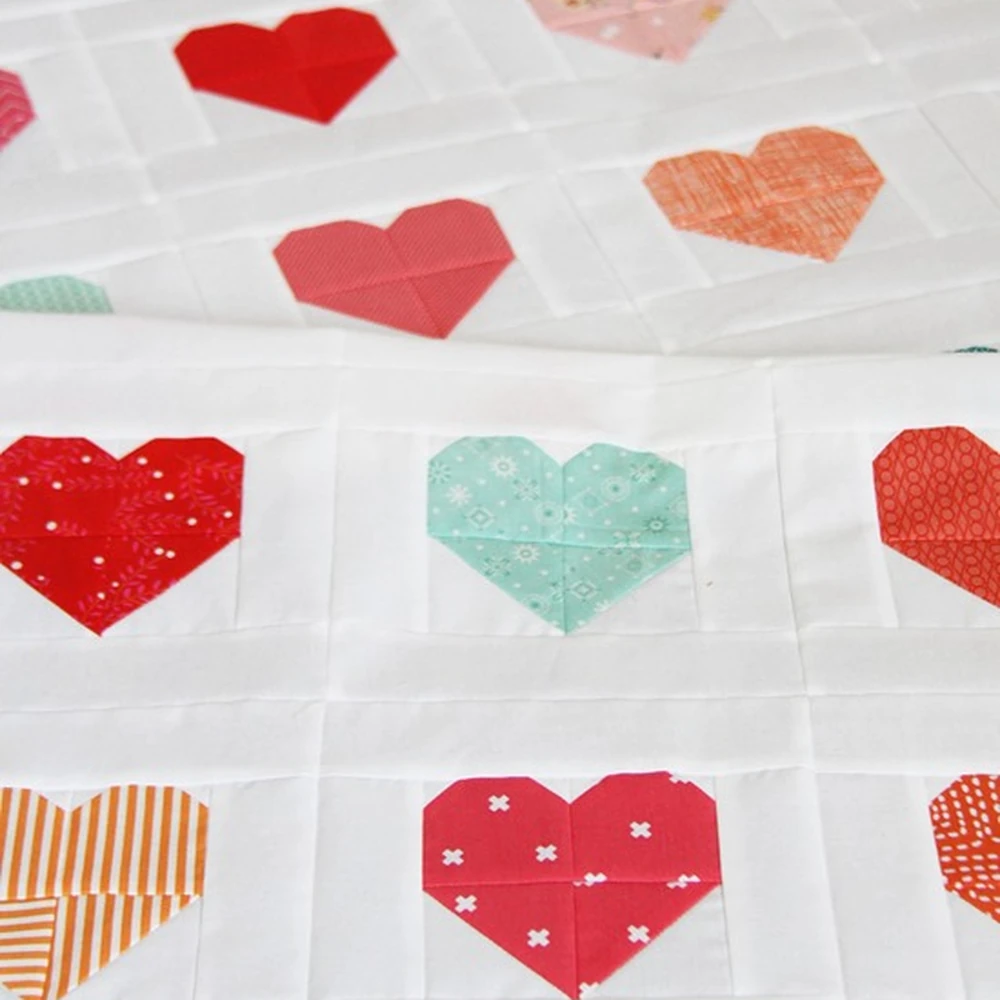
3. Simple Heart Quilt Tutorial
Skill Level: Beginner
Time to Make: A weekend
Hearts make people smile before the quilt is even finished, which is why they are such a popular gift choice. Shaped pieces take a bit more care than plain squares, so cut slowly and double-check your measurements before you slice.
A pattern like this also pairs nicely with a limited palette, and two color quilt patterns show how much charm you can get from just a pair of fabrics. Pin generously, sew with patience, and you can do this.
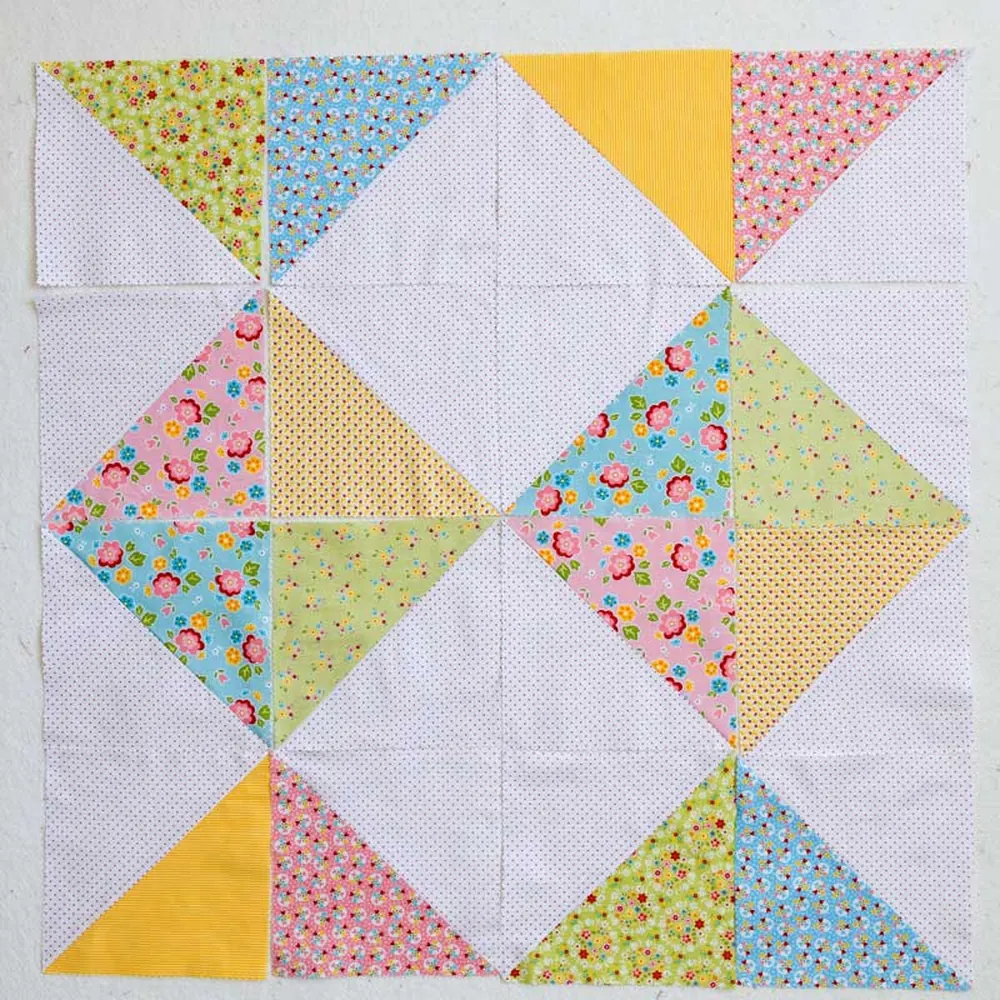
4. Roundabout Simple Quilt Pattern
Skill Level: Beginner
Time to Make: A weekend
Patterns with a sense of movement are really just clever arrangements of simple units, and that is what makes them so rewarding to sew. The trick is keeping every unit facing the right direction, so build a small test section before you commit to the whole quilt.
Rotating shapes around a center is a very old quilting idea, and triangle quilt patterns give you plenty more ways to play with it. Take a photo of your layout before you start sewing; it’s a handy map if you lose your place.
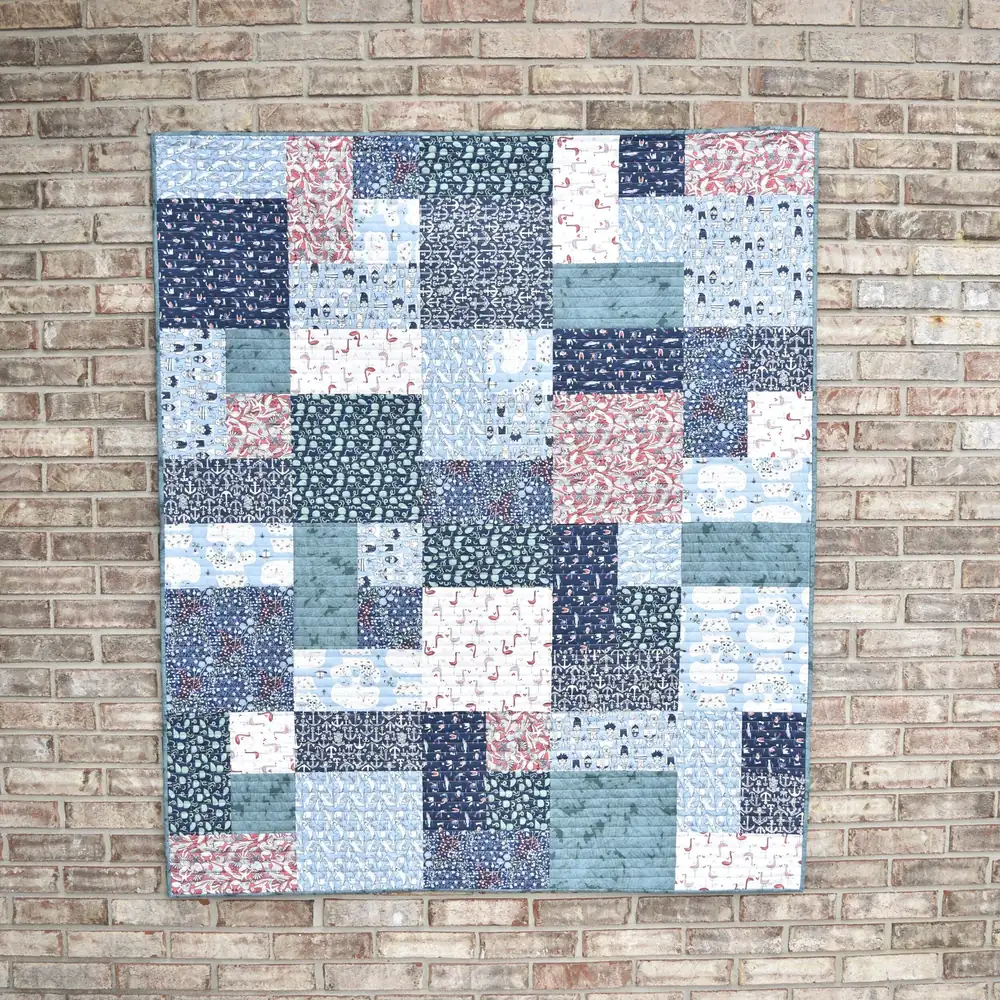
5. Beginner-Friendly Fat Quarter Simple Quilt Tutorial
Skill Level: Beginner
Time to Make: A weekend
A fat quarter is a piece of fabric measuring roughly 18 by 21 inches, and bundling them is a lovely way to add variety without buying yards of everything. Because each piece is a manageable size, you can cut plenty of squares or rectangles from one with very little waste.
Press each piece before cutting, and your measurements will be far more accurate. Soft, brushed fabrics come in fat quarters too, and flannel quilt patterns explain how to handle that cozy, stretchy material.
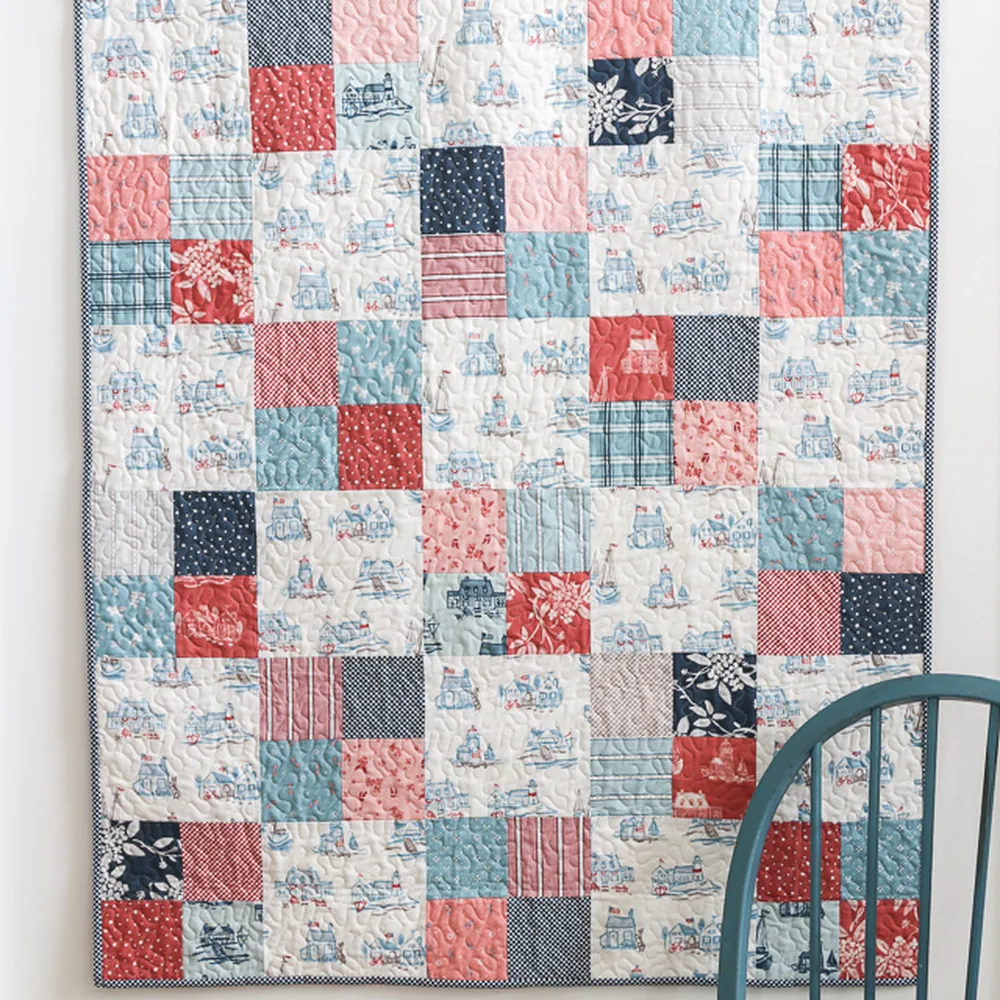
6. Simple Four Patch Quilt Tutorial
Skill Level: Beginner
Time to Make: One afternoon
Sewing four squares into one block might be the friendliest introduction to matching seams that quilting has to offer. When two seams meet in the middle, press them in opposite directions so they lock together, and your center will land right where it should.
It takes a little getting used to, and then it clicks, usually around the third block. Once four patch feels comfortable, half square triangle patterns make a natural next step.
7. How to Make a Simple Quilt for Babies
Skill Level: Beginner
Time to Make: One afternoon
Baby quilts are small enough to handle easily, which makes them an ideal practice project for anyone new to the craft. They also make some of the most treasured gifts you will ever sew.
Prewash your fabric and choose a thin cotton batting, since lighter quilts are softer, easier to wash, and more comfortable for little ones. If you love the idea of a fluffy, cuddly finish, rag quilt patterns get their softness from seams that fray on purpose.
Small Things That Make Starting Easier
Sew a test block first. It takes an hour and tells you whether your seam allowance is accurate, which saves a lot of heartache later. If you want to keep your quilts from feeling like giant wrestling matches, quilt as you go methods let you quilt small sections one at a time instead of pushing a huge top through your machine.
Learn the scant quarter inch. It means sewing a thread or two narrower than a full quarter inch, and it makes up for the tiny amount of fabric that disappears into each fold. Your blocks will finish at the size the pattern promises, and you will stop wondering why everything comes out a little small.
Keep your tools simple. A rotary cutter, a clear ruler, and a self-healing mat will carry you through nearly every project on this list, and you can add fancy extras later if you fall in love with the craft. Once you feel steady with straight lines, shapes with many small pieces become less scary, and hexagon quilt patterns are a gentle way to try them.
Finally, take your time choosing fabric. Contrast matters more than any particular shade, so look for a mix of lighter and darker pieces. If you enjoy calm, honest designs, the quiet confidence of amish quilt patterns is a lovely thing to study.
Beginner Traps Worth Dodging
Starting a seasonal quilt too close to the holiday is the classic trap. Even simple quilts take longer than they look, and the same thing happens every autumn to people planning halloween quilt ideas at the last minute. Count backward from the date you need it and add a cushion for binding, which always takes longer than you expect.
Skipping the prewash is another one. Unwashed fabric can shrink and pucker after the first trip through the laundry, and some dyes run when they get wet. Wash and dry your fabric the way you plan to care for the finished quilt.
Picking a pattern that is too ambitious tends to end with a half-finished top in a drawer. Choose something that feels slightly easy, finish it, and let that win carry you into the next project. Even the pointy shapes in christmas tree quilt patterns feel manageable once you have a few finished quilts behind you.
When you are ready for something with a little more visual punch, take a look at these barn quilt patterns and keep that beginner confidence going.